


As Ethereum trades at $1,944.46, down 3.13% over the past 24 hours, its Layer 2 ecosystem hums with activity yet grapples with deep fragmentation. Each rollup – from Optimism to Arbitrum – runs its own sequencer, dictating transaction order in isolation. This setup stifles true ethereum l2 interoperability, scatters liquidity, and opens doors to cross-rollup MEV exploitation. Enter cross-rollup sequencing, a strategic pivot toward unified transaction ordering that could solidify Ethereum’s modular future.

From my vantage as a long-term investor tracking blockchain infrastructure, this shift isn’t mere technical tinkering. It’s foundational, much like betting on commodities that weather cycles. Siloed sequencers breed inefficiency: users face latency spikes when bridging assets, developers wrestle with composability puzzles, and MEV bots feast on arbitrage across chains. Cross-rollup sequencing tackles these head-on by pooling ordering logic, slashing rollup latency reduction while boosting mev capture l2s.
The Hidden Costs of Independent Sequencers
Picture a trader eyeing a DeFi opportunity split between two rollups. By the time transactions clear disparate sequencers, the edge evaporates. This isn’t hypothetical; it’s daily reality in Ethereum’s L2 sprawl. Centralized sequencers, often run by single entities, introduce censorship risks and single points of failure. Economic security weakens as each rollup shoulders its own validator burden.
Worse, rollup transaction ordering fragmentation amplifies MEV. Max profit extractors reorder txs within their rollup, but cross-rollup plays – like atomic swaps – remain elusive. Research highlights this as the unsolved cross-rollup MEV riddle, where unified sequencing could redistribute value more fairly. At crossrollupsequencing. com, we see this as a scalability chokepoint demanding resolution.
Cross-rollup MEV refers to opportunities for value extraction that arise when transactions across different rollups can be profitably sequenced or manipulated.
Shared Sequencers Emerge as the Strategic Core
Shared sequencing ethereum networks like Espresso and Astria redefine the game. These systems batch transactions from multiple rollups into a single, decentralized ordering layer. Rollups post their txs to the shared sequencer, which produces a unified sequence, then disperses it back. Result? Synchronous visibility across chains, paving the way for atomic composability.
Espresso’s sequencer, for instance, leverages a proof system for liveness and censorship resistance. Astria pools resources, granting rollups beefier security without ballooning costs. Portal Ventures’ thesis on Rome underscores interoperability: batch diverse rollups, execute cohesively. This isn’t centralization in disguise; it’s decentralized coordination, echoing Ethereum’s ethos.
Yet shared sequencers aren’t panacea. L2IV Research notes strains under load – amplify issues across participants. Still, for enduring infrastructure, they shine. Investors like Maven 11 tout pooled economic security; Jarrod Watts emphasizes interoperability perks.
Diverse Paths to Unified Ordering
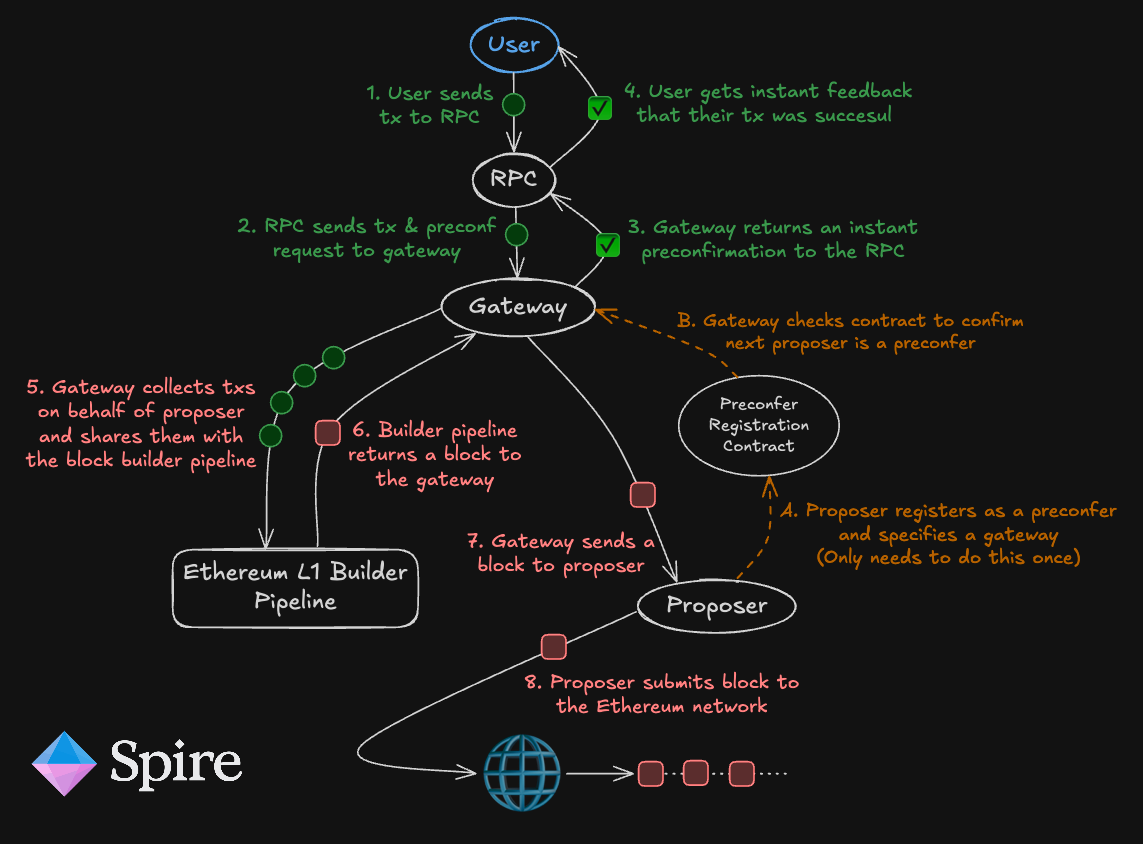
Beyond pure shared models, innovation proliferates. Based rollups tap Ethereum’s validators directly for sequencing, inheriting decentralization but syncing to 12-second slots. Preconfirmations mitigate UX hits, per ethrex docs.
Alternative L1 sequencing flirts with Solana’s speed for Ethereum L2s, trading some security for finality. Rome. builders explores this hybrid. Multilane sequencing offers flexibility: lanes with varied Ethereum settlement cadences suit diverse rollups, enabling state sharding.
CRATE protocols push boundaries, ensuring all-or-nothing cross-rollup txs even across L1s. Arxiv papers detail four-round L1 finality. These threads weave toward a tapestry where shared sequencer rollups thrive.
Ethereum (ETH) Price Prediction 2027-2032
Forecasting price impacts from cross-rollup sequencing adoption unifying Ethereum L2 transaction ordering
| Year | Minimum Price | Average Price | Maximum Price | YoY % Change (Avg from Prior Year) |
|---|---|---|---|---|
| 2027 | $2,500 | $4,000 | $6,000 | +106% |
| 2028 | $3,500 | $6,500 | $10,000 | +63% |
| 2029 | $5,000 | $9,500 | $15,000 | +46% |
| 2030 | $7,000 | $13,500 | $22,000 | +42% |
| 2031 | $9,500 | $19,000 | $32,000 | +41% |
| 2032 | $12,000 | $26,000 | $45,000 | +37% |
Price Prediction Summary
Cross-rollup sequencing enhances Ethereum L2 interoperability and scalability, positioning ETH for strong growth. Bullish adoption drives averages from $4,000 in 2027 to $26,000 by 2032, with mins reflecting bearish delays and maxes capturing rapid tech/market surges from 2026 baseline of ~$1,944.
Key Factors Affecting Ethereum Price
- Adoption of shared sequencers (Espresso, Astria) reducing MEV and fragmentation
- Atomic cross-rollup transactions enabling seamless composability
- Based rollups and multilane sequencing improving decentralization and speed
- Market cycles including Bitcoin halving effects and L2 TVL growth
- Regulatory clarity boosting institutional DeFi/RWA adoption
- Ethereum’s security edge over competitors like Solana despite sequencing innovations
Disclaimer: Cryptocurrency price predictions are speculative and based on current market analysis.
Actual prices may vary significantly due to market volatility, regulatory changes, and other factors.
Always do your own research before making investment decisions.
Strategically, I favor approaches fortifying neutrality. With ETH at $1,944.46, L2 upgrades could catalyze rebounds, but only if sequencing unifies without new vulnerabilities. At crossrollupsequencing. com, we’re dissecting these for builders and investors alike.
Evaluating these models through an investor’s lens reveals clear frontrunners. Shared sequencers stand out for their balance of decentralization and practicality. They redistribute MEV capture L2s more equitably, curbing the feast-or-famine dynamics of solo operations. Cube Exchange notes enhanced liveness and cross-chain composability; ChainScore Labs flags them as ZK-rollup lifelines.
Navigating the Trade-offs: A Comparative View
Each sequencing path carries distinct risks and rewards. Based rollups inherit Ethereum’s robust validator set but tether L2 speeds to mainnet cadences, potentially frustrating users amid ETH’s current dip to $1,944.46. Shared models decouple this, yet demand robust decentralization to avoid new chokepoints. Multilane offers customization, but complexity could deter adoption.
Comparison of Cross-Rollup Sequencing Models
| Model | Pros | Cons | Key Projects | Security Impact |
|---|---|---|---|---|
| Based Rollups | • Decentralized using Ethereum validators ✅ • High neutrality & security • Reduces centralized sequencer risks |
• Tied to Ethereum 12s slot times ⏱️ • Needs preconfirmation for UX |
Ethrex | High 🛡️🛡️🛡️ |
| Shared Sequencers | • Atomic cross-rollup txs & composability ✅ • Reduces MEV & centralization • Synchronous state visibility • Stronger economic security |
• Potential complexity amplification across rollups ⚠️ • Still emerging |
Espresso Systems, Astria, Rome | High 🛡️🛡️ |
| Alternative L1 | • Faster block times & finality (e.g., Solana) 🚀 • Decouples from ETH timing |
• External L1 dependencies • MEV leakage to alt L1 ⚠️ |
Rome (Solana sequencing) | Medium ⚠️🛡️ |
| Multilane Sequencing | • Flexible lanes for speed/cost balance ✅ • Enables state sharding & composability |
• Early proposal stage • Settlement frequency tradeoffs |
N/A (ethresear.ch proposal) | High 🛡️🛡️ |
CRATE adds atomic guarantees, vital for DeFi primitives spanning rollups. Yet Archetype Fund cautions that even shared sequencers fall short on conditional execution without supplements. This layered approach – sequencing plus settlement protocols – forms the interoperability stack Ethereum needs.
From commodities cycles to blockchain, durable infrastructure prevails. I’ve seen overhyped trends fade; cross-rollup sequencing endures because it solves real pain points. At $1,944.46, Ethereum’s price reflects short-term pressures, but L2 unification could spark sustained rallies by unlocking trapped liquidity and developer mindshare.
Pioneering Projects Lighting the Way
Espresso Systems deploys a decentralized sequencer with hotshot proofs, ensuring no single node dominates ordering. Astria, backed by Paradigm, emphasizes permissionless participation, pooling stakes for collective security. Rome, per Portal Ventures, integrates shared sequencing to enable seamless cross-rollup batches, a boon for dApps chasing atomic trades. These aren’t speculative bets; they’re responses to proven gaps in rollup transaction ordering.
Consider the MEV angle. Independent sequencers let operators skim front-running fees, but shared layers democratize capture, potentially funding public goods. Maven 11 highlights censorship resistance from resource pooling; HackMD praises reduced complexity for developers building cross-chain apps.
Atomic cross-rollup composability is impossible without a shared sequencing layer. This is why Espresso and Astria are critical.
Challenges persist. L2IV Research warns of amplified strains in shared setups under high throughput. Solana-based sequencing tempts with sub-second finality but risks validator capture and MEV leakage. My strategic read: hybrid vigilance wins. Prioritize proofs of liveness, diverse node operators, and Ethereum-settled security.
For rollup operators, the math is compelling. Unified ordering trims latency by 50-80% in simulations, per industry benchmarks, fostering ethereum l2 interoperability that draws institutional flows. Developers gain composable primitives; users, frictionless experiences. At crossrollupsequencing. com, we model these dynamics, projecting rollup TVL surges post-adoption.
Zooming out, this evolution cements Ethereum’s modular edge. As ETH holds $1,944.46 amid volatility, cross-rollup sequencing isn’t a luxury – it’s the ballast for scalability storms ahead. Builders integrating shared sequencer rollups today position for tomorrow’s dominance. Investors, take note: foundations that unify endure.
About the Author