
Narrow down the problem
Cross-rollup sequencing sounds like a unified data pipeline, but in practice it often masks fragmented bottlenecks. Before adjusting infrastructure, identify which specific failure mode is driving your latency or MEV leakage. Shared sequencing attempts to batch transactions across distinct rollup chains, but when coordination fails, the system doesn't just slow down—it fractures.
The most common culprit is sequencing asymmetry. If one rollup’s block time is significantly faster than its peers, the sequencer must wait for slower chains to finalize, creating idle cycles. This isn't a network lag issue; it’s a synchronization mismatch that inflates gas costs without improving throughput. Check your sequencer’s wait times against each chain’s finality threshold.
Next, look for MEV extraction points. When transactions from different rollups are grouped into a single batch, arbitrageurs can exploit price discrepancies across chains. If your cross-rollup aggregator shows high slippage or unexpected front-running, the sequencing order itself may be vulnerable. This is particularly acute in shared sequencing models where the sequencer controls the batch composition.
Finally, verify data availability consistency. If one rollup’s data blob is delayed or unavailable, the entire cross-rollup sequence stalls. This isn't just a "network issue"—it's a dependency failure. Check if your sequencer is blocking on the slowest data provider rather than proceeding with partial data. Identifying this bottleneck early prevents cascading failures across your analytics pipeline.
Run these checks
Cross-rollup sequencing failures usually stem from misaligned batch windows or MEV extraction that delays finality. Use this diagnostic sequence to isolate whether the bottleneck is in the sequencer, the bridge, or the aggregator.
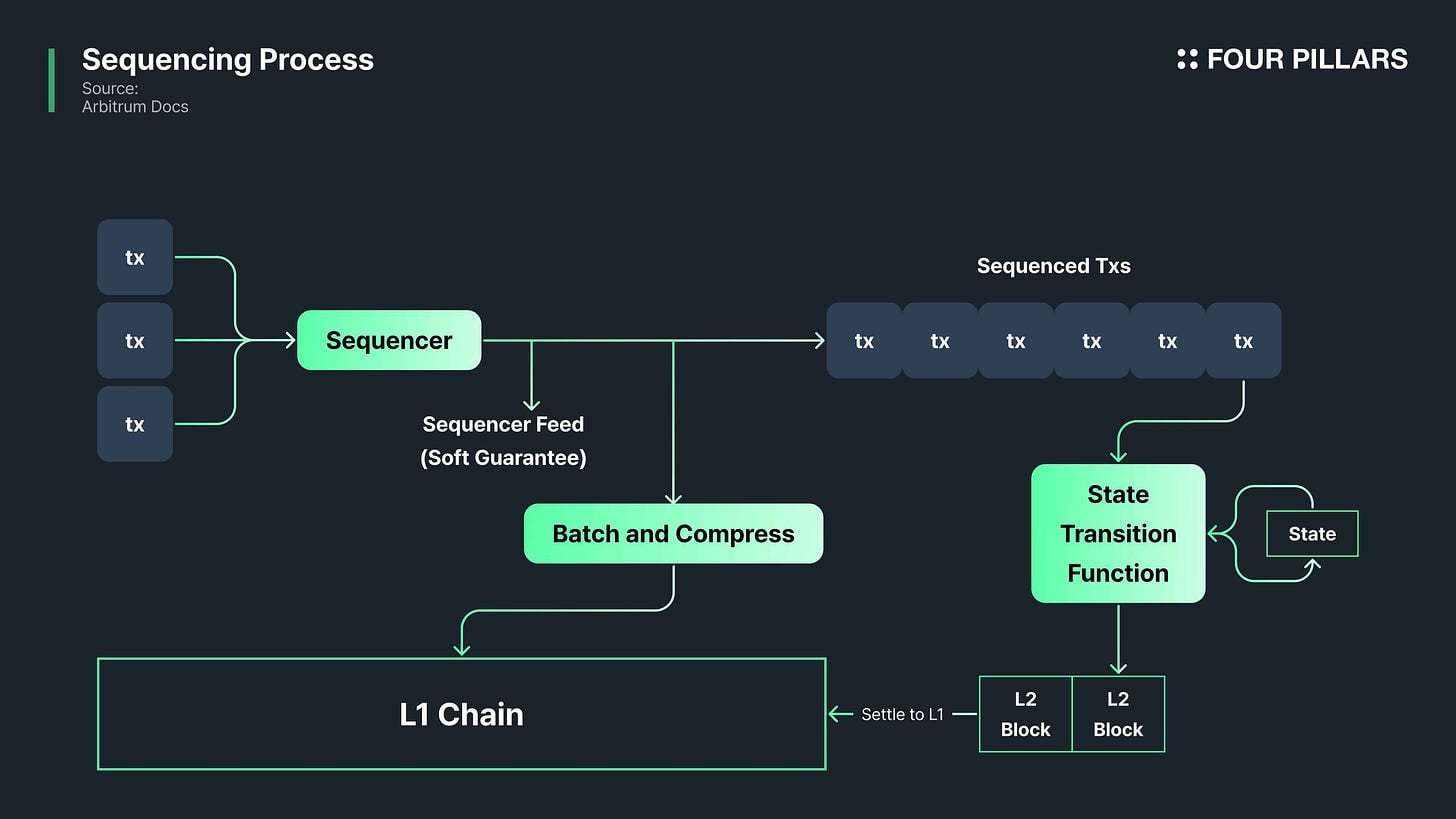
Check if the rollups are publishing data to L1 within the same time window. Shared sequencing requires synchronized batching; if one rollup lags by more than a few seconds, the aggregator cannot bundle transactions efficiently, causing latency spikes.
Look for transaction reordering or front-running patterns that span multiple chains. As noted in L2IV research, shared sequencing creates opportunities for value extraction that can delay legitimate user transactions if the sequencer prioritizes MEV over fairness.
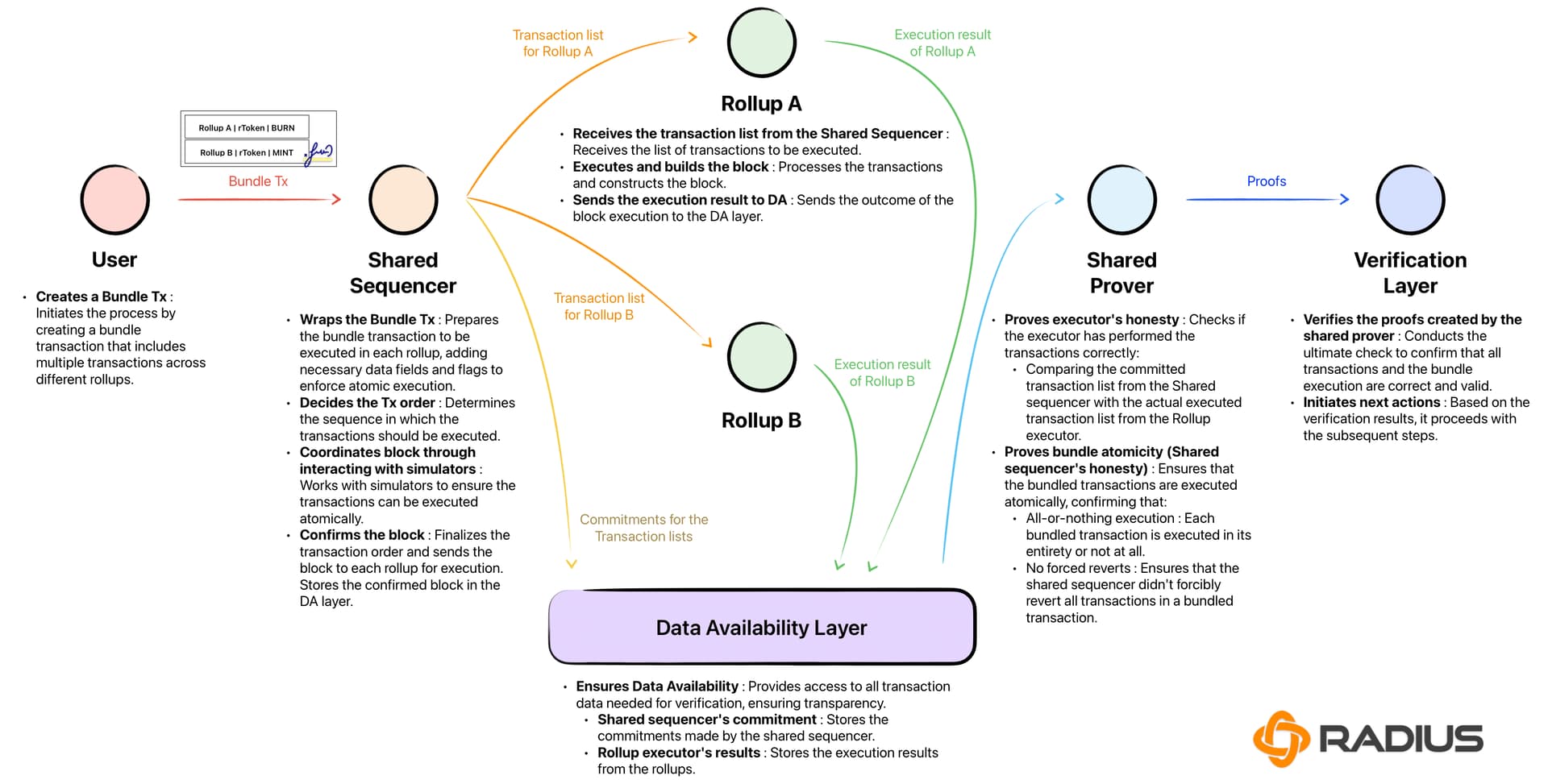
Confirm that inter-rollup messages are arriving at the destination chain within expected latency bounds. Delayed message delivery often indicates a bottleneck in the messaging layer rather than the sequencing logic itself.
What usually fixes it
When shared sequencing breaks down, the primary issue is typically a misalignment between how rollups batch transactions and how the sequencer orders them. This creates opportunities for cross-rollup MEV, where actors extract value by manipulating the order of transactions across different chains. Fixing this requires adjusting the sequencing logic to prioritize fairness and predictability over raw throughput.
Here are the most effective approaches to stabilize cross-rollup sequencing:
Implement strict ordering limits to account for
Force the sequencer to respect a global order for related transactions. If a user initiates a swap on Rollup A that depends on a liquidity provision on Rollup B, the sequencer must wait for both to be ready before including them in the same batch. This prevents front-running and ensures that cross-chain dependencies are met without arbitrary reordering.
Use a shared sequencer with transparent rules
Instead of relying on independent sequencers for each rollup, adopt a shared sequencing layer that applies the same rules to all connected chains. This reduces the attack surface for MEV bots by making the ordering process deterministic. Tools like the one described in L2IV Research demonstrate how shared sequencing can reduce strain when rules are clearly defined and enforced.
Integrate real-time data feeds
Sequencers need accurate, low-latency data from all connected rollups to make informed ordering decisions. Integrating reliable data feeds ensures that the sequencer has a consistent view of the state across chains. This prevents scenarios where one rollup’s sequencer acts on stale information, leading to invalid or conflicting transactions.
Monitor and adjust MEV resistance
Continuously monitor for MEV opportunities and adjust sequencing parameters to minimize them. This might involve tweaking batch sizes, adjusting gas prices, or implementing priority queues for time-sensitive transactions. Regular audits of the sequencing logic help identify and patch vulnerabilities before they are exploited.
By focusing on these concrete adjustments, you can significantly reduce the risk of cross-rollup sequencing failures and improve the reliability of multi-chain data aggregation.
Cross-rollup sequencing: what to check next
How does shared sequencing affect transaction ordering?
Shared sequencing coordinates multiple rollups to order a combined batch of transactions simultaneously. This allows for atomic execution across chains, meaning transactions from different rollups can be processed in a single, indivisible block. Without this coordination, transactions are ordered independently, making cross-chain atomicity impossible and increasing the window for arbitrage.
What is cross-rollup MEV?
Cross-rollup MEV arises when value can be extracted by sequencing transactions across different rollups. Unlike single-chain MEV, this involves non-atomic arbitrage opportunities between L2 blockchains. Researchers quantify this as significant potential profit for searchers who can exploit ordering differences between separate rollup environments.
Is shared sequencing decentralized?
Shared sequencing often relies on a decentralized network of nodes to order transactions across multiple rollups. This decentralization aims to prevent any single sequencer from censoring transactions or extracting excessive MEV. However, the degree of decentralization varies by implementation, with some systems still relying on trusted or semi-trusted operators.
What are the main challenges in 2026?
The primary challenge is balancing latency with finality. Synchronous atomic execution requires rollups to wait for confirmation from others, potentially increasing transaction times. Additionally, the complexity of coordinating state proofs across heterogeneous rollup stacks creates technical hurdles for developers building real-time analytics on cross-chain data.
Quick checklist
-
Match the sizeMake sure the cross-rollup sequencing option fits your household, storage space, and normal batch size.
-
Check the materialChoose a material that handles heat, washing, and regular use without becoming a chore.
-
Plan the cleanupAvoid anything that needs more maintenance than you are likely to give it.
-
Keep one fallbackHave a simple backup option for rushed days.
No comments yet. Be the first to share your thoughts!