
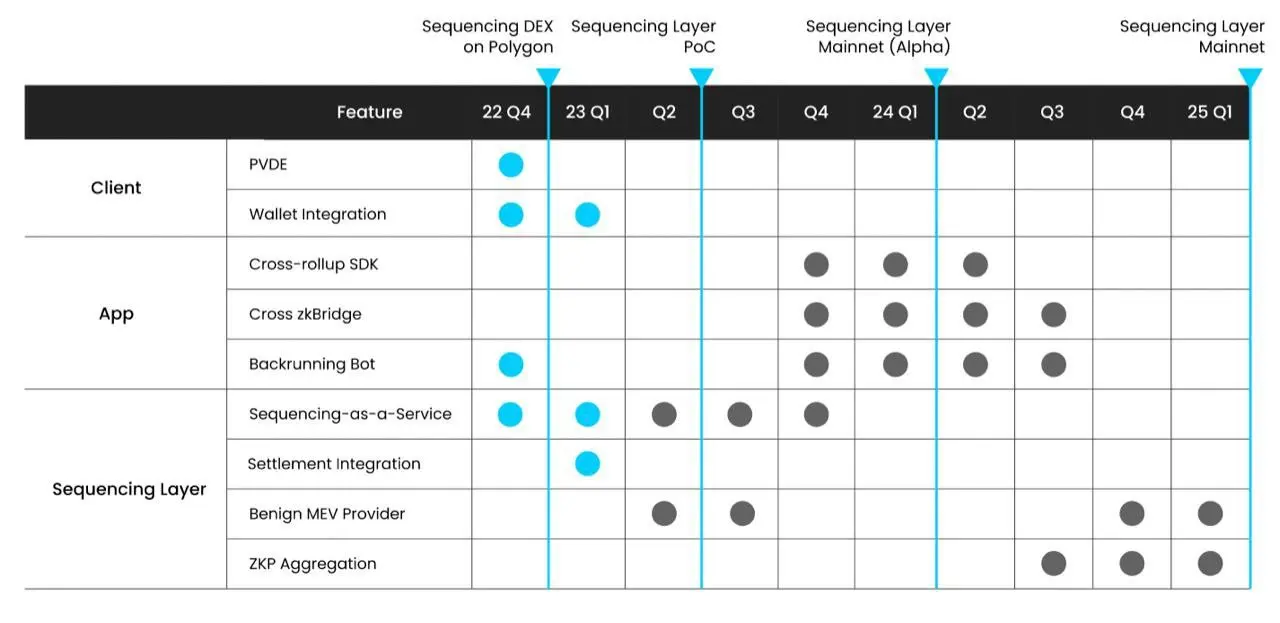
Cross-rollup sequencing budget
The sequencing budget defines the cost and latency tradeoffs when aggregating transactions across multiple rollups. Unlike a single-chain environment, cross-rollup sequencing introduces shared infrastructure costs and potential MEV (Maximal Extractable Value) risks. You must weigh the price of shared sequencing against the complexity of maintaining data consistency.
Shared Sequencing Costs
Shared sequencing layers, such as those proposed in recent Ethereum research, allow rollups to outsource ordering to a common service. This reduces individual rollup overhead but introduces a new variable: the fee paid to the shared sequencer. These fees fluctuate based on aggregate demand across all connected rollups, not just your own. Budget for this variable cost as a percentage of total transaction volume, rather than a fixed per-tx fee.
Latency and atomicity choices that change the plan
Atomic execution across rollups requires synchronous sequencing, which is significantly more expensive and slower than asynchronous processing. If your application prioritizes speed over strict atomicity, you may opt for a looser consistency model, reducing sequencing costs but increasing the risk of failed cross-chain states. For high-value DeFi operations, the higher cost of synchronous sequencing is often justified by the guarantee of atomicity. For lower-stakes transfers, asynchronous messaging with finality checks may offer a better cost-efficiency ratio.
MEV Exposure and Mitigation
Cross-rollup MEV is a critical budget item. When transactions are sequenced together, arbitrageurs can exploit price discrepancies between rollups. This "unsolved problem" of shared sequencing means that your effective throughput may be lower than expected due to MEV extraction. To mitigate this, consider using private ordering or batching strategies that obscure transaction intent, though these add complexity to your stack.
Choosing the Right Sequencer
Not all sequencers are created equal. Some offer low-latency ordering with weaker liveness guarantees, while others prioritize decentralization at the cost of speed. Evaluate sequencers based on their historical uptime, fee stability, and MEV protection mechanisms. A slightly more expensive sequencer that prevents front-running can save significant capital in volatile markets.


As an Amazon Associate, we may earn from qualifying purchases.
Key Takeaways
- Budget for variable fees: Shared sequencing costs scale with aggregate demand, not just your volume.
- Atomicity costs money: Synchronous execution is more expensive but ensures consistency.
- MEV is a real cost: Factor in potential value extraction when estimating net throughput.
- Choose sequencers carefully: Prioritize liveness and MEV protection over raw speed for high-value operations.
Cross-rollup sequencing options compared
Cross-rollup sequencing addresses the friction of moving value and data between Layer 2 networks. Without a shared ordering layer, transactions on different rollups execute in isolation, creating MEV opportunities and liquidity fragmentation. The following options represent the current architectural approaches to synchronizing this flow.
Shared Sequencer Networks
Shared sequencers are decentralized networks that order transactions across multiple rollups simultaneously. Rollups outsource this ordering to the network, which then posts the data to Ethereum. This approach reduces the overhead of maintaining independent sequencer sets while providing a unified view of cross-rollup activity. It is the most common path for projects seeking immediate interoperability without building their own infrastructure.
Sovereign Shared Sequencing
This model allows rollups to create their own shared sequencing layer as a service. By offering this as a standalone product, developers can customize the ordering rules to fit specific atomic execution needs. It provides greater control over the sequencing process compared to public shared networks, making it suitable for specialized DeFi protocols that require strict transaction ordering guarantees.
Decentralized Sequencing via Interchain Security
Launching a rollup with decentralized sequencing often involves gathering a set of independent sequencers and issuing a new token. This approach distributes trust but comes with high operational overhead. It is generally reserved for projects that prioritize security and decentralization over speed, leveraging existing interchain security frameworks to validate sequencing integrity.
Comparison of Sequencing Models
| Model | Control Level | Setup Complexity | Best Use Case |
|---|---|---|---|
| Shared Sequencer | Low (Network-managed) | Low | General interoperability |
| Sovereign Shared | High (Rollup-managed) | Medium | Atomic execution |
| Decentralized | Medium (Validator-set) | High | High-security DeFi |
RedditThread url="https://www.reddit.com/r/ethereum/comments/123456" title="Community discussion on shared sequencing" excerpt="Developers are actively debating the tradeoffs between shared sequencers and sovereign layers, with many noting that shared sequencing is the most practical path for 2026."
Inspect the expensive parts
Use this section to make the Cross-Rollup Sequencing Best Practices for decision easier to compare in real life, not just on paper. Start with the reader's actual constraint, then separate must-have requirements from details that are merely nice to have. A practical choice should survive normal use, maintenance, timing, and budget. If a recommendation only works in an ideal situation, call that out plainly and give the reader a fallback path.
-
Verify the basicsConfirm the core specs, condition, and fit before comparing extras.
-
Price the downsideLook for the repair, maintenance, or replacement cost that would change the decision.
-
Compare alternativesCheck at least two comparable options before treating one listing as the benchmark.
Plan for ownership costs
Use this section to make the Cross-Rollup Sequencing Best Practices for decision easier to compare in real life, not just on paper. Start with the reader's actual constraint, then separate must-have requirements from details that are merely nice to have. A practical choice should survive normal use, maintenance, timing, and budget. If a recommendation only works in an ideal situation, call that out plainly and give the reader a fallback path.
The simplest way to use this section is to write down the must-have criteria first, then compare each option against those criteria before weighing nice-to-have features.
Cross-rollup sequencing: what to check next
Before building or integrating with multi-chain liquidity, it helps to clear up how these components actually work. The terminology often overlaps, but the security models and execution paths are distinct.
No comments yet. Be the first to share your thoughts!