
Narrow Down the Problem
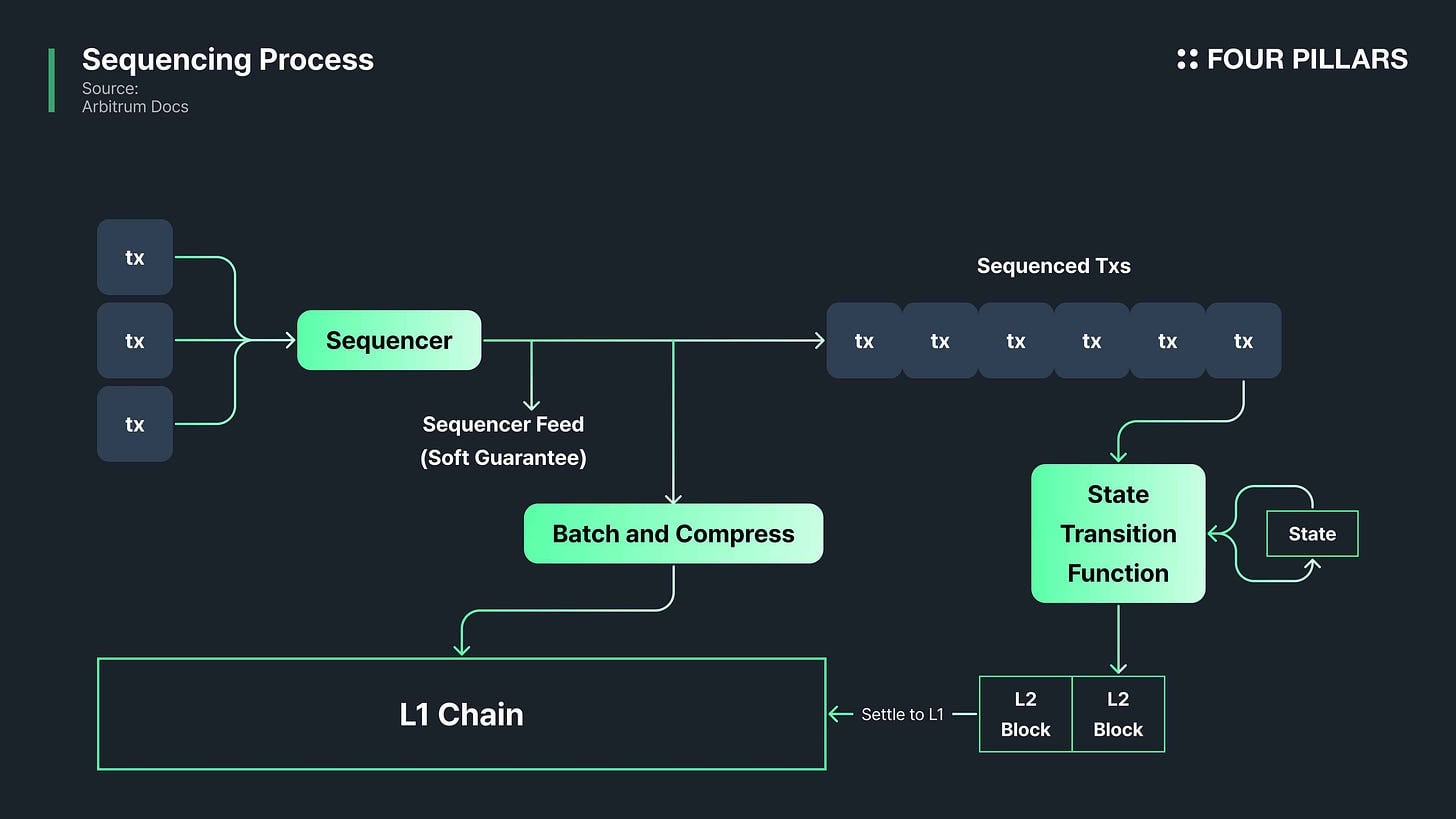
Cross-rollup sequencing sounds like a single infrastructure layer, but it actually masks several distinct failure modes. Before you adjust your routing logic or swap sequencers, identify which bottleneck is costing you. The symptoms differ depending on whether the issue lies in transaction ordering, liquidity fragmentation, or MEV extraction.
Shared Sequencing Latency When multiple rollups coordinate to batch transactions together, delays in one chain ripple across the others. If your swaps are timing out or failing to land within expected blocks, the shared sequencer is likely struggling with throughput. This is not a client-side network issue; it is a coordination bottleneck at the protocol level.
Cross-Rollup MEV Leakage MEV bots are increasingly targeting gaps between rollups. If you notice consistent slippage or front-running on specific pairs, extractors are likely arbitraging the delay between when a transaction leaves one chain and settles on another. This is distinct from latency; your transaction lands, but the price has moved.
Liquidity Fragmentation Sometimes the sequencer works fine, but the liquidity is not there. Cross-rollup protocols often split liquidity across multiple chains to reduce gas costs. If your large orders are suffering from poor price impact, the issue is not sequencing speed, but shallow order books on the specific rollup you are targeting.
Run these checks
Cross-rollup sequencing sounds like a unified pipeline, but in practice it is a fragile handoff between independent sequencers. When transactions from different rollups are batched together, the order matters. A single misaligned timestamp or failed bridge message can break the entire batch, leaving liquidity stranded or exposed to MEV extraction.
Use this diagnostic sequence to verify your multi-chain liquidity flow. Start with the highest-risk components first: bridge finality and sequencer alignment.
1. Verify Bridge Finality Windows
Before sequencing, confirm that the source rollup has finalized the transaction on the destination chain. Most shared sequencing protocols rely on optimistic bridges, which means there is a delay between submission and finality. If your sequencer assumes immediate finality, it may process transactions that are later reverted, causing state mismatches.
Check the current finality period for your target bridge. If it exceeds the sequencing window, you must introduce a buffer or use a bridge with faster finality. Never assume L2-to-L2 transfers are instant.
2. Check Sequencer Timestamp Alignment
Shared sequencing requires a common time reference. If Rollup A and Rollup B have clock drift, their batch ordering will diverge. This drift can cause arbitrage opportunities where one sequencer processes a trade before the other, even if the user submitted them simultaneously.
Compare the block timestamps of both sequencers for the last 100 blocks. If the drift exceeds 2-3 seconds, your shared sequencing batch will likely fail or be reordered incorrectly. Align your sequencer clocks using NTP or a shared oracle.
3. Audit Cross-Chain Message Gas Limits
When a transaction on Rollup A triggers an action on Rollup B, it consumes gas on both chains. If the gas limit is too low, the message will fail mid-batch, breaking the atomicity of the shared sequence.
Review the gas estimates for your most complex cross-rollup transactions. Add a 20% buffer to account for network congestion. Monitor the success rate of these messages; if failure rates exceed 1%, reduce your batch size or switch to a more reliable messaging layer.
4. Monitor MEV Extraction Vectors
Cross-rollup sequencing creates unique MEV opportunities. Bots can front-run transactions that span multiple chains by predicting the final state of the shared batch. If your sequencing protocol does not use encrypted mempools or commit-reveal schemes, you are vulnerable to value extraction.
Analyze your recent batch transactions for signs of MEV: unexpected price slippage or large, simultaneous trades from unknown wallets. If detected, implement transaction encryption or adjust your sequencing order to randomize the batch composition.
5. Test Rollback Procedures
Finally, ensure you have a tested rollback procedure. If a shared sequence fails partway through, you must be able to revert the state on both rollups without losing user funds. This requires a coordinated stop mechanism across all participating sequencers.
Run a simulated failure scenario. Intentionally break a message in a test environment and verify that the rollback completes within your acceptable downtime. If the rollback takes longer than 5 minutes, your system is not production-ready for shared sequencing.
What usually fixes it
The core issue in cross-rollup sequencing is that shared sequencers often struggle to handle the combined volume of transactions from multiple chains without introducing latency or leaving value on the table. When transactions from different rollups are batched together, the sequencer must order them to prevent cross-rollup MEV (Maximal Extractable Value) extraction, which can fragment liquidity and increase costs for users.
To address this, developers and protocols are adopting three primary strategies: dedicated cross-rollup sequencers, optimized batching logic, and hybrid ordering mechanisms.
Dedicated Cross-Rollup Sequencers
Some networks are moving away from shared sequencing infrastructure entirely for high-value cross-chain operations. By employing dedicated sequencers that understand the specific state transitions of both the source and destination rollups, protocols can ensure atomicity and reduce the window for MEV bots to arbitrage between chains. This approach is most effective for high-value DeFi protocols where latency and certainty are more critical than raw throughput. For example, a specialized sequencer can bundle a swap on Arbitrum and a deposit on Optimism into a single, verified transaction, eliminating the need for users to bridge assets manually.
Optimized Batching Logic
For high-throughput applications, optimizing how transactions are batched is often more practical than building new infrastructure. This involves grouping cross-rollup transactions by asset type, user address, or destination chain to minimize state conflicts and reduce computational overhead. By prioritizing batches that have a higher probability of successful execution, protocols can reduce the likelihood of failed transactions and the associated gas costs. This method works well for social or gaming apps where small, frequent transactions are the norm, and users are less sensitive to minor delays than to transaction failures.
Hybrid Ordering Mechanisms
A growing number of protocols are experimenting with hybrid ordering, which combines the benefits of shared sequencing for low-value transactions with dedicated sequencing for high-value ones. In this model, a shared sequencer handles the bulk of routine transactions, while a secondary, dedicated sequencer processes complex cross-rollup swaps or large deposits. This tiered approach allows protocols to maintain high throughput for everyday users while ensuring that high-value operations are executed with the necessary security and speed. It is particularly useful for decentralized exchanges that need to balance liquidity depth with execution quality.
-
Use dedicated sequencers for high-value DeFi swaps requiring atomicity.
-
Apply optimized batching for high-frequency, low-value social or gaming transactions.
-
Adopt hybrid ordering for exchanges needing both throughput and execution certainty.
Cross-rollup sequencing: what to check next
Cross-rollup sequencing is still evolving, and practical concerns about reliability and cost are common. Here are the most frequent questions about how it works and what to watch for in 2026.
Quick checklist
-
Match the sizeMake sure the cross-rollup sequencing option fits your household, storage space, and normal batch size.
-
Check the materialChoose a material that handles heat, washing, and regular use without becoming a chore.
-
Plan the cleanupAvoid anything that needs more maintenance than you are likely to give it.
-
Keep one fallbackHave a simple backup option for rushed days.
No comments yet. Be the first to share your thoughts!