What cross-rollup sequencing is
Cross-rollup sequencing is a Layer 2 architecture where a single sequencer orders transactions across multiple independent rollups. This shared ordering layer enables atomic execution and composability between chains that would otherwise be isolated. It solves the fragmentation problem by treating multiple rollups as a single, unified state machine for transaction ordering.
Shared sequencers vs independent nodes
Cross-rollup sequencing primarily relies on two architectural models: shared sequencers and independent nodes. The choice between these models defines how transactions are ordered and how different rollups interact with each other. This decision impacts latency, cost, and the ability to execute atomic operations across chains.
Shared sequencers
A shared sequencer acts as a central ordering layer for multiple rollups. Instead of each rollup maintaining its own isolated sequencer, multiple chains submit their transactions to a single shared entity. This entity provides a global ordering of transactions, allowing different rollups to see each other's state changes in real time.
The primary advantage of this model is cross-rollup atomicity. Because all transactions pass through the same ordering engine, a user can interact with multiple rollups in a single batch. This enables seamless cross-chain swaps and transfers without relying on slow, asynchronous messaging bridges. It effectively turns fragmented L2 ecosystems into a unified network.
Independent nodes
Independent sequencers operate in isolation. Each rollup maintains its own sequencer, which orders transactions solely for that specific chain. There is no inherent global ordering between different rollups. Cross-chain communication must rely on secondary messaging layers, such as optimistic bridges or interoperability protocols like CCTP.
This approach prioritizes decentralization and sovereignty. Rollup operators retain full control over their sequencing infrastructure, reducing reliance on third-party providers. However, this isolation introduces latency for cross-rollup interactions. Users must wait for message proofs to be verified across chains before completing cross-chain actions, which can feel sluggish compared to shared sequencing.
Comparison: Shared vs. Independent
The table below outlines the core differences between shared and independent sequencing models.
| Metric | Shared Sequencer | Independent Node |
|---|---|---|
| Atomicity | Native cross-rollup atomicity | Requires cross-chain messaging |
| Latency | Low (single batch) | Higher (message verification delays) |
| Cost | Lower (aggregated proofs) | Higher (per-rollup overhead) |
| Decentralization | Centralized ordering layer | Fully decentralized per chain |
| Complexity | Simpler user experience | Complex bridge integration |
Synchronous atomic execution explained
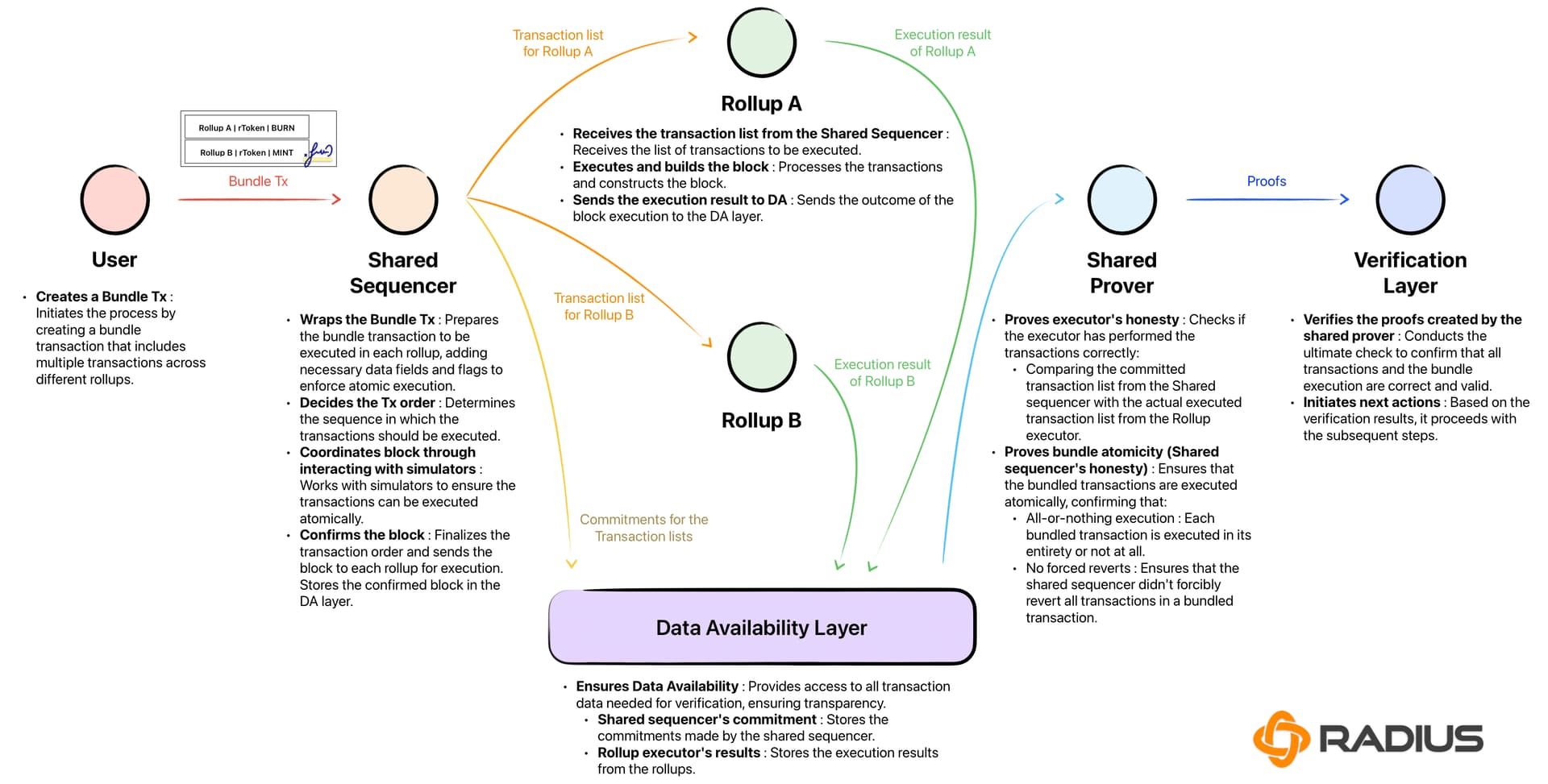
Synchronous atomic execution is the mechanism that allows cross-rollup sequencing to function as a single, unified event. In a shared sequencing model, a central coordinator orders transactions from multiple independent rollups. This coordination ensures that dependent actions across different chains are processed together in the same batch or epoch.
Without this synchronization, cross-rollup interactions would be asynchronous. A user might send a transaction on Rollup A, wait for confirmation, and then submit a follow-up transaction on Rollup B. This creates latency and breaks composability. Synchronous atomic execution removes these delays by treating the distributed transactions as one cohesive unit.
The shared sequencer receives pending transactions from various rollups, orders them based on strict criteria, and packages them into a single block. This block is then distributed to the respective rollups for execution. Because the ordering is centralized, the state changes on all involved rollups happen simultaneously.
This approach mirrors the atomicity found in traditional databases. Either the entire cross-rollup transaction succeeds, or it fails entirely. There is no middle ground where one rollup updates its state while another remains unchanged. This guarantees consistency and prevents the partial state updates that often plague asynchronous cross-chain bridges.
The result is a seamless user experience. From the user's perspective, interacting across different rollups feels like interacting with a single chain. They do not need to manage separate signatures or wait for disparate confirmations. The shared sequencer handles the complexity, allowing developers to build complex, multi-chain applications that rely on instant, atomic state transitions.
How cross-rollup sequencing cuts costs
Cross-rollup sequencing transforms how Layer 2 networks handle data. Instead of each rollup paying for its own separate block space on the base layer, multiple rollups share sequencer slots. This shared infrastructure allows transactions from different chains to be bundled together. The result is a significant reduction in the cost of data availability and proof generation.
When rollups operate independently, each must submit its own zero-knowledge proof or optimistic fraud proof to Ethereum. These proofs are expensive to generate and post. By aggregating proofs across several rollups, the fixed cost of proof submission is split among many users. This means each individual transaction carries a much smaller share of the overhead. The shared sequencer acts as a single point of entry, compressing data before it hits the mainnet.
This model is particularly effective for optimistic rollups, which rely on batching transactions to save space. When multiple rollups share a sequencer, their batches can be combined into a single, larger submission. This reduces the per-transaction fee for users while maintaining the security guarantees of the underlying blockchain. The efficiency gain comes from the fact that proof aggregation costs do not scale linearly with the number of transactions.
The economic advantage extends beyond simple gas fees. Shared sequencing reduces the complexity of cross-rollup messaging. When a message needs to move from one rollup to another, the shared sequencer can process the initiation and execution in a coordinated manner. This eliminates the need for expensive bridge contracts and separate settlement layers for every interaction. The network becomes more efficient, and users pay less for every transfer.
When to choose shared sequencing
Shared sequencing is the right choice when your application prioritizes composability over sovereignty. If your cross-rollup dApp requires real-time interaction between users on different chains, a shared sequencer provides the common ordering layer necessary for atomic operations. This architecture replaces isolated sequencing domains with a single stream, allowing transactions to be processed in a unified sequence.
Choose this model if your primary goal is seamless asset bridging or complex multi-chain swaps. By relying on a shared infrastructure, you avoid the latency and complexity of asynchronous message passing. However, this comes at the cost of centralized trust in the sequencer operator. If your protocol demands total independence from third-party ordering services, independent sequencing remains the safer, albeit more complex, path.
Common questions about cross-rollup sequencing
How does cross-rollup sequencing differ from traditional bridging?
Traditional bridging relies on lock-and-mint or burn-and-mint mechanisms that require separate transactions on source and destination chains, often involving waiting periods for fraud proofs or message verification. Cross-rollup sequencing uses a shared sequencer to order transactions across rollups atomically. This allows state changes on multiple chains to occur in a single batch, eliminating the need for separate bridge transactions and reducing latency from minutes to seconds.
What are the security risks of using a shared sequencer?
The primary risk is centralization. A shared sequencer controls the ordering of transactions, which means it could theoretically reorder, censor, or front-run transactions if not properly constrained. To mitigate this, many shared sequencer implementations use decentralized networks of nodes or cryptographic commitments that allow rollup operators to detect and challenge malicious ordering behavior. Users must trust the sequencer operator's honesty and the underlying verification mechanisms.
Can independent rollups use cross-rollup sequencing?
Yes, but it requires architectural changes. Independent rollups typically have their own sequencers. To participate in cross-rollup sequencing, they must integrate with a shared ordering layer. This often involves modifying the rollup's transaction submission process to route orders through the shared sequencer rather than its own internal ordering engine. This integration allows independent rollups to benefit from atomic execution while maintaining their own execution environments.
No comments yet. Be the first to share your thoughts!