
Ethereum's Layer 2 rollups have scaled transactions impressively, yet their independent sequencers create silos that hinder true scalability. As ETH holds steady at $1,972.18, reflecting a modest 24-hour gain of and $6.25 or and 0.32%, the market eyes solutions like cross-rollup sequencing. This innovation promises unified rollup transaction ordering, slashing latency and unlocking fluid Ethereum rollup interoperability. Investors like me, with a focus on enduring infrastructure, see it as a foundational shift amid rising cross-rollup MEV pressures projected for 2026.
Fragmented sequencing means each rollup- Arbitrum, Optimism, Base, or ZKsync- manages its own transaction queue. This setup fosters inefficiencies: atomic cross-rollup trades falter, liquidity splinters, and searchers exploit ordering discrepancies for MEV. Recent analyses highlight cross-rollup MEV as the 'unsolved problem of shared sequencing, ' with independent rollups enabling manipulative reordering across chains. Developers face hurdles in building composable dApps, while users endure delays in multi-rollup interactions.
The Fragmentation Challenge in Rollup Ecosystems
Consider a DeFi trader swapping on Optimism then bridging to Arbitrum. Without synchronized ordering, transactions risk front-running or sandwich attacks spanning rollups. Studies on EVM-compatible rollups reveal rampant reverted transactions due to these misalignments, eroding trust and efficiency. Centralized sequencers exacerbate risks of censorship and liveness failures, as seen in critiques labeling Ethereum rollups as overly centralized. With ETH at $1,972.18, such friction caps L2 adoption, stalling the network's path to mass scalability.
Cross-rollup MEV opportunities arise precisely because rollups order transactions independently, turning interoperability into a vulnerability.
Proponents argue independent sequencers preserve sovereignty, but strategically, this shortsightedness ignores the network effects of unification. Rollup operators capture MEV locally, yet forego broader extraction, while users pay the latency tax.

Shared Sequencers: Coordinating the Chaos
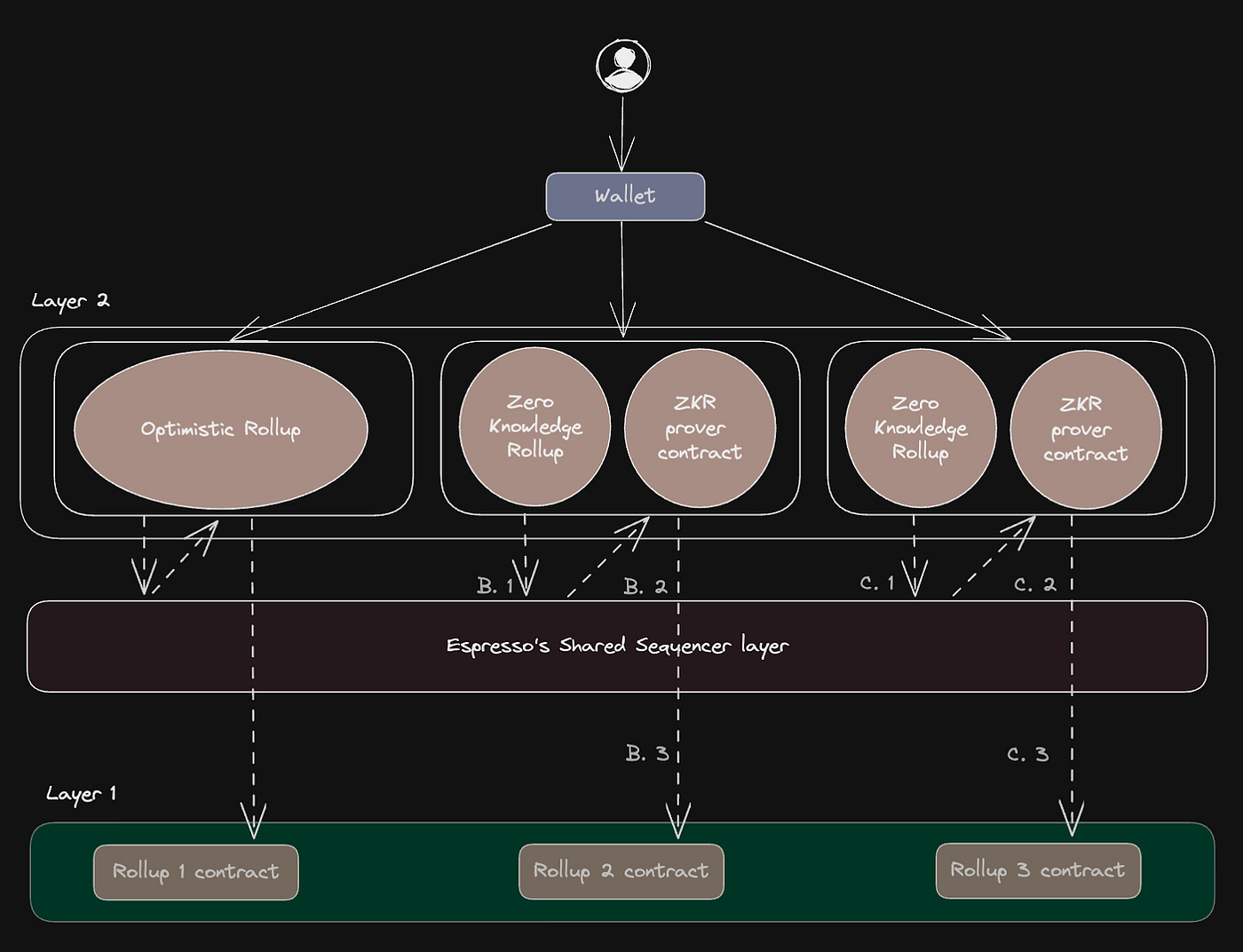
Shared sequencer ethereum networks flip the script by aggregating transactions from multiple rollups into a single, decentralized ordering layer. Projects like Astria and Espresso Systems pioneer this: Astria's network orders without execution, feeding rollups consistent blocks. Espresso emphasizes atomicity and composability, reducing the complexity developers dread. These rollup-agnostic systems ensure synchronous visibility, where a transaction's state updates propagate instantly across participants.
Mechanically, a shared sequencer collects batches, applies fair ordering- often via time-based or proposer-builder models- and broadcasts. Rollups then execute in lockstep. This curbs cross-rollup MEV, as unified queues neutralize inter-rollup arbitrage. For instance, shared sequencers enable atomic cross-rollup trades in OP Stack ecosystems, a boon for Superchain visions.
Reducing Latency Through Unified Ordering
To reduce rollup latency, shared sequencing cuts propagation delays from seconds to milliseconds. Traditional setups ping-pong inclusion requests; unified ones streamline via a common membrane. Based rollups take it further, leveraging Ethereum L1 proposers for sequencing, inheriting decentralization without new networks. This 'based' approach minimizes redundancy, boosting liveness and slashing costs.
Strategic upside? Enhanced MEV capture rollups via shared extraction, where sequencers auction bundles across L2s, redistributing value fairly. Operators gain multi-L2 fees, fostering sustainable economics. As interoperability stacks evolve, shared sequencers position themselves upstream, capturing first-mover MEV dibs.
Ethereum (ETH) Price Prediction 2027-2032
Predictions factoring cross-rollup sequencing adoption, shared sequencers, and Ethereum L2 scalability gains amid 2026 market conditions (current ETH price: $1,972)
| Year | Minimum Price | Average Price | Maximum Price | Avg YoY Change % |
|---|---|---|---|---|
| 2027 | $2,800 | $4,200 | $6,500 | +110% |
| 2028 | $3,500 | $6,300 | $10,000 | +50% |
| 2029 | $4,500 | $9,500 | $15,000 | +51% |
| 2030 | $6,000 | $14,000 | $22,000 | +47% |
| 2031 | $8,000 | $20,000 | $32,000 | +43% |
| 2032 | $10,000 | $28,000 | $45,000 | +40% |
Price Prediction Summary
Ethereum (ETH) is forecasted to experience robust growth from 2027-2032, propelled by cross-rollup sequencing innovations like shared sequencers (Espresso, Astria) and based rollups, which enhance interoperability, reduce MEV/latency, and drive L2 adoption. Average prices could surge 14x to $28,000 by 2032 in bullish scenarios, with mins reflecting bearish cycles and maxes capturing high scalability uptake.
Key Factors Affecting Ethereum Price
- Adoption of shared sequencers for unified transaction ordering and cross-rollup atomicity
- Reduced cross-rollup MEV, censorship risks, and latency boosting user/developer experience
- Surge in L2 TVL and tx volume increasing ETH burn via fees
- Bullish market cycles aligned with Ethereum upgrades and macro trends
- Regulatory clarity favoring L2 scaling and decentralization
- Competition from Solana mitigated by Ethereum's security and ecosystem dominance
- Potential bearish pressures from global economics or delayed tech rollouts
Disclaimer: Cryptocurrency price predictions are speculative and based on current market analysis. Actual prices may vary significantly due to market volatility, regulatory changes, and other factors. Always do your own research before making investment decisions.
Critics note risks- sequencer centralization or liveness dependencies- but decentralized designs like Espresso's mitigate them. In my view, betting on these foundations endures cycles, much like commodities infrastructure weathers volatility.
Practical implementations underscore this potential. Astria's Shared Sequencer Network acts as a modular blockchain dedicated to aggregation and rollup transaction ordering, sidestepping execution to focus purely on fairness. It charges rollups for sequencing services, creating a revenue model that incentivizes decentralization. Espresso Systems complements this with its lightweight sequencer, prioritizing ethereum rollup interoperability through verifiable randomness and rapid finality. Both tackle the liveness pitfalls of solo sequencers, where downtime cascades across ecosystems.
Based Rollups: Leveraging Ethereum's Core for Sequencing
Enter based rollups, a pragmatic evolution that outsources sequencing to Ethereum's L1 proposer network. No bespoke infrastructure needed; rollups simply 'base' their ordering on L1 blocks, inheriting the chain's robust decentralization. This slashes overhead, aligns incentives with validators, and accelerates pre-confirmations. Projects like Taiko pioneer this, proving rollups can thrive without proprietary sequencers. The result? Inherent resistance to censorship and a unified front against cross-rollup MEV, where manipulators lose their edge in disjointed queues.
Quantitatively, these shifts matter. Analyses of rollups like Arbitrum and Optimism show reverted transactions plaguing fast-finality chains, often from ordering mismatches. Unified sequencing drops these rates, preserving gas fees and user capital. With ETH steady at $1,972.18, up $6.25 or 0.32% over 24 hours (high $1,994.49, low $1,956.43), infrastructure bets like these stabilize amid volatility.
MEV Redistribution: Fairer Value Flows
MEV capture rollups transforms under shared regimes. Searchers submit cross-rollup bundles to the sequencer, which auctions them transparently. Sequencers pocket a cut, then redistribute via staking rewards or L2 subsidies. This democratizes extraction, curtailing the 'unsolved problem' status of cross-rollup MEV forecasted for 2026. Operators benefit from diversified income, as multiple rollups fund the network, echoing commodity pipelines that thrive on volume over spot prices.
Key Advantages of Shared Sequencers
- Millisecond Latency Cuts: Unifies transaction ordering to slash cross-rollup latency to milliseconds, boosting efficiency in high-throughput environments.
- Decentralized Liveness: Provides robust, decentralized sequencing networks that enhance availability and resist censorship, as seen in shared sequencer designs.
- MEV Auctions for Fairness: Introduces fair MEV auctions to mitigate cross-rollup extraction, solving a key pain point highlighted in 2026 analyses.
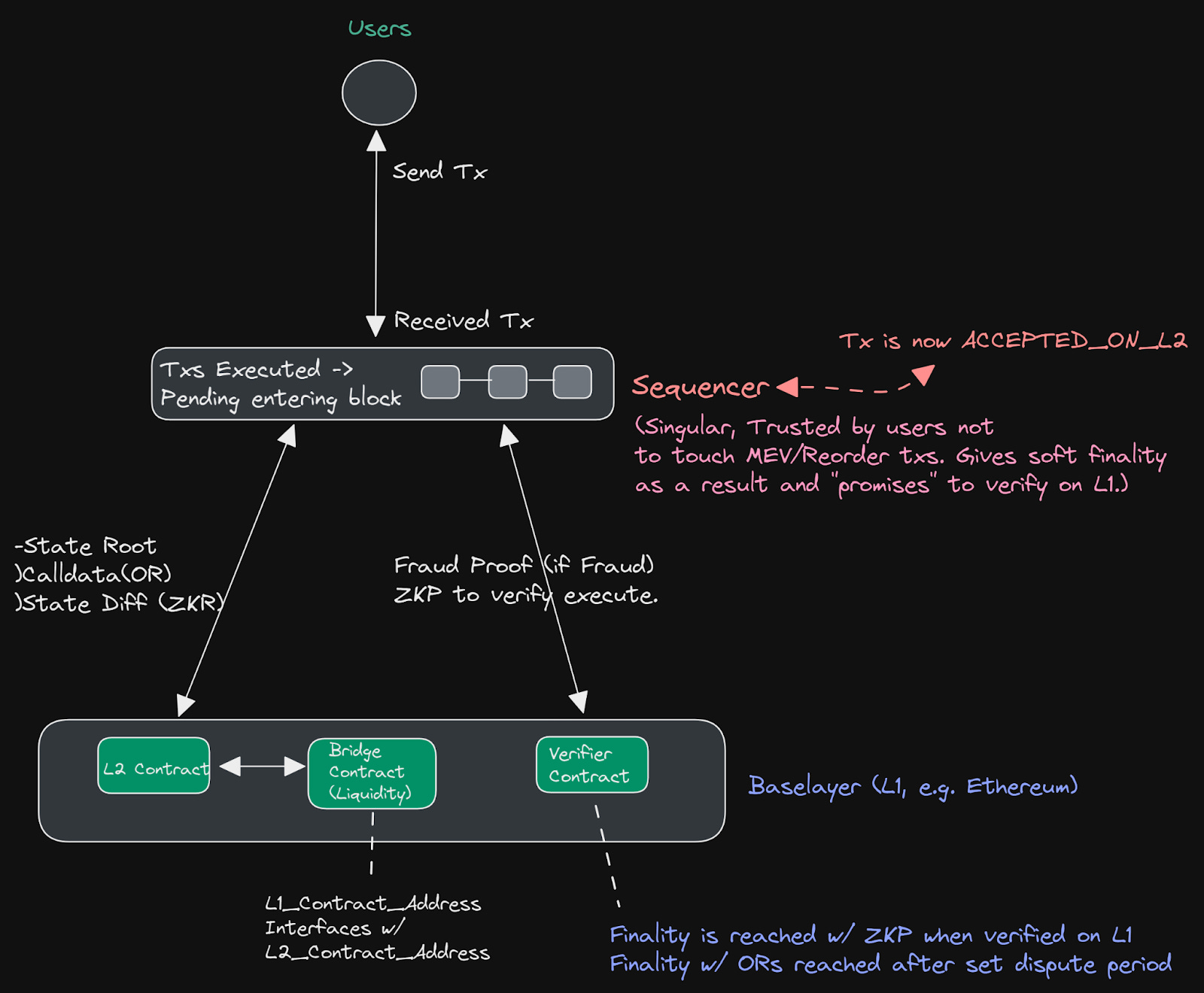
- Multi-L2 Revenue Streams: Sequencers earn from multiple rollups, creating sustainable economics while fostering interoperability among L2s.

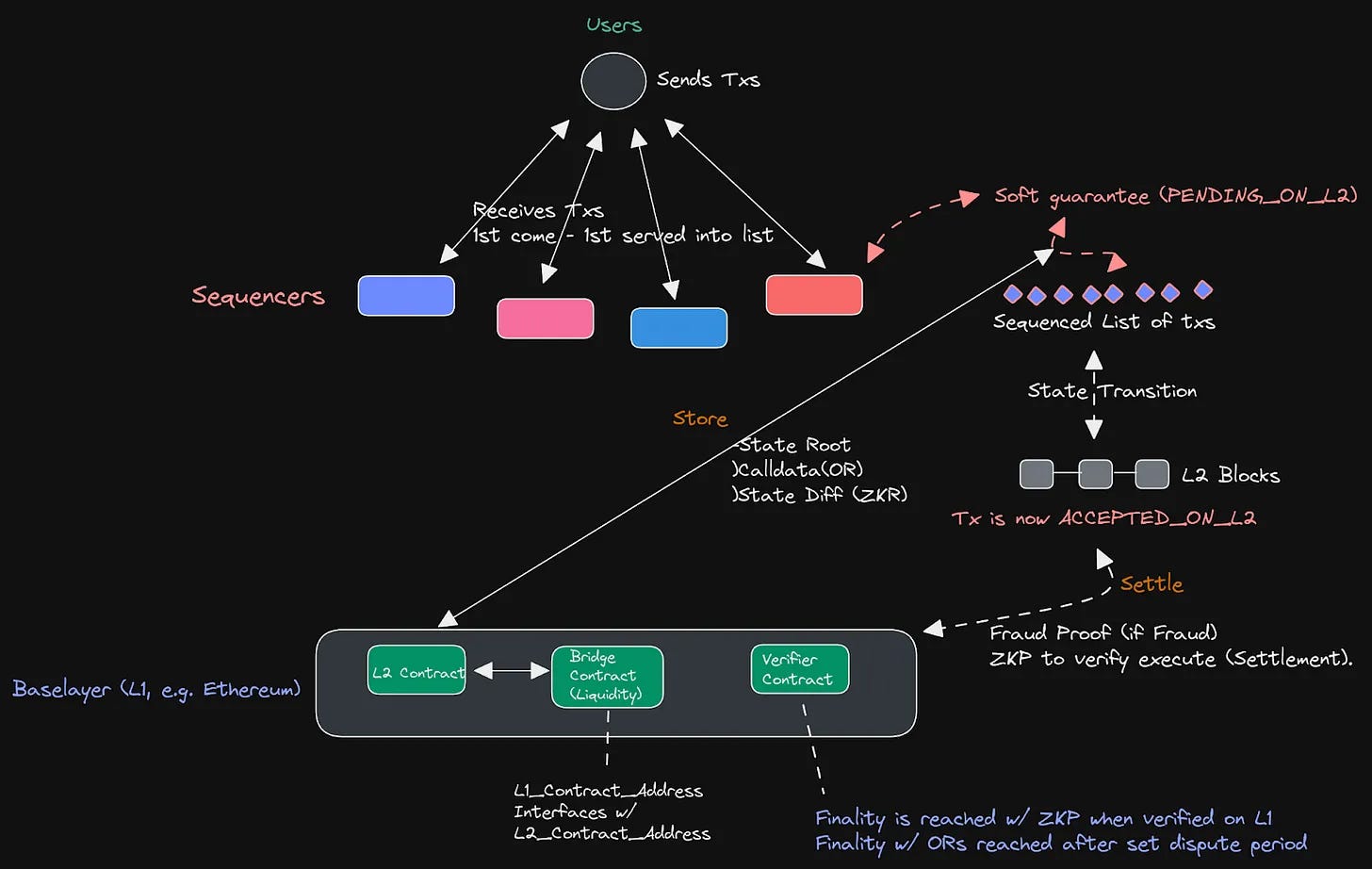
Shared sequencers do not just coordinate; they rewire incentives, turning fragmentation into collective strength.
Challenges persist, of course. Adoption hinges on rollup opt-in, and network effects demand critical mass. Yet, as Superchain and OP Stack mature, momentum builds. Strategic operators will migrate early, capturing interoperability premiums in a mesh of L2s. For investors, this mirrors macro trends: infrastructure underpins cycles, whether oil rigs or sequencing layers.
Looking ahead, cross-rollup sequencing cements Ethereum's modular future. With projects like Espresso confirming mainnet trajectories and based designs gaining validators' buy-in, latency barriers crumble. Users gain seamless dApps spanning ZKsync to Base, developers unlock composability without bridges, and the network scales toward true sovereignty. At $1,972.18, ETH reflects quiet confidence in these foundations, poised for the interoperability surge.




No comments yet. Be the first to share your thoughts!