Why rollups need shared sequencing
Isolated sequencers are the root cause of cross-rollup fragmentation. Each rollup operates its own ordering engine, creating silos where liquidity cannot flow freely and transaction order is opaque to external actors. This architecture enables cross-rollup MEV, a sophisticated form of value extraction that thrives on the lack of coordination between different L2 networks.
In 2026, this fragmentation is no longer just an efficiency issue; it is a structural vulnerability. As cross-rollup applications become standard, users expect atomic execution—where a single action spans multiple chains without intermediate states that can be exploited. Without shared sequencing, these applications remain fragile, relying on brittle bridge mechanisms rather than native composability.
The tipping point for shared infrastructure has arrived because the cost of building parallel, isolated ordering layers now outweighs the benefits of independence. Developers are shifting toward models where a single sequencer or coordinated group of sequencers manages order flow across multiple rollups. This approach eliminates the latency arbitrage opportunities that currently fuel cross-rollup MEV, ensuring that transaction ordering is consistent, transparent, and secure across the entire L2 ecosystem.
Top shared sequencing architectures
Fragmented liquidity and poor cross-rollup UX stem from isolated transaction orderings. Shared sequencing solves this by decoupling the fast-ordering engine from the execution layer. In 2026, three primary models dominate the infrastructure landscape: decentralized networks, sequencing-as-a-service, and L1-based ordering.
Decentralized Shared Sequencers
Platforms like Espresso System operate a dedicated network of nodes that provide global transaction ordering across multiple rollups. Each rollup reads from this shared sequencer, which establishes a single, consistent timeline for all transactions. This approach reduces the complexity of cross-rollup swaps and ensures that atomic execution happens without users bridging assets manually. The security model relies on the distributed nature of the sequencer network rather than a single operator.
Sequencing-as-a-Service
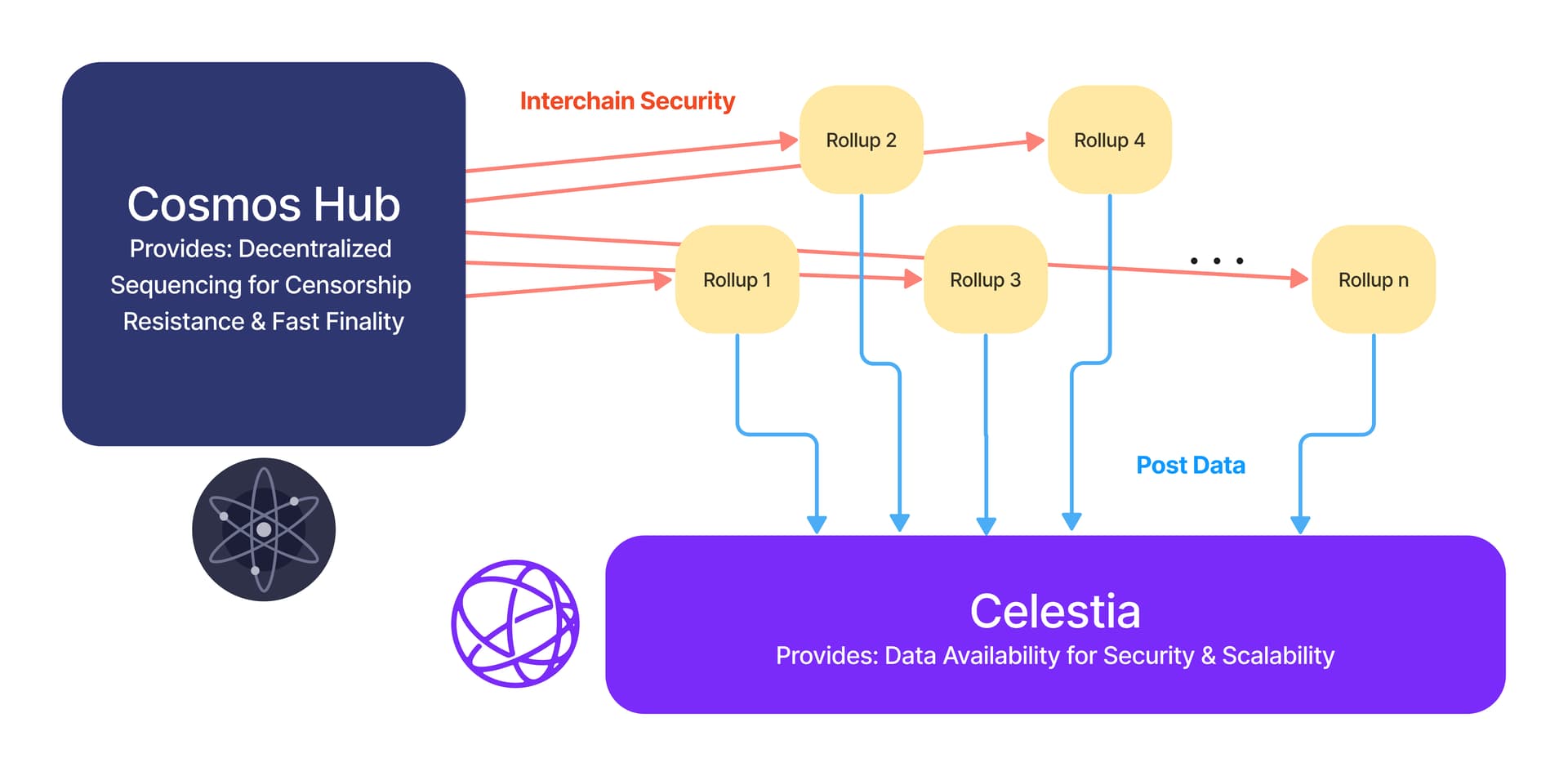
Celestia offers a modular alternative by providing sequencing infrastructure that can be plugged into various rollups. This model treats sequencing as a standalone service, allowing rollups to focus on execution and data availability while outsourcing the ordering process. While this lowers the barrier to entry for launching new rollups, it requires careful coordination to ensure that the sequencing layer remains aligned with the rollup's specific data requirements and security assumptions.
L1-Based Sequencing
Based rollups, also known as L1-sequenced rollups, drive sequencing directly through Layer 1 Ethereum. In this architecture, the L1 acts as the primary sequencer, providing pre-confirmations and immediate ordering guarantees. This method leverages the existing security and decentralization of Ethereum, eliminating the need for separate sequencer networks. It is particularly effective for applications that prioritize finality and security over the extreme low-latency benefits of dedicated shared sequencers.
Comparison of Sequencing Models
The following table compares the core technical attributes of each approach.
| Model | Latency | Decentralization | Cost |
|---|---|---|---|
| Decentralized Network | Low | High | Medium |
| Sequencing-as-a-Service | Medium | Medium | Low |
| L1-Based | High | Very High | High |
Real-world cross-rollup MEV cases
Cross-rollup MEV arises when the fragmented nature of Layer 2 ecosystems creates price discrepancies that sophisticated bots can exploit. Unlike single-chain arbitrage, these opportunities require coordinating transactions across distinct rollups, each with its own sequencer and order book. When a trade occurs on one rollup, the price impact often lags on others, creating a window for value extraction that disrupts fair market access.
A common pattern involves a large swap on Rollup A that temporarily distorts the price of an asset. Bots monitor this event and immediately front-run or back-run the corresponding liquidity pool on Rollup B before the price syncs. This arbitrage is only profitable because the rollups do not share a unified sequencing view. The lack of atomic execution across chains means that what should be a simultaneous price discovery process becomes a sequential race, where speed advantages translate directly to user losses.
Shared sequencing mitigates this by providing a global ordering service. When a single sequencer handles transactions for multiple rollups, it can detect cross-rollup dependencies in real-time. This allows for atomic execution, ensuring that arbitrage opportunities are either captured fairly or neutralized based on a unified state, rather than being exploited through latency gaps between isolated chains.
Atomic execution across chains
Synchronous atomic execution allows a user to swap or bridge assets across multiple rollups in a single transaction. Instead of relying on asynchronous bridges that require waiting for fault proofs or finality windows, this approach treats cross-rollup transactions as a single, indivisible unit. If any part of the sequence fails, the entire transaction reverts, eliminating the risk of stuck funds or partial states.
The mechanism relies on shared sequencers that order transactions from different rollups in a global timeline. By coordinating the sequencers, the network can ensure that a deposit on Rollup A and a withdrawal on Rollup B are processed in the same atomic block. This creates a "shared memory" space where state updates on one chain are immediately visible to others without intermediate settlement steps.
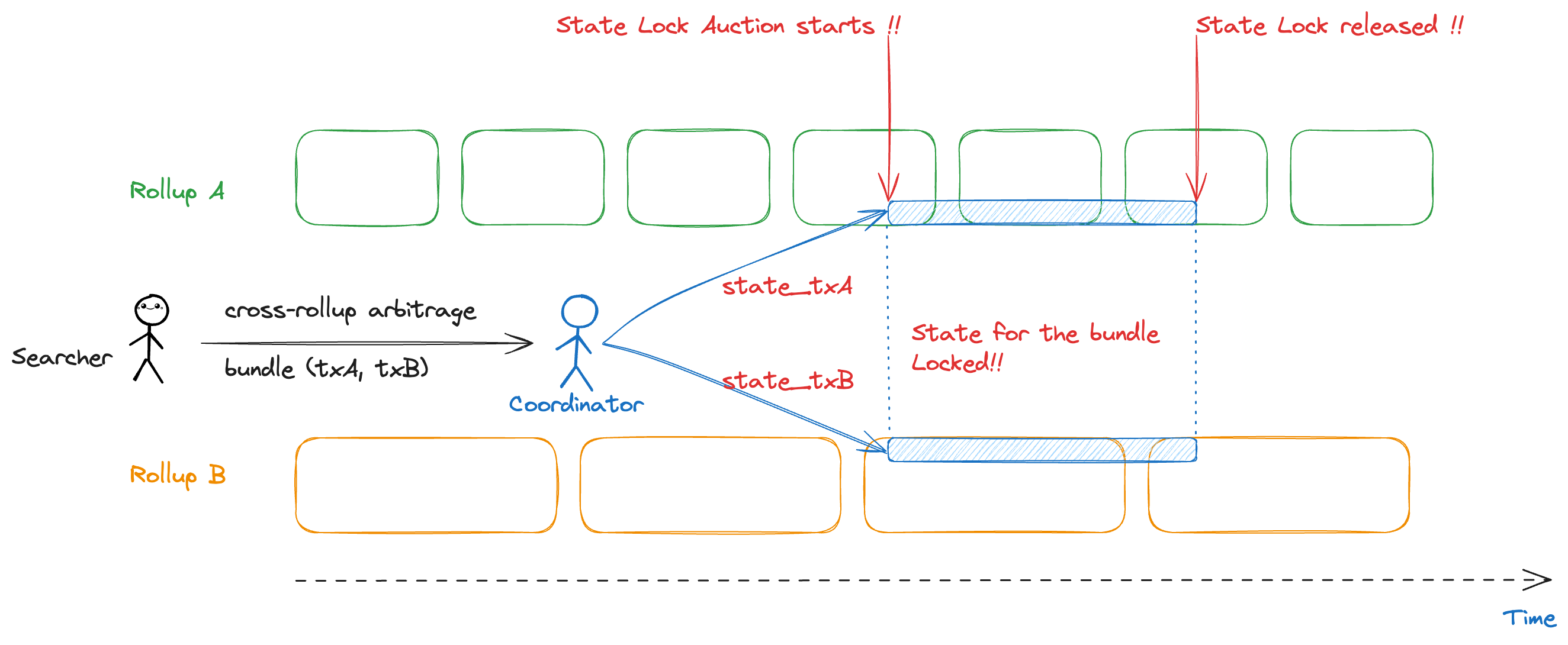
This synchronous model removes the need for trust in third-party bridge operators. As highlighted in recent research on CRATE, the goal is to allow a user to execute a sequence of transactions spanning multiple rollups as if they were on a single chain.
The goal is to allow a user to execute a sequence of transactions spanning multiple rollups ...— CRATE Research
By treating cross-rollup interactions as atomic, developers can build complex DeFi strategies that leverage liquidity across fragmented ecosystems without the friction of multi-step bridging. This shifts the paradigm from "moving assets" to "composing across chains."
Community views on sequencing standards
The push for standardized cross-rollup sequencing has moved from theoretical debate to urgent infrastructure planning. Developers on Ethresear.ch are increasingly focused on shared sequencer models that offer synchronous atomic execution, allowing different rollups to settle transactions in a single, verifiable step rather than relying on fragmented, sequential bridges.
We will enable rollups to create their own shared sequencing layer, offering this as a service to make it widely accessible.— Ethresear.ch Thread
However, the path to decentralization remains fraught with economic hurdles. Forum discussions highlight that launching a truly decentralized sequencing service requires gathering a trusted set of sequencers and issuing new tokens, creating high overhead that many teams are hesitant to adopt. The consensus is clear: while shared sequencing is the only viable path to solving L2 fragmentation in 2026, the incentive structures for sequencers must be solved before widespread adoption can occur.
Sequencing FAQ for L2 users
Understanding the mechanics of cross-rollup sequencing requires distinguishing between core infrastructure components and user-facing outcomes. The following questions address the specific roles of sequencers, the architectural differences between scaling solutions, and the protocols enabling atomic cross-chain execution.
These mechanisms form the backbone of 2026 infrastructure, where shared sequencers and atomic execution replace fragmented, siloed networks. For further reading on sequencer architecture, refer to Chainlink's technical overview.
No comments yet. Be the first to share your thoughts!