The Fragmentation Problem in L2s
Layer 2 rollups were built to scale Ethereum, but they have inadvertently created isolated liquidity silos. Each rollup operates with its own sequencer, treating transaction ordering as a proprietary engine rather than a shared public good. This isolation is not merely an inconvenience; it is a structural vulnerability that enables cross-rollup MEV (Maximal Extractable Value). When transactions on different chains interact—such as a swap on Arbitrum followed by a bridge transfer to Optimism—the lack of a unified sequencing layer creates arbitrage windows that centralized actors can exploit.
The core issue lies in the sequencer's role. As the fast-ordering engine of a rollup, the sequencer decides the precise order of transactions. In an isolated environment, this power is localized. However, when users and protocols operate across multiple L2s, the fragmented nature of these sequencers allows sophisticated bots to front-run or reorder cross-chain actions. This is cross-rollup MEV: value extraction that arises specifically because transactions across different rollups can be profitably manipulated by centralized or semi-centralized actors who can see the full picture across silos.
This fragmentation undermines the economic security of the broader Ethereum ecosystem. It forces users to pay higher slippage and fees to account for potential manipulation, effectively taxing interoperability. The current architecture treats each rollup as a fortress, but in a multi-chain world, these fortresses create moats that predators can navigate. Without a shared sequencing infrastructure, the promise of seamless L2 interoperability remains a theoretical ideal rather than a secure reality.
The community and experts are increasingly vocal about this unsolved problem. The technical consensus is shifting from accepting fragmentation as a necessary trade-off to demanding shared sequencing solutions that can neutralize these cross-chain arbitrage opportunities.
Shared Sequencers as the Solution
The fragmentation of the Layer 2 ecosystem has created a dangerous disconnect. When rollups operate in isolation, they create liquidity silos and force users to navigate complex, error-prone bridging mechanisms just to interact with their own assets. This isolation isn't just an inconvenience; it is a security liability. A shared sequencer architecture solves this by providing a global ordering layer that treats all rollups as part of a single, cohesive network.
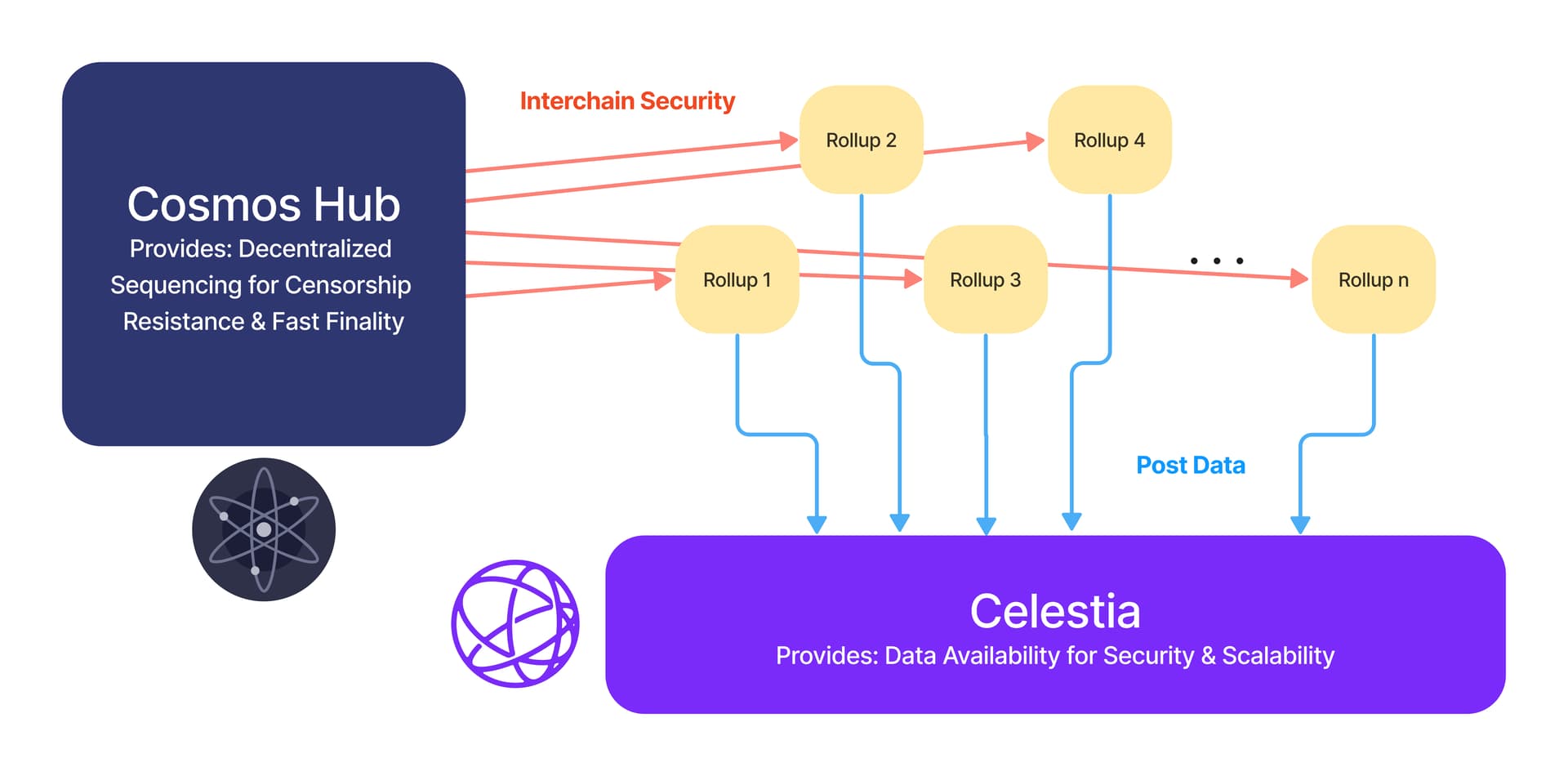
Each rollup reads from the shared sequencer, which provides a global ordering over all transactions. This means that a swap on one rollup and a transfer on another can be settled in the same block, with their relative order known and verifiable. The result is a unified execution environment that removes the need for trust-minimized bridges between compatible rollups. Complexity drops because the sequencing layer handles the coordination, while security improves because the ordering is anchored to a single, robust source of truth.
The economic implications are immediate. By eliminating the latency and fees associated with cross-rollup communication, shared sequencing enables new financial primitives that were previously too expensive or risky to deploy. It shifts the burden from the application layer back to the infrastructure layer, where it belongs. As the ecosystem matures, the choice between isolated and shared sequencing will define not just performance, but the fundamental security model of decentralized finance.
Each rollup reads from the shared sequencer, which provides a global ordering over all transactions. Reduced complexity also has security implications.— Espresso Systems
This architectural shift is gaining traction among developers who recognize that the future of scaling isn't just about throughput—it's about interoperability. The community is already debating the best paths forward, with many pointing to the need for standardized ordering protocols that can handle the volume of a multi-rollup world.
Atomic execution across rollups
Cross-rollup sequencing transforms isolated blockchain environments into a single, unified execution layer. Without this capability, users attempting complex operations across multiple networks face a fragmented experience where one failed transaction breaks the entire sequence. Synchronous atomic execution eliminates this risk by treating transactions on different rollups as part of one indivisible unit.
The CRATE protocol (Cross-Rollup Atomic Transaction Execution) provides the technical foundation for this synchronization. It allows a user to execute a sequence of transactions spanning multiple rollups, ensuring that either all steps succeed or all steps revert. This "all-or-nothing" guarantee is critical for high-stakes financial operations, such as cross-chain arbitrage or complex DeFi strategies, where partial execution could lead to significant economic loss or exploitation.
By enabling rollups to create their own shared sequencing layer, the infrastructure becomes a service that is widely accessible. This approach moves beyond simple asset bridging, focusing instead on the atomicity of the execution itself. It ensures that the state changes across different rollups are committed simultaneously, preventing the race conditions and intermediate states that plague current cross-chain workflows.
The economic implications are profound. When sequencing is atomic, the security model of the underlying rollups is preserved without requiring users to trust intermediate bridges or relayers. This reduces the attack surface for exploiters who might otherwise target the gaps between sequential transactions. As the 2026 roadmap progresses, this shared infrastructure will become the standard for multi-chain applications, allowing developers to build complex, cross-rollup dApps without managing the underlying synchronization logic.
The shift to decentralized sequencing
Centralized sequencers have long served as the single point of failure for rollup ecosystems. While they offer high throughput, their reliance on a single entity creates significant security and economic risks. The industry is now pivoting toward decentralized 'sequencing as a service' models, aiming to distribute ordering power across a network of nodes. This shift is critical for cross-rollup composability, as it ensures that transaction ordering is not controlled by a single operator who could potentially censor or reorder transactions for profit.
Celestia and Compose Network are leading this transition by decoupling sequencing from data availability and execution. Celestia’s approach, detailed in their forum discussions on decentralized rollup sequencing, involves gathering a set of sequencers and issuing a new token to incentivize participation. While this model enhances security, it introduces high overhead, requiring complex tokenomics to maintain a sufficient set of honest sequencers.
Compose Network’s Shared Publisher architecture offers a different path, focusing on cross-rollup synchronous composability. By separating sequencing from publishing, Compose allows multiple rollups to share a common ordering layer. This reduces the friction of cross-rollup transactions, enabling users to interact with assets across different L2s as if they were on a single chain. The trade-off is complexity; managing a shared sequencer network requires robust coordination mechanisms to prevent bottlenecks and ensure fair access.
The economic implications are profound. Decentralized sequencing introduces new fee markets and staking dynamics. Operators must be compensated for their ordering power, which can lead to higher transaction fees if demand outstrips capacity. However, this also creates a more resilient ecosystem where no single actor can halt the network. As cross-rollup applications mature, the choice of sequencing infrastructure will determine the speed, cost, and security of the entire L2 landscape.
Based Rollups: Sequencing as a Security Layer
The Based Rollup model, often termed 'L1-sequenced,' shifts the power of transaction ordering from a centralized operator to Layer 1 Ethereum itself. In this architecture, the rollup does not merely submit data; it submits sequencing rights. This transforms the sequencer from an independent gatekeeper into a delegate of the base layer, aligning economic incentives with the security of the entire ecosystem.
By anchoring sequencing to Ethereum, Based Rollups mitigate the risk of censorship or order manipulation that plagues independent sequencers. The economic cost of attacking the sequencing layer becomes prohibitively high, as any attempt to disrupt order must contend with the full weight of Ethereum's consensus. This creates a trust-minimized environment where user experience remains fast, but the underlying security is derived directly from the mainnet.
This approach redefines cross-rollup sequencing by establishing a shared, immutable timeline. When sequencing is driven by L1, different rollups can operate on a synchronized clock, reducing the friction of cross-chain communication. The result is a more cohesive network where security is not a trade-off for speed, but a foundational feature of the sequencing mechanism.
Sequencing and Rollup Basics
Cross-rollup sequencing isn't just an upgrade; it's a structural shift in how value moves. Understanding the mechanics is essential to grasping the security risks involved.
What is a L2 rollup?
Rollups are Layer 2 protocols that batch transactions and post state commitments to Ethereum. These commitments are validated through Validity Proofs or accepted optimistically, with the ability to challenge fraud within a specific window. This architecture prioritizes security over speed, anchoring trust to the base layer.
What role does a sequencer play?
The sequencer is the ordering engine of a rollup. It provides immediate, low-latency inclusion for users while the network handles slower verification and proof resolution. In a cross-rollup context, shared sequencers provide a global ordering, reducing complexity but creating new points of centralization if not properly decentralized.
Sidechain vs. Rollup
The difference lies in security. Rollups inherit the security of Layer 1, whereas sidechains operate with independent consensus. For cross-rollup sequencing, this distinction matters: rollups rely on shared security models, making their internal ordering critical to the broader ecosystem's integrity.
What is a cross-chain protocol?
Cross-chain protocols like the Cross-Chain Transfer Protocol (CCTP) enable the permissionless flow of assets, such as USDC, across different blockchains. While CCTP handles asset movement, cross-rollup sequencing handles the ordering of the transactions themselves. Both are necessary for a unified financial layer.
No comments yet. Be the first to share your thoughts!