Why rollups need shared sequencing
The current rollup landscape is defined by fragmentation. Each Layer 2 network operates as an isolated silo, managing its own sequencer and transaction ordering independently. This structure creates significant friction for cross-rollup liquidity, forcing users to navigate complex bridging protocols or suffer from fragmented order books that degrade execution quality.
Shared sequencing addresses this by providing a global ordering layer across multiple rollups. Instead of each chain determining transaction order in isolation, a shared sequencer coordinates the sequence, ensuring a consistent view of state across the ecosystem. This reduces the complexity of cross-chain interactions and mitigates the MEV (Maximal Extractable Value) opportunities that arise from disjointed ordering.
As the rollup ecosystem matures, the ability to coordinate sequencing becomes a structural necessity rather than a nice-to-have. By decoupling sequencing from individual chain validation, developers can build applications that treat multi-chain liquidity as a single, unified pool rather than a series of disconnected islands. This shift is foundational for the scalability and user experience expectations of 2026.
Cross-rollup sequencing models
Cross-rollup sequencing defines how transactions across distinct Layer 2 networks are ordered and settled. The architecture you choose determines latency, security assumptions, and how value flows between chains. Four primary models dominate the landscape: centralized shared sequencers, decentralized sequencing networks, L1-based sequencing, and independent rollup sequencing.
Centralized shared sequencers
Shared sequencers act as a central hub, ordering transactions from multiple rollups before they are published to the base layer. This approach reduces complexity for individual rollup operators and provides a global ordering over all transactions in the ecosystem. Espresso Systems pioneered this model, offering a "Shared Sequencing as a Service" infrastructure that allows rollups to read from a common ordering source. While efficient, this model introduces a central point of failure and requires trust in the sequencer operator to not reorder or censor transactions maliciously.
Decentralized sequencing networks
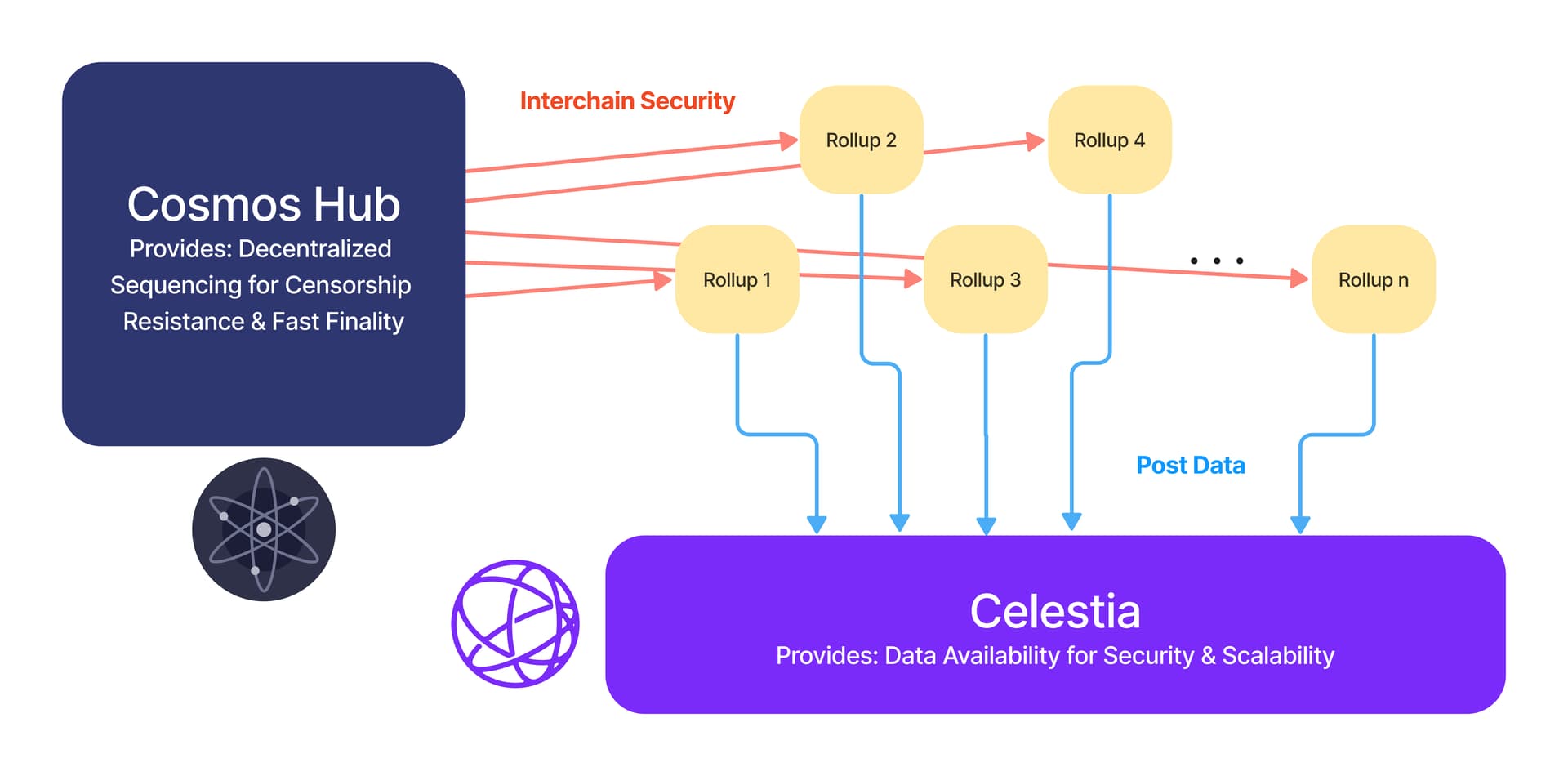
Decentralized sequencing distributes the ordering responsibility across a network of independent nodes. This model enhances censorship resistance and security by removing the single-point-of-failure inherent in centralized systems. Projects like Celestia are exploring decentralized sequencing as a service via interchain security, allowing rollups to leverage existing validator sets. However, this approach often requires higher overhead, such as gathering a set of sequencers and issuing new tokens, which can complicate the launch and economic model of a new rollup.
L1-based sequencing (Based rollups)
In this model, the sequencing is driven directly by the Layer 1 blockchain. A rollup is considered "based" when its transaction ordering is determined by the base L1 consensus mechanism. This approach inherits the security and decentralization properties of the underlying Layer 1, offering strong guarantees against reordering. The trade-off is that rollups are bound by the throughput and latency of the base layer, which can limit the performance benefits of using a rollup in the first place.
Independent rollup sequencing
Some rollups opt for fully independent sequencing, managing their own ordering engines without external coordination. This provides maximum flexibility and autonomy for the rollup operator, allowing for customized fee markets and transaction ordering rules. However, it complicates cross-rollup communication, as there is no shared global state or ordering mechanism. Cross-chain transfers in this model rely on bridging protocols rather than atomic sequencing, which can introduce latency and additional security risks.
Comparison of sequencing models
The following table compares the four models across key dimensions relevant to cross-rollup liquidity.
| Model | Decentralization | Latency | Security Model | MEV Resistance |
|---|---|---|---|---|
| Centralized Shared | Low | Low | Trusted Operator | Low |
| Decentralized Network | High | Medium | Validator Set | Medium |
| L1-Based | High | High | Layer 1 Consensus | Low |
| Independent | Variable | Low | Operator Dependent | Low |
Solving Cross-Rollup MEV
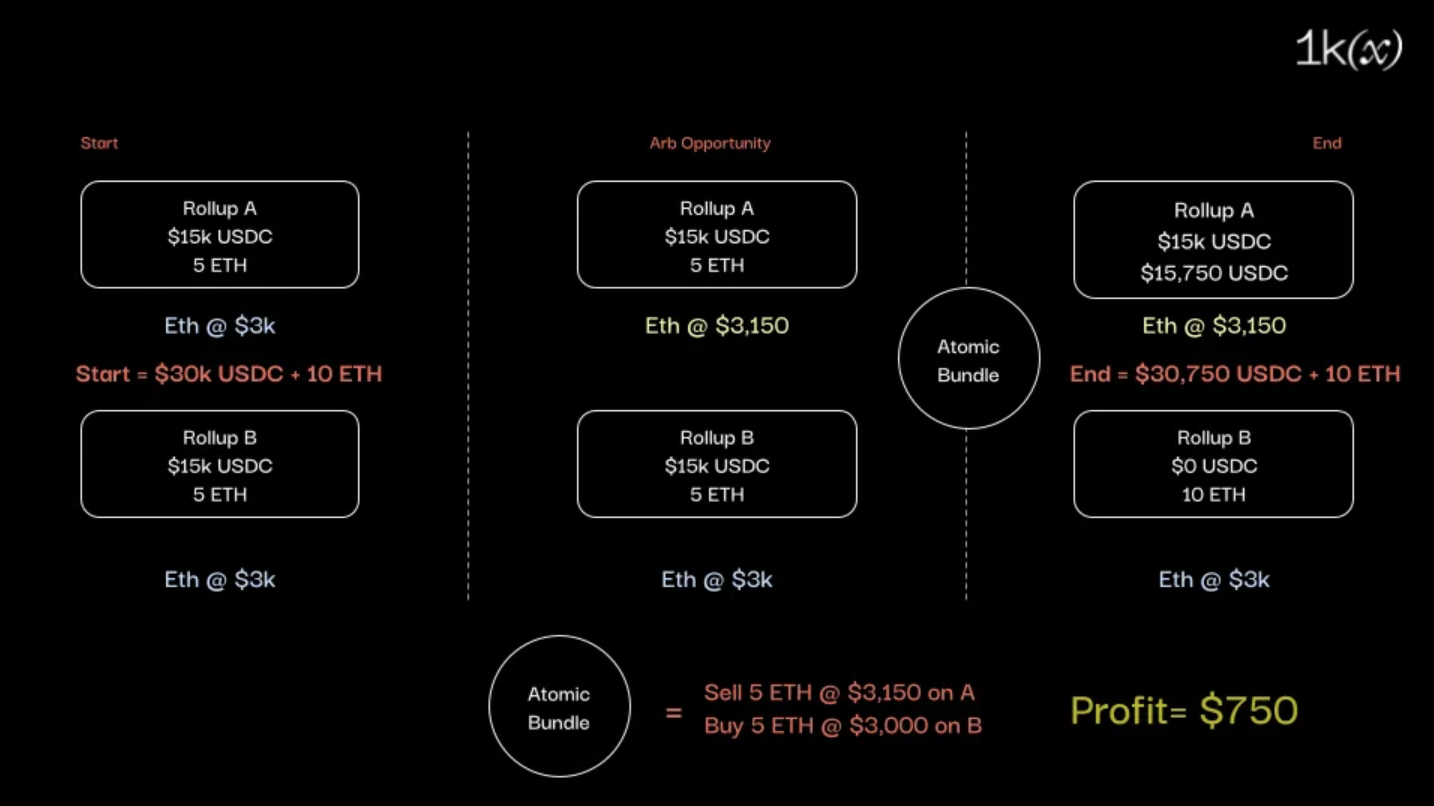
Cross-rollup MEV refers to opportunities for value extraction that arise when transactions across different rollups can be profitably sequenced or manipulated. In a fragmented multi-chain environment, this creates a high-stakes problem: a malicious actor or sophisticated searcher can observe pending transactions on one rollup and front-run or sandwich-trade related assets on another, exploiting the latency and lack of coordination between sequencers.
Cross-rollup MEV refers to opportunities for value extraction that arise when transactions across different rollups can be profitably sequenced or manipulated.— Swapspace Research
The core vulnerability lies in the isolated nature of traditional rollup sequencers. Each rollup maintains its own ordering pipeline, unaware of pending intents on neighboring chains. This isolation allows arbitrageurs to build complex strategies that span multiple layers, extracting value from price discrepancies that emerge during the time lag between chain states.
Shared sequencing mitigates this by introducing a global ordering layer. Instead of each rollup processing transactions in isolation, a shared sequencer observes pending transactions across all connected rollups simultaneously. By ordering these transactions globally, the sequencer can neutralize cross-chain arbitrage opportunities before they materialize, ensuring that users on one chain are not disadvantaged by activity on another.
This approach transforms the sequencing process from a localized task into a coordinated system. When transactions are ordered globally, the profit margin for cross-rollup MEV strategies collapses. Searchers can no longer exploit the "blind spots" between chains because the sequencer sees the entire picture. This reduces the cost of trading for users and stabilizes liquidity across the multi-rollup ecosystem.
The shift toward shared sequencing represents a fundamental change in how we think about fairness in decentralized finance. It moves the industry away from a "winner-takes-all" MEV model, where isolated sequencers compete to extract value, toward a more cooperative framework where order integrity is preserved across the entire network.
For high-frequency traders and large liquidity providers, this reduction in cross-chain MEV is critical. It ensures that their trades are executed at the intended price, without being preempted by bots exploiting inter-chain latency. As the multi-rollup landscape matures, shared sequencing will likely become the standard for maintaining equitable access to liquidity.
Atomic execution across rollups
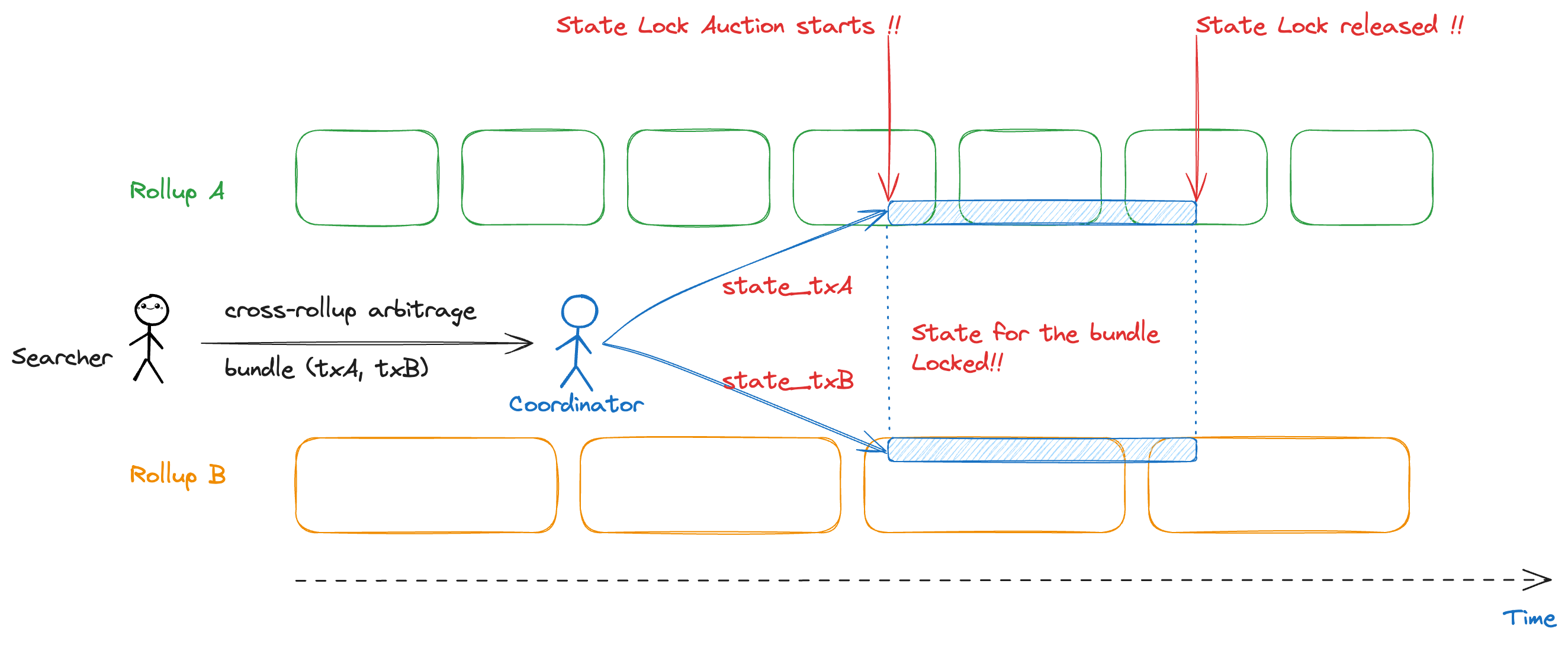
Cross-rollup sequencing transforms fragmented liquidity into a unified execution layer. By introducing a shared ordering mechanism, protocols can guarantee that multi-step trades across different L2s either all succeed or all fail. This atomicity prevents the partial fills that typically plague cross-chain arbitrage, where a trade might succeed on one rollup but fail on another, leaving capital stranded or exposed to price slippage.
The technical foundation relies on synchronous execution models. Research into systems like CRATE (Cross-Rollup Atomic Transaction Execution) demonstrates how users can execute sequences spanning multiple rollups within a single atomic unit. This approach requires a shared sequencing layer that coordinates state updates across isolated environments, ensuring that the final state of one transaction is a prerequisite for the next.
"We will enable rollups to create their own shared sequencing layer, offering this as a service to make it widely accessible." — Ethereum Research
This coordination is critical for high-stakes finance. Without atomic guarantees, traders face significant risk: a successful swap on Arbitrum might be followed by a failed bridge transfer to Optimism, resulting in immediate losses. Shared sequencing eliminates this gap by treating multiple rollups as a single logical execution environment.
The industry is moving toward this model through initiatives like Espresso Systems, which provides decentralized sequencing infrastructure. By decoupling the sequencer from the rollup operator, these systems ensure fair ordering and atomic cross-chain capabilities without centralizing trust.
Community view on sequencing
The debate over shared sequencing versus independent rollup control centers on the trade-off between operational simplicity and sovereignty. While centralized sequencers offer a streamlined user experience, the community increasingly views this as a single point of failure that compromises the security guarantees of the underlying L1.
Technical discussions on EthResearch highlight the friction of launching rollups with decentralized sequencing. As noted in community analysis, gathering a set of independent sequencers and issuing new tokens involves high overhead, pushing many projects toward centralized intermediaries for speed. This creates a tension where the most efficient paths often diverge from the most decentralized ideals.
The push for "based rollups"—where sequencing is driven directly by the L1 block producer—aims to resolve this. By aligning sequencing incentives with the base layer, developers hope to maintain low latency without sacrificing the trustless verification that defines modern scaling solutions. This approach is gaining traction as a way to ensure that cross-rollup liquidity remains secure and censorship-resistant.
Key questions on rollup sequencing
Cross-rollup sequencing introduces new mechanics that distinguish modern Layer 2 infrastructure from earlier scaling models. Understanding the specific roles of sequencers and the architectural differences between rollups and sidechains is essential for navigating multi-chain liquidity.
What role does a sequencer play in a rollup?
A sequencer acts as the fast-ordering engine for a rollup, providing immediate, low-latency transaction inclusion. Users submit transactions to the sequencer for rapid processing, while the underlying protocol handles slower, batched verification and proof generation separately. In cross-rollup environments, shared sequencers provide global ordering across multiple chains, reducing complexity and enhancing security by eliminating isolated ordering conflicts.
What is the difference between sidechain and rollup?
Rollups prioritize security by leaning on Layer 1 consensus, periodically posting state commitments validated by validity proofs or fraud proofs. Sidechains operate with independent security models, prioritizing speed and cost-effectiveness over the robust security guarantees of the main chain. This distinction makes rollups the preferred choice for high-stakes financial applications requiring Layer 1-level trust minimization.
What is a Layer 2 rollup?
Layer 2 rollups are scaling solutions that process transactions off-chain before posting compressed data to Ethereum. They maintain security by relying on the main chain's consensus, using either Validity Proofs (Zero-Knowledge) or Optimistic Fraud Proofs to validate state transitions. This architecture allows for significantly higher throughput while preserving the decentralization and security properties of the base layer.
What is a cross-chain protocol?
Cross-chain protocols like the Cross-Chain Transfer Protocol (CCTP) enable permissionless movement of assets, such as USDC, across different blockchains. By using native burning and minting mechanisms, these protocols allow assets to be "teleported" between chains without relying on wrapped tokens or complex bridge architectures. This capability is foundational for seamless liquidity flow in a multi-rollup ecosystem.
No comments yet. Be the first to share your thoughts!