Why shared sequencing matters for L2s
Layer-2 networks were built to scale Ethereum, but the current reliance on fragmented, private sequencers has introduced a hidden tax on every transaction. Cross-rollup sequencing refers to the ordering of transactions across different Layer-2 blockchains, a process that currently lacks coordination. When sequencers operate in isolation, they create blind spots that sophisticated actors exploit to extract value at the expense of regular users.
This fragmentation is the root cause of cross-rollup MEV (Maximal Extractable Value). In a siloed environment, a sequencer for one rollup cannot see pending transactions on another. This allows arbitrageurs to front-run trades across chains, capturing profits that would not exist in a unified order flow. The result is non-atomic arbitrage, where trades succeed on one chain but fail or are delayed on another, leading to failed transactions and price inefficiencies.
"Cross-rollup MEV refers to opportunities for value extraction that arise when transactions across different rollups can be profitably sequenced..." — Swapspace
The financial implications are significant. Without shared infrastructure, users face higher slippage and unpredictable execution times. The lack of a common sequencing layer means that the benefits of L2 scaling are partially offset by the costs of MEV extraction. Establishing a shared sequencing protocol is not just a technical upgrade; it is a necessary step to ensure fair and efficient transaction ordering across the multi-rollup landscape.
Research into cross-rollup MEV highlights the scale of the problem. Studies quantify the potential non-atomic MEV on Layer-2 blockchains by measuring arbitrage opportunities between cross-rollup and intra-rollup activities. These findings underscore the urgency of developing shared sequencing solutions that can neutralize these extraction opportunities and restore trust in L2 ecosystems.
How synchronous atomic execution works
Synchronous atomic execution solves the fragmentation problem in multi-rollup environments. Instead of relying on asynchronous bridges that leave state gaps, this model commits transactions from different rollups to a shared order in a single atomic step. This ensures that if one leg of a cross-rollup trade fails, the entire transaction reverts, preventing partial state updates and the resulting arbitrage opportunities.
The mechanism operates through a shared sequencing layer that acts as the single source of truth for order. Rollups submit their pending transactions to this layer, which then batches them into a unified sequence. This sequence is validated and executed atomically, meaning all state changes across the involved rollups happen simultaneously or not at all. This approach eliminates the need for complex, error-prone inter-rollup messaging protocols.
"We will enable rollups to create their own shared sequencing layer, offering this as a service to make it widely accessible."
The technical workflow follows a strict sequence to maintain consistency:
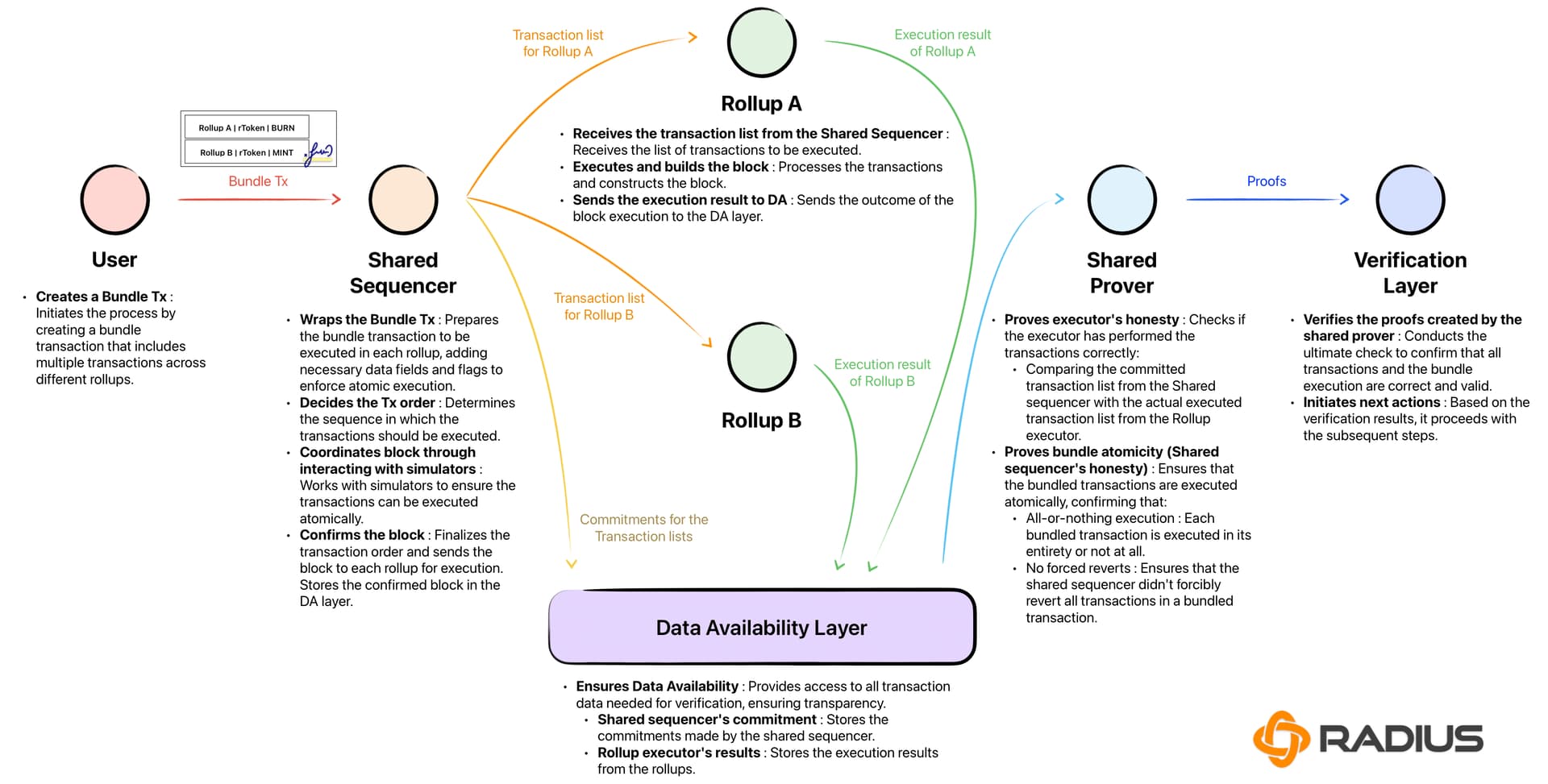
Rollups submit their pending transactions to the shared sequencing service. These transactions are not yet executed but are queued for ordering. The sequencing layer receives batches from multiple rollups, treating them as a unified pool of work.
The sequencing layer determines the global order of transactions. This step is critical for preventing front-running and ensuring fair execution. By establishing a single order, the system ensures that all rollups agree on the state of the world at any given point in time.
The sequenced transactions are executed simultaneously across all involved rollups. If any transaction in the batch fails validation or execution, the entire batch is reverted. This atomicity guarantees that no rollup ends up in an inconsistent state relative to the others.
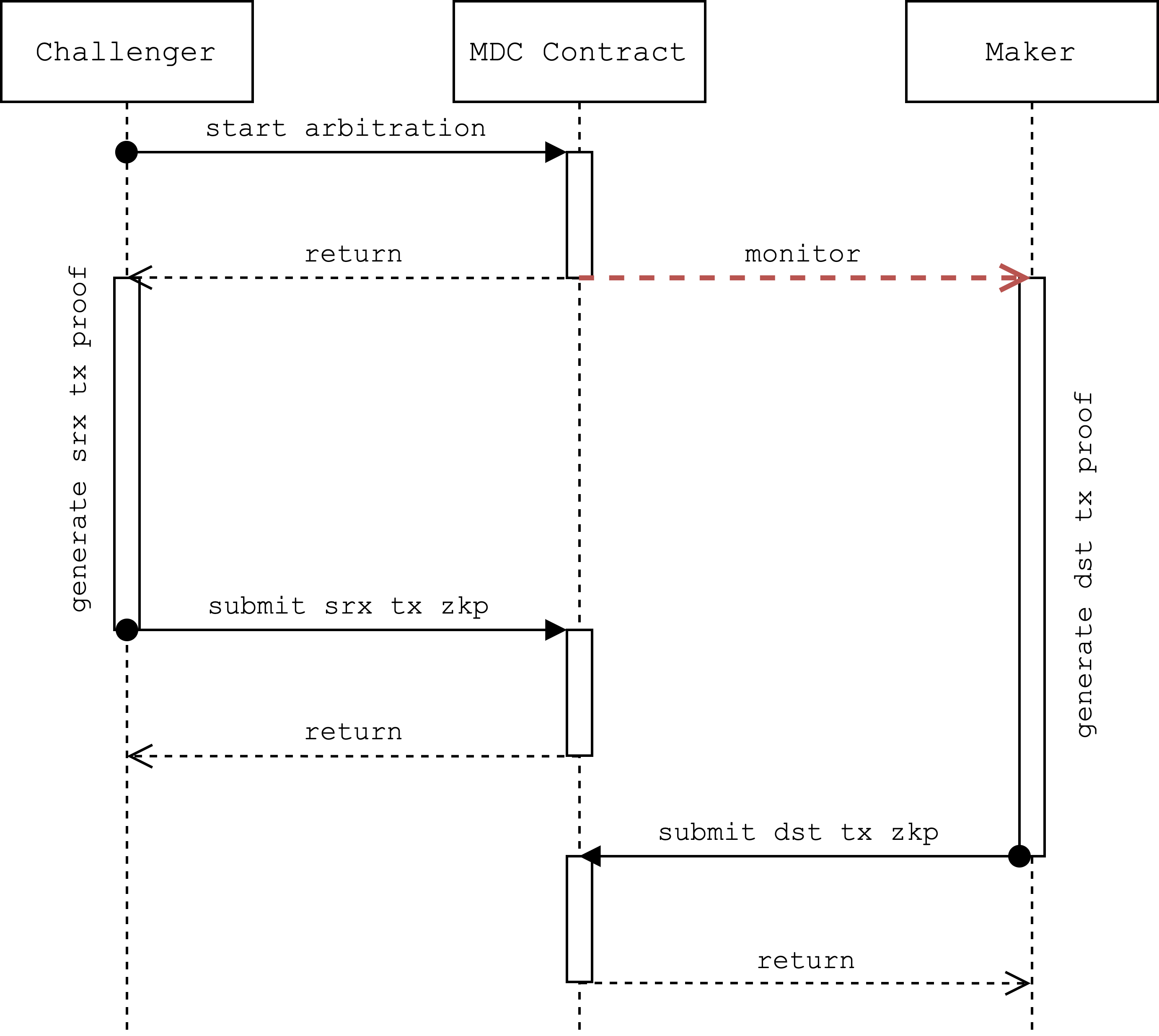
Once execution is complete, the new state roots are committed to the respective rollups. This commitment is final and irreversible, ensuring that all participants can verify the outcome. The shared sequencing layer then clears the batch and prepares for the next set of transactions.
This model shifts the complexity from the rollup level to the sequencing layer. Developers no longer need to build custom bridge logic for every cross-rollup interaction. Instead, they rely on the shared sequencing service to handle the ordering and atomicity guarantees. This standardization reduces development time and minimizes the attack surface for cross-rollup exploits.
The financial implications are significant. By eliminating asynchronous state gaps, synchronous atomic execution removes the primary vector for cross-rollup MEV. Traders can no longer exploit timing differences between rollups to extract value. This creates a more level playing field and reduces the cost of cross-rollup trading for users.
As cross-rollup arbitrage increases, shared sequencing becomes strategic infrastructure. Projects like Mantle and Ethereum Research are actively exploring these architectures to ensure that the multi-rollup future is not only possible but also efficient and secure. The move toward synchronous atomic execution represents a fundamental shift in how we think about interoperability.
Building efficient cross-rollup systems
Cross-rollup architectures require precise coordination between Layer 2 networks to maintain transaction ordering and prevent MEV exploitation. The core challenge lies in synchronizing state transitions across distinct EVM environments while ensuring data availability and finality.
Core Architecture Components
Efficient systems rely on three primary layers: the sequencing layer, the verification layer, and the settlement layer. The sequencing layer orders transactions across rollups, often using a shared sequencer or a decentralized network of nodes. The verification layer ensures that cross-rollup state updates are valid, typically through zero-knowledge proofs or optimistic verification. The settlement layer anchors finality to the base layer, providing a single source of truth for all cross-rollup interactions.
Designing for Low Latency
Latency is the primary enemy of cross-rollup efficiency. Systems must minimize the time between transaction submission and final confirmation. This involves optimizing message passing protocols, reducing proof generation times, and ensuring robust network connectivity between sequencers. High-frequency trading applications, in particular, demand sub-second finality to remain viable.
Preventing MEV Exploitation
Cross-rollup environments are ripe for MEV opportunities, such as sandwich attacks and front-running. Mitigation strategies include encrypted mempools, fair sequencing mechanisms, and decentralized sequencer networks. By distributing sequencing power, systems can reduce the risk of a single actor manipulating transaction order for profit.
Decentralized sequencing via interchain security
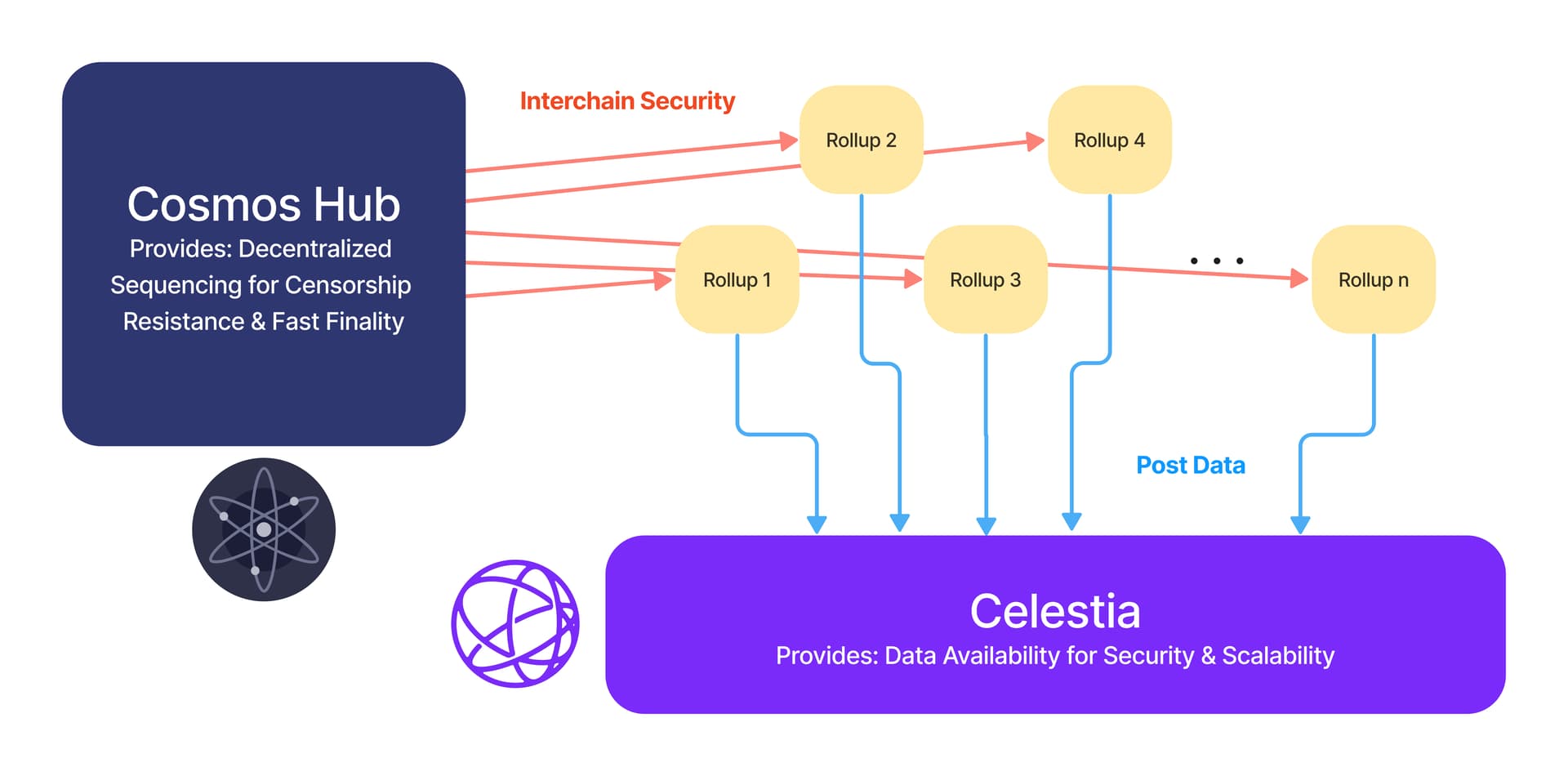
Centralized sequencers are a single point of failure and a prime target for MEV extraction. Decentralized sequencing as a service offers a structural alternative by leveraging existing validator sets. Instead of building a new consensus layer from scratch, rollups can tap into established interchain security protocols. This approach allows a new rollup to spin up with a pre-existing set of sequencers and staked assets, immediately inheriting their security guarantees.
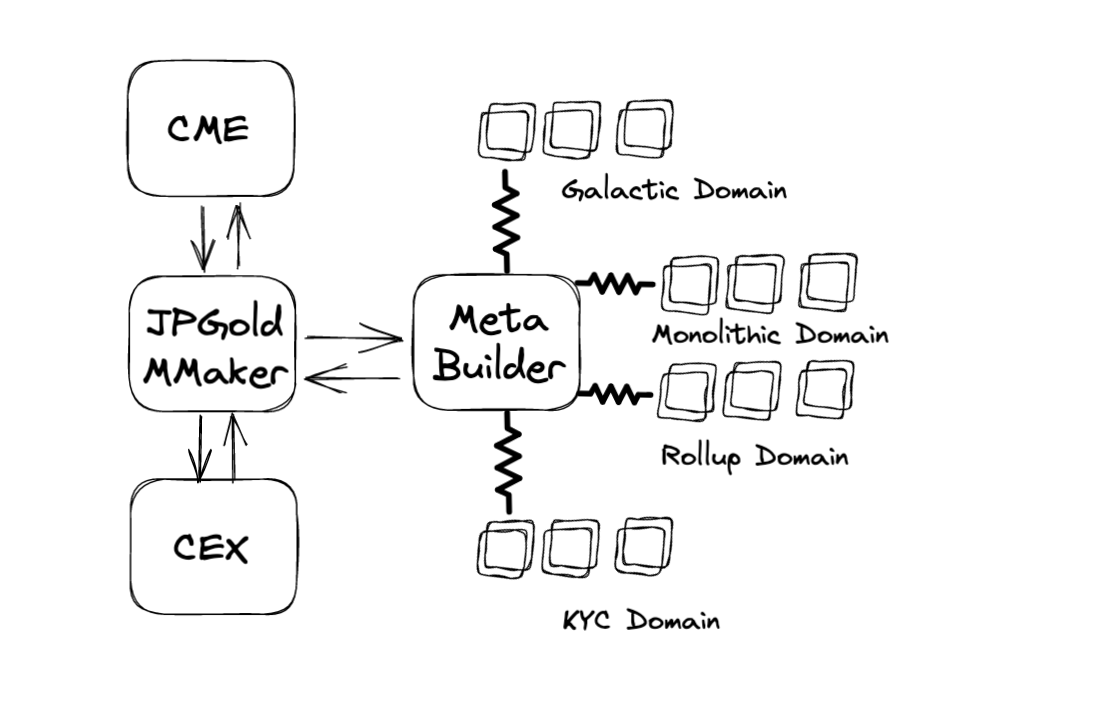
The mechanics mirror cross-chain bridging but operate at the sequencing layer. Cross-rollup bridging functions similarly to cross-chain bridging, except that the two rollups may or may not share the same consensus protocol. By treating sequencing as a shared service, operators can fragment the monopoly of centralized order flow. This defragmentation reduces the risk of a single entity controlling the entire transaction lifecycle across multiple L2s.
This model shifts the trust assumption from a single sequencer operator to a distributed network of validators. For high-stakes financial applications, this distribution is critical. It prevents the concentration of MEV power and ensures that no single actor can censor or reorder transactions across the entire ecosystem. The result is a more resilient sequencing layer that scales with the broader interchain security market.
Common sequencing mistakes and fixes
Cross-rollup sequencing introduces unique failure modes that standard L1 sequencing does not. When transactions span multiple Layer-2 networks, the lack of a shared state creates opportunities for non-atomic arbitrage. This allows MEV bots to capture value by executing trades on one rollup while failing on another, leaving users with partial fills or failed transactions.
The most critical error is treating cross-rollup transactions as independent events. Without atomicity guarantees, a trade on Arbitrum might succeed while the corresponding settlement on Optimism fails, resulting in immediate financial loss for the user. Research from the CAAW 2026 conference highlights that shared sequencing infrastructure is becoming a strategic necessity to mitigate these risks [src-serp-7].
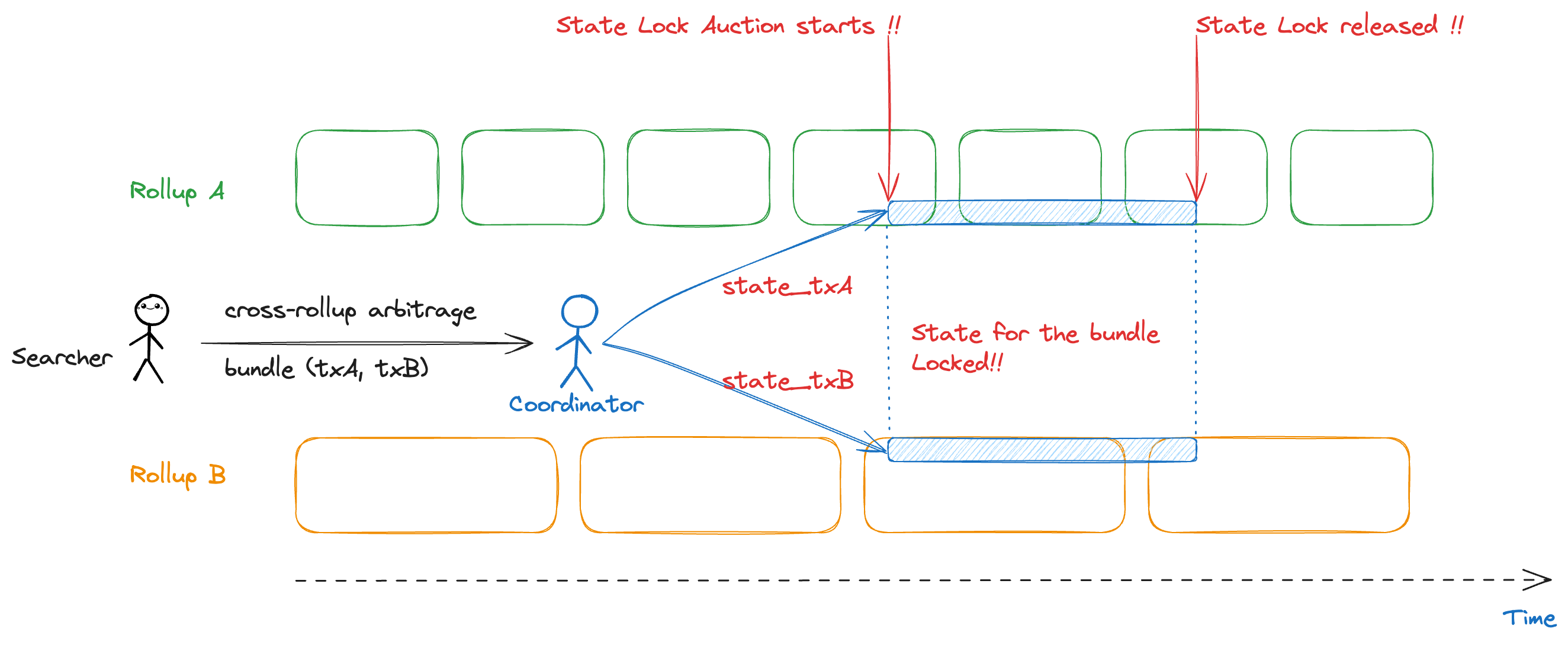
To fix this, implement state-lock auctions or coordinator-based sequencing. These protocols ensure that all legs of a cross-rollup transaction are validated simultaneously before execution. If any leg fails, the entire transaction is reverted, preserving atomicity. This approach transforms cross-rollup MEV from a user liability into a controlled market design problem.
The Flashbots Collective’s research on atomic cross-rollup arbitrage provides a technical blueprint for these coordinator mechanisms [src-serp-5]. By adopting these protocols, developers can prevent the fragmentation of liquidity and protect users from the asymmetrical risks inherent in non-atomic sequencing.
- Verify Atomicity: Ensure your sequencer or coordinator rejects any cross-rollup bundle that cannot be executed atomically across all target L2s.
- Monitor State Locks: Implement real-time monitoring for state lock auctions to detect and prevent front-running attempts during the coordination phase.
- Test Failure Modes: Rigorously test transaction reverts to confirm that partial executions are impossible under all network conditions.
No comments yet. Be the first to share your thoughts!