Why rollups need shared sequencing
The current Layer-2 landscape is defined by fragmentation. Each rollup operates as an isolated silo, managing its own sequencer to order transactions and produce blocks. This architecture creates a "walled garden" effect where interoperability is an afterthought rather than a native feature. Cross-rollup bridging functions similarly to cross-chain bridging, but the friction remains high because the underlying consensus and sequencing layers do not align.
In many deployed systems, the sequencer is a single operator or a tightly controlled service. This centralization creates a bottleneck for security and censorship resistance. Users face risks of transaction manipulation and delayed finality when relying on isolated operators. The lack of a shared structural backbone means that moving value between rollups requires complex, trust-heavy bridges that are vulnerable to exploits.
Shared sequencing addresses this by pooling resources across multiple rollups. Instead of competing for limited block space and security, rollups share the same sequencer infrastructure. This model offers stronger economic security and censorship resistance than isolated operators can provide alone. By decoupling sequencing from execution, the ecosystem moves toward a more unified and resilient structure.
The shift toward shared infrastructure is not just about efficiency; it is about structural integrity. As rollups continue to proliferate, the cost of maintaining independent sequencers becomes unsustainable. A shared model reduces redundancy and aligns incentives, ensuring that the foundational layer of the L2 ecosystem remains robust against fragmentation.
Solving cross-rollup MEV and atomicity
Cross-rollup MEV represents a distinct threat to decentralized finance, arising when the fragmented nature of Layer 2 networks allows value extraction across different chains. Currently, the lack of a shared sequencing layer means that sophisticated actors can exploit the time lag between transactions on separate rollups, manipulating prices and extracting value that should remain within the protocol.
Shared Validity Sequencing (SVS) addresses this by introducing a trigger-action paradigm where a smart contract on one rollup can remotely invoke a method on another. This approach transforms cross-chain interactions from fragile, asynchronous bridges into atomic operations. By treating multiple rollups as a single logical execution environment, SVS eliminates the arbitrage opportunities that thrive on fragmentation.
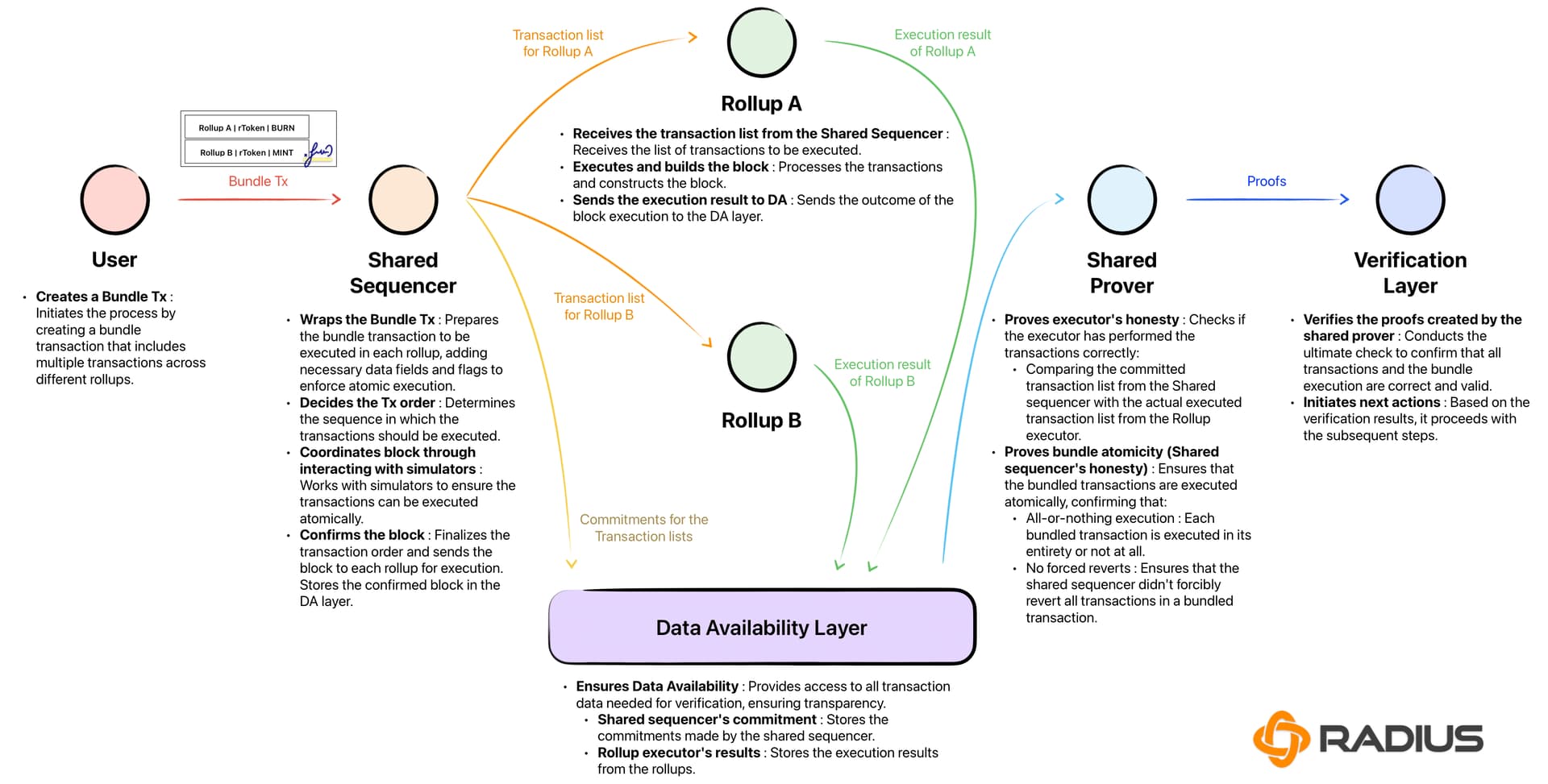
Atomic execution ensures that either all parts of a cross-rollup transaction succeed, or none do. This prevents partial state updates that could leave assets stranded or create exploitable inconsistencies. The goal is to enable rollups to create their own shared sequencing layer, offering this as a service to make it widely accessible and secure.
"Shared Validity Sequencing enables atomic cross-rollup transactions, solving the interoperability challenges created by application-specific rollups."
This structural shift moves the industry away from fragile, trust-based bridges toward a more robust, mathematically guaranteed state. By synchronizing the order of transactions across rollups, we remove the ambiguity that currently allows MEV bots to profit from the very inefficiencies that define the current L2 landscape.
Decentralizing the Sequencer Role
The sequencer is the heartbeat of any rollup. It accepts transactions, decides their exact order, and provides users with fast confirmations before the data is eventually batched and posted to Layer 1. In most deployed systems today, this role is held by a single operator or a tightly controlled service. While this centralization enables speed, it introduces a critical vulnerability: censorship, transaction manipulation, and tampering.
To fix this, the industry is shifting toward decentralized, stake-backed sequencing services. By leveraging existing validator sets and staked assets, new rollups can spin up with shared sequencing infrastructure rather than relying on isolated operators. This approach, often discussed under the framework of Interchain Security, distributes the trust assumption across a broader network, making it significantly harder for any single entity to censor transactions or rewrite history.
Shared sequencers represent one of the most significant infrastructure developments for Ethereum's Layer 2 ecosystem. They promise to unlock cross-rollup composability by allowing different chains to agree on a common ordering layer. However, this shift comes with trade-offs. As these shared services become critical infrastructure, the question of who controls the decentralized network—and how governance is managed—becomes the new centralization risk.
Community views on shared infrastructure
The shift toward shared sequencing is no longer just theoretical. Developers and researchers are actively debating how centralized ordering layers can be replaced by decentralized, shared infrastructure without sacrificing the speed that makes rollups viable.
Uma Roy from the OP Stack highlights the tension between specialization and fragmentation. As application-specific rollups proliferate, interoperability becomes a bottleneck. Her proposal for "Shared Validity Sequencing" aims to enable atomic cross-rollup transactions, treating multiple chains as a single execution environment rather than isolated silos.
"The rise of application-specific rollups... creates new challenges with interop. We propose Shared Validity Sequencing: a new shared sequencer architecture that enables atomic cross-chain operations." — Uma Roy, OP Stack
This sentiment is echoed by industry experts like Andy, who points to multi-token staking as a mechanism to align incentives across these shared networks. By linking staking requirements across rollups, the network can strengthen state finality guarantees and reduce the attack surface for cross-chain exploits.
The consensus among these voices is clear: fragmentation is a structural risk. Shared infrastructure offers a path to unify these fragmented states, but it requires rigorous security models to ensure that the shared sequencer does not become a single point of failure.
Key questions about rollup interoperability
Cross-rollup sequencing addresses the structural fragmentation of Layer-2 ecosystems. By sharing infrastructure, these systems aim to reduce the reliance on isolated, centralized sequencers that currently bottleneck transaction flow and security.
What role does a sequencer play in a rollup?
A sequencer accepts transactions, determines their order, and provides users with fast confirmations before the data is posted to Layer-1. In many deployed systems, this is a single operator or tightly controlled service, creating a centralization risk that shared sequencing seeks to mitigate.
What is a Layer 2 rollup?
Layer-2 blockchains run their own chains to process transactions, bundling them into "rollups." These compressed data sets are then committed to the underlying Layer-1 blockchain as part of one of its blocks, reducing costs while inheriting Layer-1 security.
What is a cross-chain protocol?
Cross-chain protocols enable interoperability between different blockchain networks, allowing them to communicate, transfer data, and exchange assets. These solutions address blockchain fragmentation, where assets and applications are often confined to their native networks, by creating bridges between isolated ecosystems.
No comments yet. Be the first to share your thoughts!