Why cross-rollup sequencing matters for yield
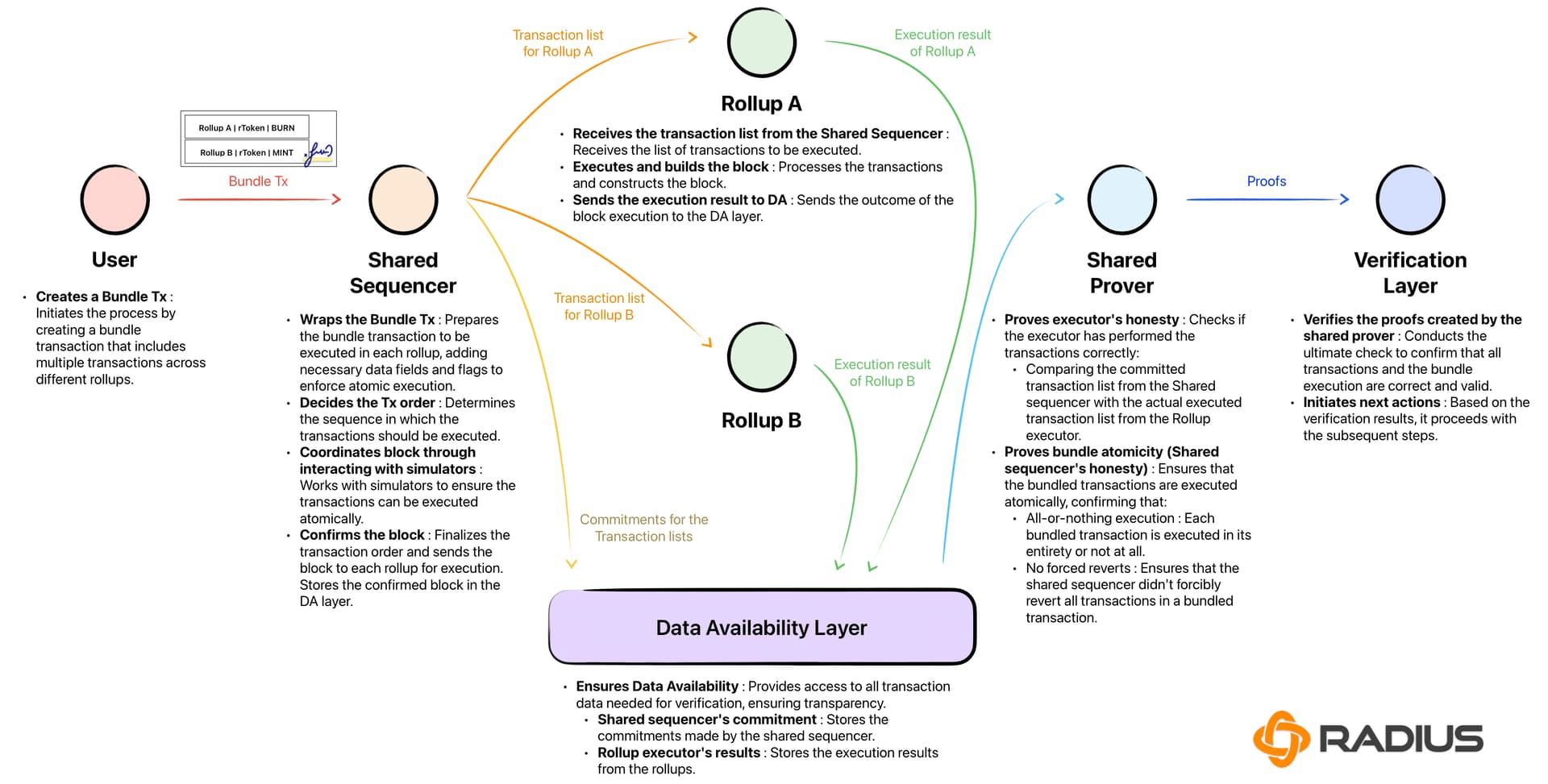
Cross-rollup sequencing coordinates transactions across multiple Layer-2 networks to execute trades that would otherwise fail or lose value. Without this coordination, yield farmers face significant risks from non-atomic arbitrage, where a trade succeeds on one chain but fails on another, leaving capital exposed to price slippage or complete loss.
For yield farmers, this fragmentation is a silent profit killer. If you are rebalancing a portfolio across Arbitrum, Optimism, and Base, manual sequencing often results in partial fills. Advanced sequencing tools close these gaps by ensuring that all legs of a trade execute simultaneously or not at all. This atomicity protects your capital from the volatility that occurs between block confirmations on different chains.
The technology essentially creates a unified liquidity layer above the fragmented L2 landscape. By treating multiple rollups as a single execution environment, these tools allow you to capture arbitrage opportunities that span chains without manually bridging assets or managing separate transaction hashes. This efficiency is critical for maintaining consistent yield in a market where seconds matter.
Top cross-rollup sequencing platforms compared
Cross-rollup atomic composability via shared sequencing is planned but not yet a live production feature for most general-purpose chains. Current infrastructure relies on distinct sequencing models, ranging from centralized relays to decentralized interchain services. Understanding these approaches is essential for building multi-chain applications that require reliable transaction ordering.
The following platforms represent the leading approaches to sequencing infrastructure in 2026. Each tool offers a different trade-off between decentralization, latency, and cross-chain interoperability.
Celestia
Celestia provides decentralized rollup sequencing as a service via Interchain Security. This model allows developers to spin up new rollups with decentralized sequencing by leveraging an existing set of sequencers and stake. It is particularly useful for teams prioritizing data availability and censorship resistance over ultra-low latency.
Based Rollups
Based rollups derive sequencing power directly from Layer 1. In this model, the next L1 proposer may, in collaboration with L1 searchers and builders, permissionlessly include the next rollup block as part of the L1 block. This approach tightly couples rollup execution with Ethereum's security model, reducing reliance on external sequencer networks.
Centralized Sequencer Relays
Despite the rise of decentralized models, many Layer 2 solutions still rely on centralized sequencer relays for optimal performance. Centralized sequencers offer predictable latency but introduce single points of failure.
| Platform | Sequencing Model | Decentralization Level | Cross-Rollup Support |
|---|---|---|---|
| Celestia | Interchain Security | High | Planned |
| Based Rollups | L1 Proposer | Medium | Native |
| Centralized Relays | Single Node | Low | Limited |
Hardware and software for sequencing nodes
Running a cross-rollup sequencer requires infrastructure that prioritizes low latency and high throughput. The software layer handles transaction ordering and state management, while the hardware provides the computational power needed to process blocks without bottlenecks. Choosing the right combination ensures your node can keep up with multi-chain yield strategies.
Software: Node Operators and Clients
The backbone of any sequencing operation is the client software. For Ethereum rollups, Geth and Erigon are standard choices, offering robust synchronization and API compatibility. If you are working with modular stacks or specialized rollups, clients like Reth or Besu may provide better performance depending on your specific chain configuration. These tools manage the mempool, order transactions, and broadcast blocks to the network.
For cross-rollup coordination, you may need additional middleware to handle inter-rollup messaging. Tools like the Interop SDK or custom bridge connectors allow sequencers to read and write state across different L2 environments. This software layer is critical for maintaining consistency when yield opportunities span multiple chains.
Hardware: High-Performance Servers
Hardware requirements scale with the number of chains you support. A single L2 node can run on a modern consumer-grade server, but multi-chain sequencers benefit significantly from enterprise-grade hardware. High-frequency trading setups often require NVMe SSDs for rapid state access and multiple CPU cores to handle parallel processing.


As an Amazon Associate, we may earn from qualifying purchases.
Network and Connectivity
Low-latency networking is non-negotiable for sequencers. A dedicated fiber connection or high-speed leased line ensures that transaction data reaches the network quickly. Redundant internet connections prevent downtime, which is critical for maintaining uptime in yield farming strategies. Consider using multiple ISPs or a SD-WAN solution to ensure your node remains online even if one connection fails.
Community insights on sequencing reliability
Real-world deployment of cross-rollup sequencing tools reveals a tension between theoretical security models and practical operational reliability. While academic models like those discussed on ethresear.ch focus on abstract interoperability guarantees, practitioners often prioritize tools that handle edge cases in cross-domain MEV extraction without introducing latency. The community generally views sequencing reliability not as a binary state, but as a spectrum of trade-offs between decentralization and transaction finality speed.
Discussions in specialized finance communities frequently highlight that centralized sequencers, while faster, can become single points of failure during high-volume periods. Users report that tools offering partial decentralization or fallback mechanisms provide a more stable experience for yield farming strategies that depend on precise timing. The consensus suggests that for multi-chain yield, the ability to quickly switch sequencers or routes during congestion is more valuable than raw throughput.
Frequently asked questions about cross-rollup sequencing
How does cross-rollup MEV differ from standard MEV? Standard MEV typically occurs within a single blockchain network. Cross-rollup MEV involves value extraction opportunities that arise when transactions across different rollups can be profitably sequenced together. This often includes non-atomic arbitrage between Layer-2 DEXs and centralized exchanges, allowing sophisticated actors to capture value that would be impossible on isolated chains [src-serp-3].
Is shared sequencing a live production feature? As of 2026, cross-rollup atomic composability via shared sequencing is still largely in the research and planning phases. Most current tools manage sequencing separately per rollup. True decentralized sequencing-as-a-service via interchain security exists but remains niche and complex to implement for most yield farms [src-serp-6].
What are the main risks of using cross-rollup sequencing tools? The primary risk is the complexity of managing state across multiple domains. Since cross-rollup MEV strategies often rely on non-atomic arbitrage, there is a higher risk of partial execution or front-running if the sequencing tool cannot guarantee atomicity across chains. Additionally, reliance on centralized sequencers for speed can reintroduce centralization risks [src-serp-5].
Do I need a specialized tool for cross-rollup yield? Yes, manual management is rarely sufficient for cross-rollup strategies. Specialized sequencing tools help coordinate transaction ordering across different L2s to capture arbitrage opportunities before they disappear. Without these tools, the latency between chains usually prevents profitable execution [src-serp-1].
No comments yet. Be the first to share your thoughts!