The L2 fragmentation problem
Layer-2 rollups were built to scale Ethereum, but their current architecture has created a fragmented ecosystem. Each rollup operates as an isolated silo with its own liquidity pool, user base, and transaction history. This isolation forces users to bridge assets manually between networks, a process that increases costs, adds latency, and introduces significant failure risks.
Cross-rollup bridging functions similarly to cross-chain bridging, but the technical complexity is often underestimated. Even when rollups share the same underlying consensus protocol, they do not inherently share state or order. A user swapping tokens on one rollup cannot easily interact with a lending protocol on another without going through external bridges. This friction breaks the composability that defines the Ethereum experience.
The sequencer sits at the center of this problem. In most deployed systems, the sequencer is a single operator or a tightly controlled service responsible for accepting transactions, deciding their order, and providing fast confirmations. Because each rollup has its own sequencer, there is no shared view of truth across the ecosystem. Atomic composability—where a single transaction can touch multiple rollups simultaneously—is not yet a live production feature.
This fragmentation means that while individual rollups may be fast and cheap, the broader experience remains disjointed. Until sequencing infrastructure evolves to support shared order execution, users will continue to face the friction of navigating isolated islands of liquidity.
What shared sequencing enables
Cross-rollup sequencing replaces the need for centralized bridges by introducing a shared ordering layer. In a typical rollup setup, a single sequencer accepts transactions, determines their order, and provides fast confirmations before posting data to Ethereum. When rollups operate in isolation, moving assets between them requires locking funds on one chain and minting wrapped versions on another—a process that introduces complexity and security risks.
A shared sequencer changes this dynamic. It accepts transactions from multiple distinct rollups and orders them together in a single stream. This allows for atomic cross-rollup transactions, meaning operations on different chains can be executed as a single, indivisible step. If one part of the transaction fails, the entire operation reverts, eliminating the risk of partial execution that plagues traditional bridging.
This architecture decouples the ordering layer from the execution and settlement layers, enabling composability across diverse rollup ecosystems without requiring them to adopt identical technical standards. By handling the ordering centrally, it removes the need for the complex, multi-step locking and minting processes typical of cross-chain bridging.
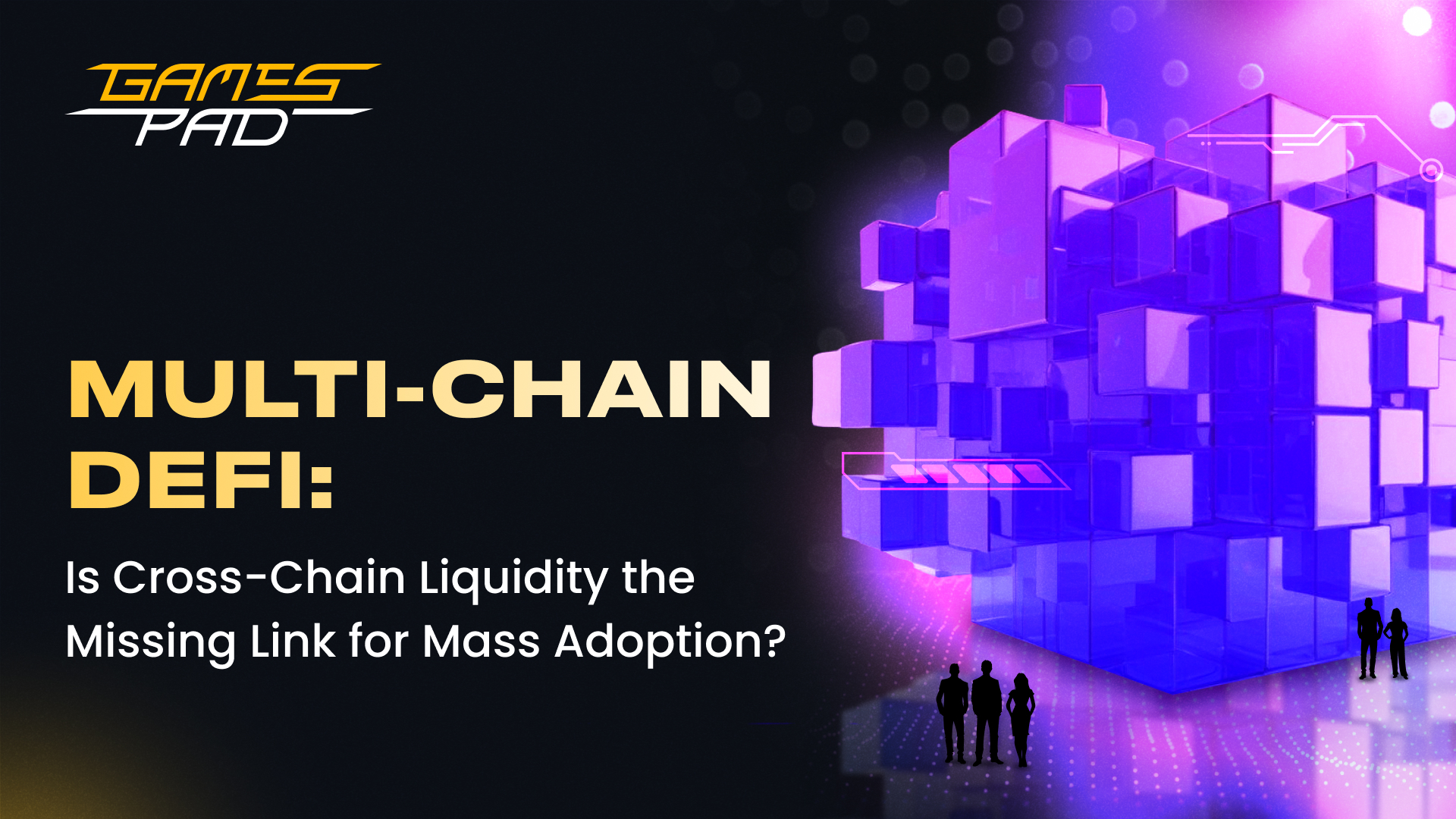
Shared sequencers represent one of the most significant infrastructure developments for Ethereum's L2 ecosystem in 2026.
The result is a fragmented L2 ecosystem that behaves more like a unified network. Users can interact with applications across different rollups as if they were on the same chain, while developers can build cross-chain logic that relies on guaranteed ordering rather than probabilistic bridge finality.
Atomic execution and MEV risks
Synchronous atomic execution changes the fundamental geometry of cross-rollup transactions. In a traditional setup, a swap on Rollup A and a deposit on Rollup B are separate events, separated by time and uncertainty. With atomic execution, these actions are bundled into a single transaction that either completes entirely or reverts entirely. This eliminates the "partial fill" risk that has long plagued cross-chain interoperability.
The benefit is immediate: users no longer need to hold capital hostage across multiple chains while waiting for finality. A shared sequencer validates the entire state transition in one step, ensuring that liquidity moves seamlessly without exposing users to intermediate failure states. This is the infrastructure shift that makes complex DeFi strategies across rollups viable.
However, this power introduces new MEV vectors. When transactions from different rollups are ordered together, the window for value extraction widens. A malicious sequencer or front-running bot can now observe pending transactions across the entire shared pool, not just within a single chain. They can identify arbitrage opportunities that span rollup boundaries and insert their own transactions to capture the spread.
This is often called "cross-rollup MEV." It is more sophisticated than traditional sandwich attacks because it requires understanding the state of multiple distinct networks simultaneously. The shared sequencer becomes a central point of contention, where the ability to reorder transactions across rollups creates significant profit opportunities for those who control the sequencing order.
The challenge for infrastructure designers is to build mechanisms that preserve atomicity while minimizing these extraction risks. Without careful design, the efficiency gains of atomic execution could be captured almost entirely by MEV bots, leaving regular users with worse execution prices than they would have seen in a fragmented, non-atomic system.
"Cross-rollup MEV refers to opportunities for value extraction that arise when transactions across different rollups can be profitably sequenced or manipulated." — Swapspace, Cross-rollup MEV: the unsolved problem of shared sequencing
The community is actively debating solutions. Some proposals suggest decentralized sequencing networks to distribute power, while others advocate for cryptographic proofs that verify transaction ordering without revealing intent. The outcome of these debates will determine whether atomic execution becomes a user-friendly feature or a new playground for extractors.
Leading infrastructure projects
Shared sequencing layers are moving from experimental research to deployed infrastructure. The current landscape is defined by three distinct approaches: decentralized validator networks, high-performance private sequencing, and interoperability standards that reduce fragmentation.
Espresso System
Espresso System operates a decentralized sequencer network that uses a consensus protocol to order transactions across multiple rollups. By separating sequencing from execution, it prevents the MEV (Maximal Extractable Value) extraction that often occurs when a single operator controls both layers. The network relies on a set of independent validators to ensure fairness and censorship resistance, making it a primary choice for teams prioritizing neutral transaction ordering.
Radius
Radius takes a different approach by focusing on high-throughput private sequencing. Backed by a $7 million seed round led by Pantera Capital, the project aims to provide a scalable alternative to public ordering layers. Radius prioritizes low-latency finality and high transaction capacity, targeting applications that require rapid confirmation speeds without the overhead of public consensus mechanisms. This makes it suitable for high-frequency trading and gaming use cases where speed is the primary constraint.
Open Intents Framework
The Open Intents Framework addresses the fragmentation issue by creating a universal standard for cross-rollup interactions. Rather than building a new sequencer, it provides a protocol for calculating optimal paths between different rollups, allowing users to interact with multiple chains as if they were a single network. This standardizes how intents are routed and settled, reducing the complexity for developers who need to support multi-chain liquidity without managing complex bridge infrastructure.
The centralization cost of shared sequencing
Shared sequencers offer immediate throughput and cross-rollup atomicity, but they introduce a single point of failure. In this model, one operator decides transaction order, controls data availability, and effectively acts as a gatekeeper. This centralization creates censorship risks and points of failure that contradict the decentralized ethos of Layer 2 scaling.
The industry response is a roadmap toward "becoming based" sequencing. This approach replaces the centralized operator with a decentralized network of validators who compete to sequence blocks based on Ethereum’s consensus layer. While this transition requires significant infrastructure changes, it is the only path to true censorship resistance.
The shift to based sequencing is not just a technical upgrade; it is a structural necessity for long-term security. Projects are currently experimenting with hybrid models, but the end goal remains clear: decentralizing the sequencer to align with Ethereum’s own security guarantees.
Common questions on sequencing
Understanding the mechanics of cross-rollup sequencing requires clarifying the roles of the underlying infrastructure. These components work together to reduce congestion and enable interoperability without sacrificing security.
No comments yet. Be the first to share your thoughts!