What cross-rollup sequencing actually is
Cross-rollup sequencing is an infrastructure layer that coordinates transaction order across distinct Layer 2 rollups. It functions as a shared memory pool, allowing different networks to agree on a single, deterministic order of operations before execution. This approach moves beyond traditional cross-chain bridging, which often relies on asynchronous message passing and complex state proofs. Instead, it enables synchronous atomic execution, ensuring that trades or transfers spanning multiple rollups settle with the same consistency as intra-chain transactions.
The core distinction lies in how order is determined. Traditional bridges treat rollups as isolated islands, requiring users to wait for confirmations on one chain before initiating actions on another. Shared sequencing, by contrast, aggregates transactions from multiple sources into a unified batch. This eliminates the fragmentation that typically degrades user experience and increases slippage in decentralized exchanges. By treating the L2 ecosystem as a cohesive market rather than a collection of silos, developers can build applications that feel native across the entire stack.
"Shared sequencing refers to when multiple rollup chains coordinate to sequence a combined batch of transactions from their individual chains in a unified order." — L2IV Research
This coordination is not merely a convenience; it is a prerequisite for robust composability. When order is ambiguous, front-running and sandwich attacks become significantly easier to execute across chain boundaries. Shared sequencing introduces censorship resistance and fairness by applying a single ordering rule set to all participating rollups. This creates a level playing field where the integrity of cross-chain trades is preserved, regardless of the underlying consensus mechanisms of the individual rollups.
The community view reinforces the necessity of this shift. Developers are increasingly recognizing that without a shared ordering layer, the promise of seamless multi-chain liquidity remains out of reach.
Ultimately, this technology redefines how value moves through the L2 ecosystem. It replaces the patchwork of async bridges with a synchronized flow of data, enabling complex financial instruments that span multiple chains with minimal friction. As the rollup landscape matures, shared sequencing will likely become the standard for any application requiring high-throughput, cross-chain interaction.
Why isolated sequencers create MEV
When rollups operate with isolated sequencers, they function like disconnected silos. Each sequencer orders transactions for its own chain without knowledge of the others. This fragmentation creates a blind spot where value leaks out of the system and into the pockets of sophisticated arbitrageurs. The result is cross-rollup MEV, a form of value extraction that emerges specifically from the timing and ordering gaps between different L2s.
Consider a scenario where a new token launches on Arbitrum while a major price feed updates on Optimism. In a siloed environment, the sequencer on Arbitrum processes trades based on stale data because the price update on Optimism hasn't propagated instantly. An arbitrageur notices this discrepancy and front-runs the market on Arbitrum, buying the token at an artificially low price before the true value is reflected. By the time the markets synchronize, the arbitrageur has extracted significant profit from regular users who traded on outdated information.
This friction is not just an inconvenience; it is a structural inefficiency. Without synchronous atomic execution, users cannot trust that their cross-chain transactions will settle at the intended price. The lack of censorship resistance in a fragmented model also means that sequencers can selectively order or drop transactions to favor their own MEV strategies, further distorting market fairness.
"Cross-rollup MEV refers to opportunities for value extraction that arise when transactions across different rollups can be profitably sequenced to exploit timing differences."
The community has long recognized this as a critical hurdle for L2 composability. On Reddit, developers frequently discuss how these MEV opportunities create a "tax" on cross-chain interactions, forcing users to accept worse slippage or risk being front-run.
This dynamic turns the promise of a multi-chain future into a fragmented marketplace. Instead of a unified liquidity layer, users face a series of isolated pools where the rules of engagement are set by individual sequencers. Until sequencing is shared or coordinated, this MEV will remain a persistent drag on efficiency and user trust.
How shared sequencers coordinate order
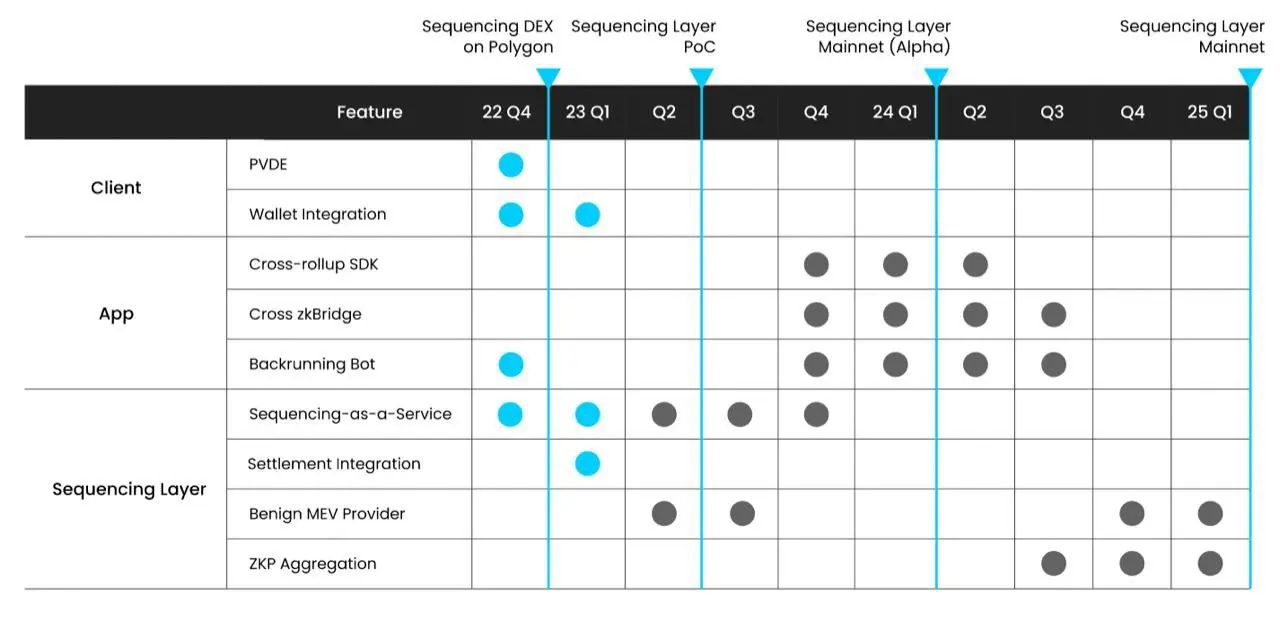
Shared sequencers act as a neutral middleware layer, decoupling the ordering of transactions from their final settlement. Instead of each rollup maintaining its own isolated ordering, a shared network of validators agrees on a single, canonical sequence of transactions across multiple layers. This architecture solves the "ordering problem" that previously made cross-rollup interactions brittle or impossible.
The core innovation lies in the separation of sequencing and publishing. As implemented by networks like Compose Network, the sequencer handles the high-frequency ordering of transactions to maximize throughput, while the actual data publishing to the underlying Ethereum layer (L1) can be decentralized. This allows rollups to achieve synchronous atomic execution—where transactions from different chains are processed in the same block and roll up together—without sacrificing censorship resistance or data availability.
This coordination mechanism is critical for financial composability. When a trade on Arbitrum needs to settle against liquidity on Optimism, the shared sequencer ensures both legs of the transaction are ordered correctly and executed atomically. If the execution fails, the entire transaction reverts, eliminating the risk of partial fills or front-running that plagues async bridges.
The industry view on this architecture is shifting from theoretical benefit to practical necessity. Developers are increasingly recognizing that synchronous atomic execution is the only way to achieve true interoperability without relying on trusted relayers.
Decentralized sequencing trade-offs
Shared sequencing introduces a fundamental tension: centralized efficiency versus decentralized censorship resistance. When multiple rollup chains coordinate to sequence a combined batch of transactions, the model shifts from individual chain sovereignty to a shared infrastructure dependency. This approach promises synchronous atomic execution but requires careful consideration of the underlying trust assumptions.
Decentralized sequencing is a common approach for rollups to achieve censorship resistance, but it incurs large overhead to launch a new rollup. Celestia and Interchain Security represent two distinct paths to mitigate this. Celestia offers modular data availability, allowing sequencers to post data without full execution verification, while Interchain Security leverages shared validator sets to secure multiple chains simultaneously. The former prioritizes scalability and independence, while the latter emphasizes security through shared economic stakes.
| Feature | Centralized | Celestia/Modular | Interchain Security |
|---|---|---|---|
| Censorship Resistance | Low | High | High |
| Overhead | Minimal | Moderate | High |
| Atomic Execution | Native | Complex | Native |
| Trust Model | Trusted Operator | Data Availability | Shared Validators |
The community debate highlights the security implications of shared sequencer networks. While centralized sequencers offer speed, the lack of censorship resistance remains a critical vulnerability for high-stakes financial applications. Decentralized alternatives provide robustness but often at the cost of complexity and throughput.
Common questions on shared order
Shared sequencing addresses the friction of cross-rollup composability by establishing a unified order for transactions. This approach resolves the ambiguity of which rollup processes a transfer first, enabling synchronous atomic execution across distinct L2 environments.
How does shared sequencing differ from cross-chain bridges?
Traditional bridges lock assets on the source chain and mint wrapped versions on the destination, introducing latency and custodial risk. Shared sequencing treats multiple rollups as a single logical layer. Transactions are sequenced in a global order, allowing atomic settlement without the need for intermediate wrapped tokens or multi-step messaging protocols.
Does shared sequencing improve censorship resistance?
Yes. By distributing sequencing responsibilities or utilizing a neutral coordinator, the model reduces the power of any single sequencer to reorder or drop transactions. This enhances censorship resistance compared to private, centralized sequencers. However, the specific implementation of the coordinator’s trust model remains a critical factor in the security guarantee.
What are the latency implications?
Shared sequencing can reduce finality times for cross-rollup interactions. Instead of waiting for separate block confirmations on two independent chains, users benefit from a coordinated settlement window. This is particularly valuable for high-frequency trading or real-time DeFi applications where time-sensitive atomic swaps are required.
No comments yet. Be the first to share your thoughts!