The fragmentation problem in L2s
Layer 2 rollups were designed to scale Ethereum, but the current architecture has created a fragmented ecosystem. Each rollup operates as an isolated silo, managing its own sequencer, consensus, and state. This isolation forces developers to treat different chains as separate networks, requiring complex bridging solutions to move assets and data between them.
Cross-rollup bridging functions similarly to cross-chain bridging, except that the two rollups may or may not share the same consensus protocol. This creates a fragile layer of abstraction on top of the base layer. Users face high latency, significant gas costs, and increased attack surfaces when interacting with applications that span multiple rollups. The friction is not just technical; it degrades the user experience, making cross-chain interactions feel disjointed and unreliable.
Current L2s operate as silos. Cross-rollup bridging is slow, expensive, and prone to failure compared to native atomic execution.
The sequencer plays an outsized role in this dynamic. It accepts transactions, decides their order, gives users fast confirmations, and later ensures the ordered data is posted to the Layer 1 blockchain. In many deployed systems, this sequencer is still a single operator. This centralization point creates bottlenecks and potential single points of failure, limiting the composability that defines the broader Ethereum ecosystem.
Shared sequencing addresses this by decoupling the ordering of transactions from the execution of rollups. Instead of each rollup relying on its own isolated sequencer, a shared infrastructure can order transactions across multiple rollups simultaneously. This allows for atomic execution across chains, eliminating the need for bridging and restoring the seamless composability that Layer 1 offers. The result is a more efficient, secure, and user-friendly environment for decentralized applications.
How shared sequencers work
A shared sequencer replaces isolated ordering layers with a single, unified pipeline. Instead of each rollup maintaining its own private sequencer, transactions from multiple rollups are bundled together in a common ordering layer. This architecture allows the system to process transactions for different rollups simultaneously, creating a shared state that enables atomicity across chains.
The mechanism relies on a trigger-action paradigm. A smart contract on one rollup can remotely invoke a method on another rollup through the shared validity sequencing (SVS) layer. The shared sequencer receives these cross-rollup transactions, orders them alongside standard transactions, and ensures they are executed in a specific sequence. This ordering is critical because it determines the outcome of atomic operations, preventing race conditions that would occur if transactions were processed independently.
By centralizing the ordering process, the infrastructure reduces the complexity of cross-rollup communication. Users no longer need to rely on slow, multi-step bridge transactions to move assets or data between rollups. Instead, the shared sequencer acts as a neutral arbitrator, guaranteeing that all parts of a cross-rollup transaction are included in the same block or batch. This synchronous atomic execution ensures that either all steps of a transaction succeed or none do, providing the consistency required for complex decentralized applications.
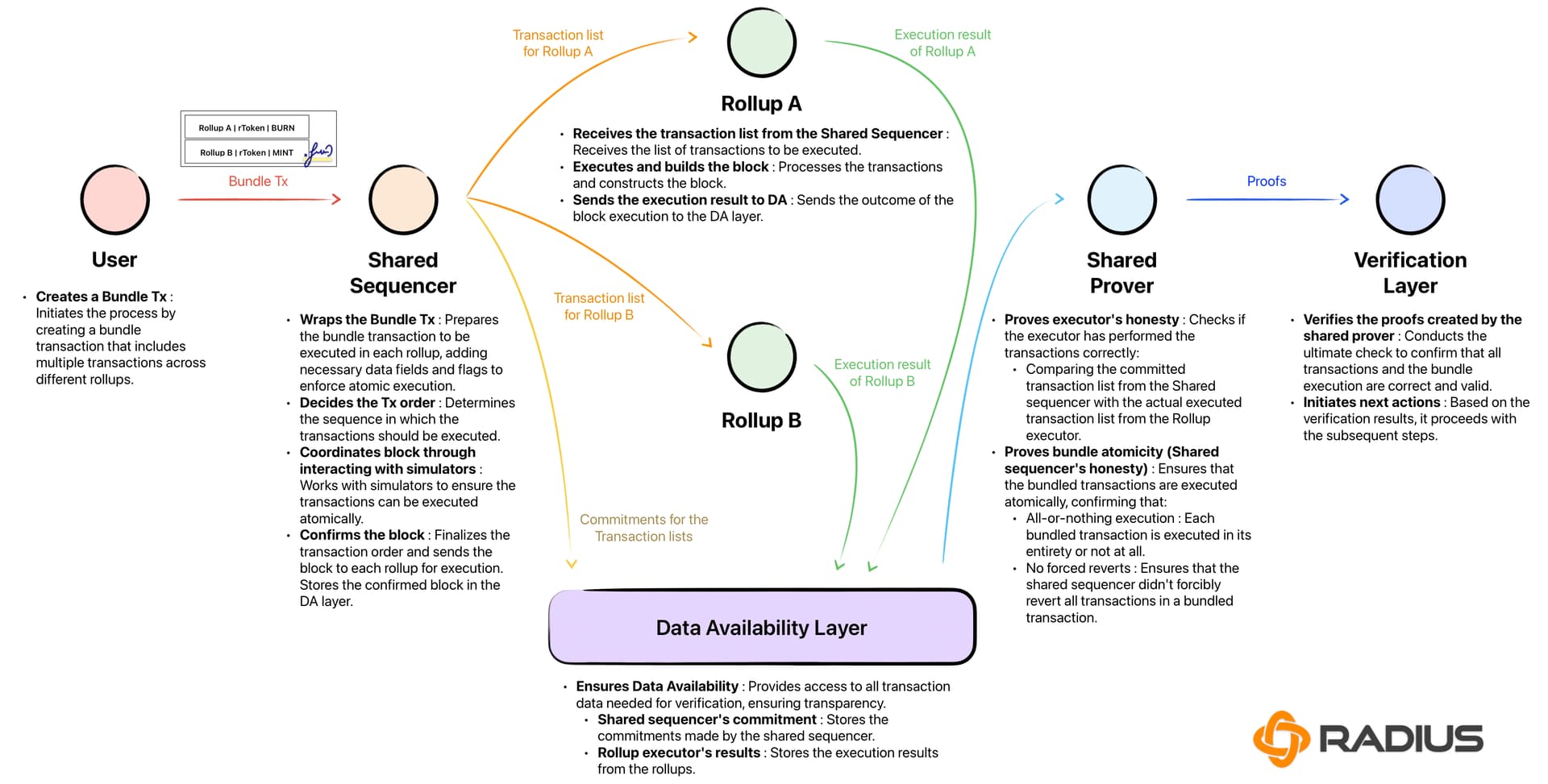
This approach mirrors the efficiency of a central exchange, where all orders are matched in a single internal ledger. However, unlike a centralized exchange, the shared sequencer operates as an open service, often offered by infrastructure providers to make cross-rollup functionality widely accessible. Developers can build applications that leverage this shared validity, knowing that the underlying ordering layer will handle the complexity of cross-chain atomicity.
Shared Validity Sequencing proposes a trigger-action paradigm for a smart contract on one rollup to remotely invoke a smart contract method on another.— ETHResearch
The result is a significant reduction in gas costs and MEV exposure. Because transactions are ordered together, front-running attacks that rely on temporal gaps between rollups become much harder to execute. The shared sequencer can also bundle competing transactions in a way that minimizes MEV extraction, passing the savings back to users. This infrastructure shift moves cross-rollup interactions from a fragmented, high-cost model to a streamlined, atomic one.
Cutting MEV and Gas Costs
Shared sequencing infrastructure fundamentally changes the economics of cross-rollup transactions. Instead of relying on complex, multi-hop bridges that charge fees at every stage, transactions move through a unified sequencer. This removes the need for intermediate asset transfers, which are the primary source of both high gas costs and MEV (Maximal Extractable Value) extraction.
How Shared Sequencing Removes MEV
Cross-rollup MEV occurs when bots or validators profit from the delay and complexity of moving data between separate rollups. In a fragmented system, a user might swap tokens on Rollup A, bridge them to Rollup B, and then trade again. Each step is a window for arbitrageurs to front-run or sandwich the transaction. Shared sequencing eliminates this by allowing the sequencer to order transactions across all connected rollups in a single, global block. This visibility allows the system to detect and neutralize MEV opportunities before they can be executed, effectively removing the profit motive for cross-chain manipulation.
Lowering Gas Fees Through Efficiency
The economic benefits extend beyond security. Traditional cross-rollup bridges require users to pay gas fees on the source rollup, the bridge contract, and the destination rollup. Shared sequencing consolidates these into a single fee structure. By batching transactions from multiple rollups into a single L1 data commitment, the infrastructure achieves economies of scale. This reduces the per-transaction cost for users and increases throughput for developers, making cross-rollup interactions as cheap and simple as native transactions.
This shift from fragmented, bridge-dependent models to shared infrastructure represents a significant step toward efficient, low-cost cross-rollup interoperability. As the technology matures, we can expect to see more rollups adopting shared sequencing to remain competitive in a crowded market.
Decentralized sequencing models
Most deployed rollups rely on a single operator to order transactions. This centralized approach offers low latency and high throughput, but it creates a single point of failure. If the sequencer goes offline, the chain halts. If it acts maliciously, it can censor transactions or reorder them for maximum extractable value (MEV).
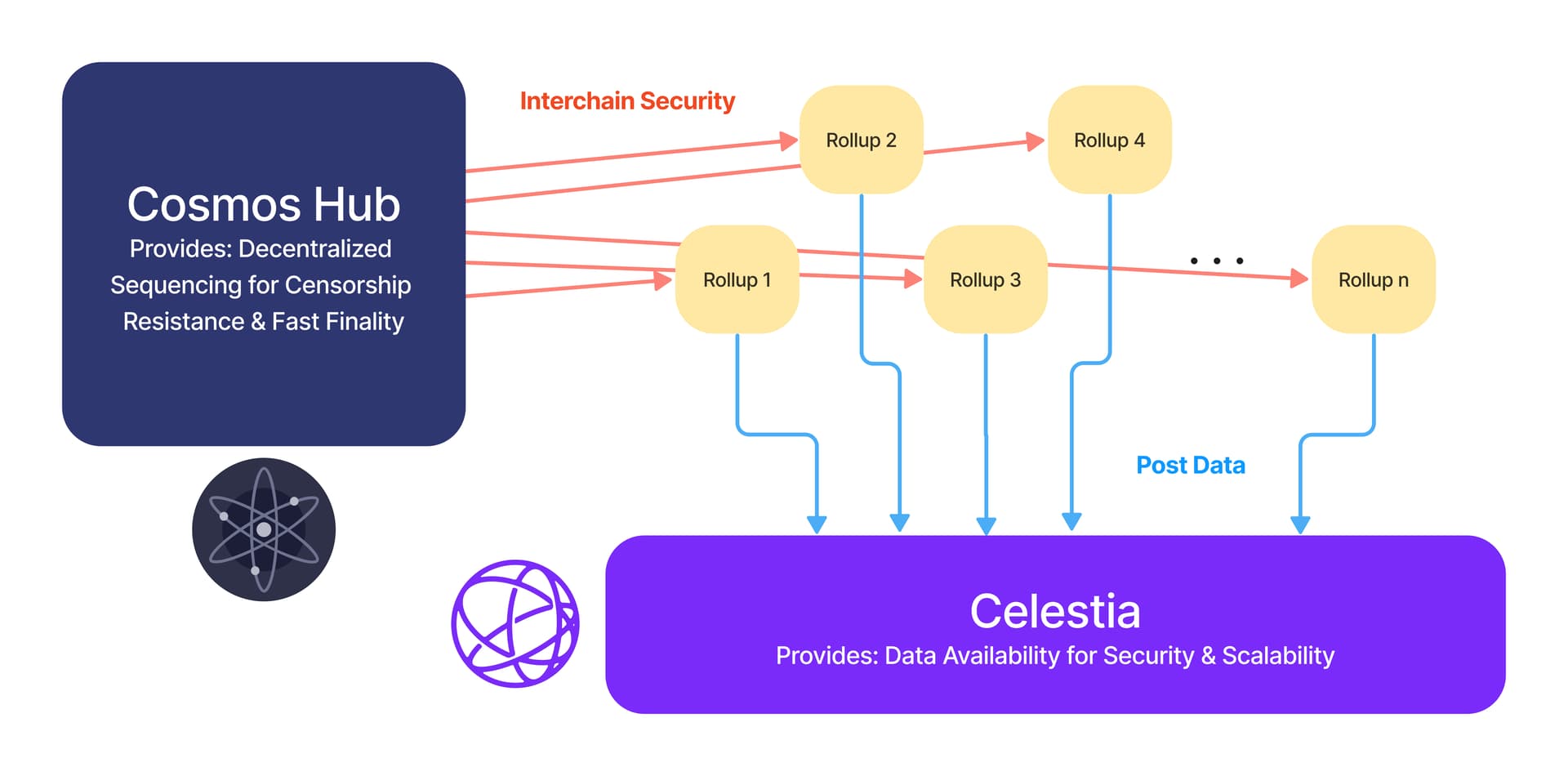
Decentralized sequencing distributes this power across a network of validators. Instead of one entity holding the keys, a set of sequencers—often secured by interchain staking—collaborate to order blocks. This architecture, often implemented as "sequencing as a service," reduces trust assumptions significantly. It makes censorship economically expensive and technically difficult, as no single actor can unilaterally exclude users.
The trade-off is complexity and latency. Decentralized consensus requires more communication rounds between nodes, which can increase block times slightly compared to a centralized operator. However, for applications where censorship resistance is paramount, this delay is a small price to pay for security.
| Feature | Centralized | Decentralized |
|---|---|---|
| Latency | Low (ms) | Moderate (seconds) |
| Censorship Resistance | Low | High |
| Trust Assumption | Trust single operator | Trust distributed stake |
| Complexity | Simple setup | High coordination overhead |
Key projects building shared sequencing
The infrastructure layer for cross-rollup sequencing is moving from theoretical papers to active testnets and mainnet deployments in 2026. Rather than each rollup operating as an isolated silo with its own centralized sequencer, new protocols are introducing shared ordering networks. These networks allow multiple rollups to batch transactions together, reducing redundancy and cutting costs.
Espresso Systems has emerged as a primary builder in this space, offering a decentralized shared sequencer that sits between users and rollups. By allowing different rollups to share the same ordering layer, Espresso reduces the need for redundant infrastructure. This approach mirrors cross-chain bridging but operates at the sequencing level, where rollups may or may not share the same underlying consensus protocol.
Celestia is also advancing this architecture through its interchain security model. Their research into "sequencing as a service" suggests a future where new rollups can spin up with decentralized sequencing by leveraging an existing set of sequencers and stake. This modular approach lowers the barrier to entry for new rollup operators while maintaining security guarantees.
The developer community is closely tracking these implementations. Early discussions on social platforms highlight the potential for these shared networks to eliminate MEV extraction and reduce gas fees for end users.
Common questions about cross-rollup sequencing
What role does a sequencer play in a rollup?
A sequencer is the engine that orders transactions within a rollup. It accepts user requests, decides their exact execution order, and provides fast confirmations before the data is batched and posted to the Layer-1 blockchain. In many current systems, this role is handled by a single operator, which creates a centralization risk.
What is a sequencer in the context of rollups?
Beyond simple ordering, the sequencer is responsible for receiving and batching transactions before they are submitted to the underlying Layer-1 chain. This process is critical for reducing gas costs, but the centralized nature of traditional sequencers makes them vulnerable to censorship, transaction manipulation, and tampering. Cross-rollup sequencing aims to distribute this power across shared infrastructure.
What is a cross-chain protocol?
A cross-chain protocol enables interoperability between different blockchain networks, allowing them to communicate, transfer data, and exchange assets. These solutions address blockchain fragmentation by ensuring that assets and applications are not confined to their native networks, a key requirement for seamless cross-rollup interactions.
No comments yet. Be the first to share your thoughts!