Symptoms of isolated rollup liquidity
Current Layer 2 networks operate as isolated silos rather than a unified ecosystem. This fragmentation forces users to pay high bridge fees and endure significant latency when moving assets between chains. More critically, it breaks composability, preventing protocols on one rollup from seamlessly interacting with liquidity on another. The result is a fractured market where capital is trapped and efficiency is lost.
The lack of shared sequencing creates a specific vulnerability to Maximal Extractable Value (MEV) attacks. Because transactions across different rollups are not viewed as a single bundle, attackers can front-run or sandwich these cross-chain operations. This manipulation extracts value from users and undermines the trustless nature of the network, as the order of execution becomes a point of contention rather than a deterministic process.
These issues stem from the centralization of sequencers. In many deployed systems, a single operator or a tightly controlled service decides transaction order. This outsized role allows for potential censorship or preferential treatment, further eroding user confidence. Without a mechanism to sequence cross-rollup transactions securely, the Layer 2 landscape remains a collection of disconnected islands.
How shared sequencers order transactions
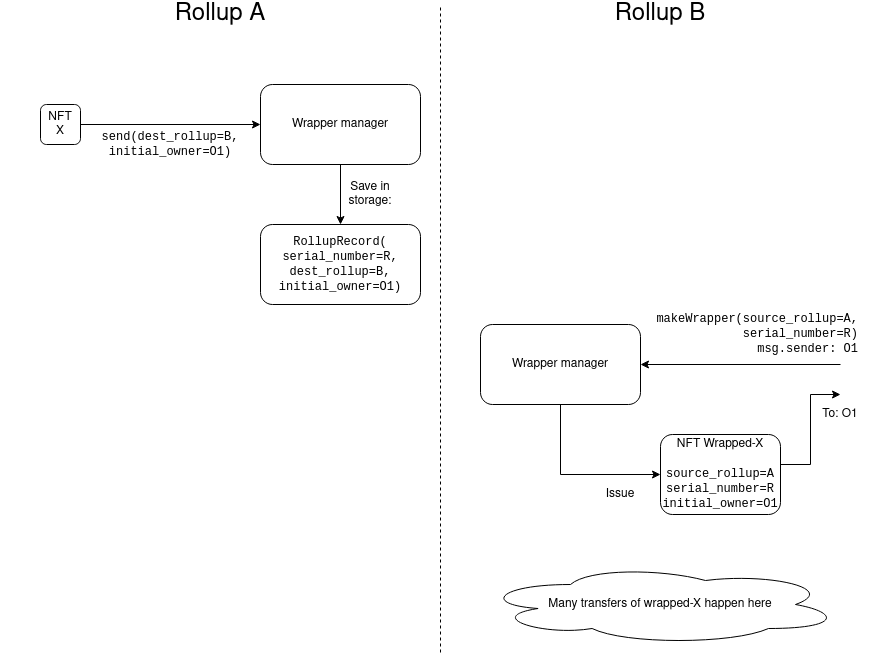
The current L2 fragmentation problem is not just a UX friction point; it is a structural vulnerability. When users bridge assets between rollups, they must submit multiple separate transactions, each with its own sequencer. This creates a "double-spend" window where a malicious actor can exploit the time gap between orders to front-run or reverse a trade. Worse, centralized sequencers capture this value through Maximal Extractable Value (MEV), effectively taxing users for the privilege of interoperability. The solution lies in treating cross-rollup bundles as single atomic units, enforced by a shared ordering layer.
1. Bundle aggregation at the entry point
The process begins when a user initiates a cross-rollup action, such as swapping an asset from Arbitrum to Optimism. Instead of sending two separate transactions to two separate sequencers, the user submits a single "bundle" to a shared sequencer service. This bundle contains the execution logic for both rollups. The shared sequencer acts as the initial intake valve, validating that the bundle is well-formed and that the user has sufficient funds to cover both sides of the transaction. This step eliminates the initial fragmentation by grouping related actions into one atomic package before they enter the ordering pipeline.
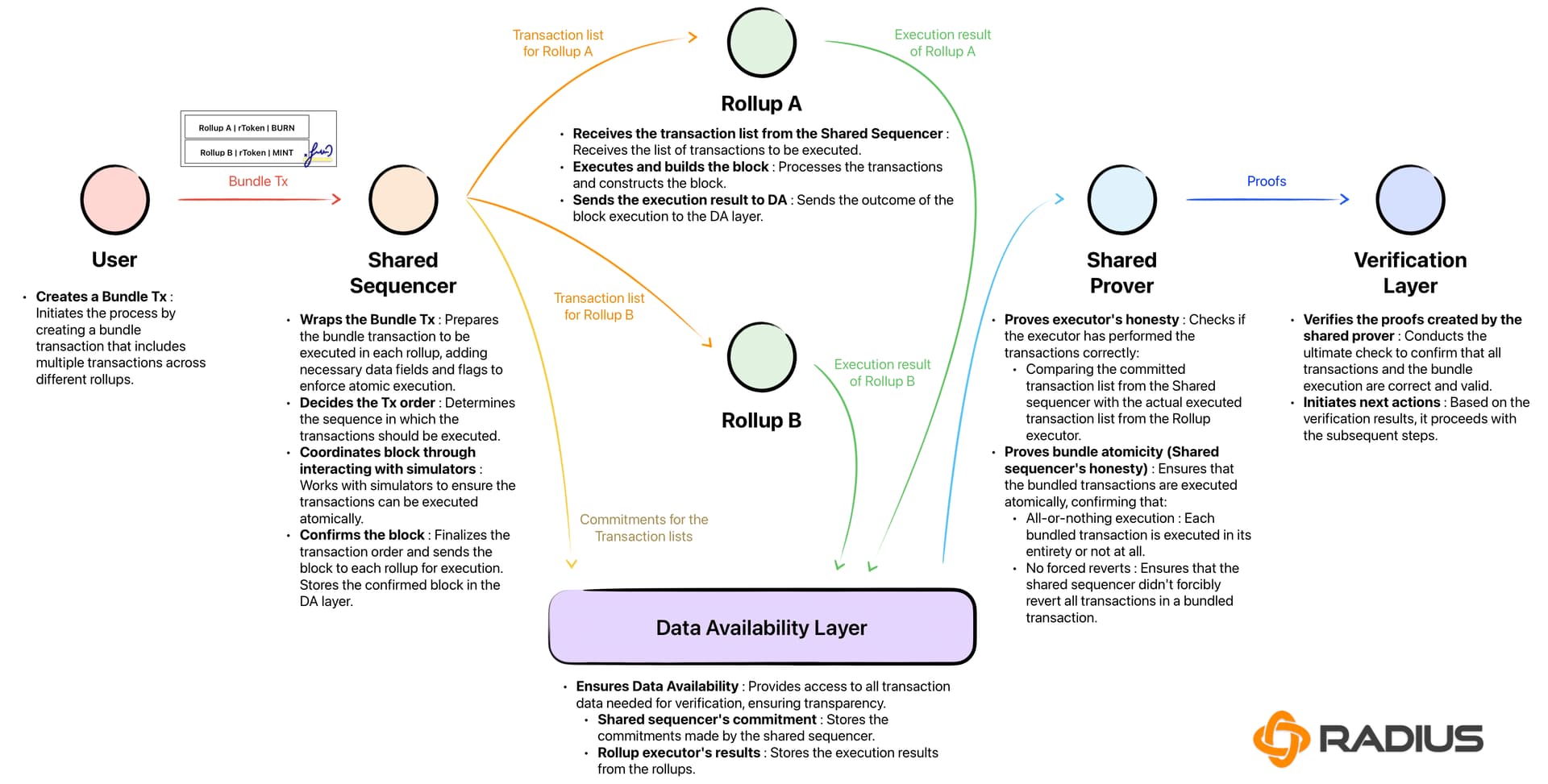
The user submits a single bundle containing execution logic for multiple rollups. The shared sequencer validates the bundle's structure and ensures the user has sufficient funds to cover all required actions across the different chains.
The shared sequencer assigns a global sequence number to the bundle. This number is critical because it establishes a single, immutable timeline for all transactions. By ordering bundles globally, the sequencer ensures that no two conflicting cross-rollup actions can be processed out of order, preventing the MEV extraction that plagues isolated rollups.
The ordered bundle is dispatched to the respective rollups. Because the bundle was ordered atomically, the rollups execute the transactions in the exact sequence determined by the shared sequencer. If any part of the bundle fails, the entire transaction is reverted. This guarantees that assets are never lost in transit and that the cross-rollup state change is either fully completed or fully undone.
2. The shared ordering layer
The core innovation is the separation of ordering from execution. In traditional rollup architectures, the sequencer decides the order of transactions and executes them. This centralization of power is what allows for MEV extraction and censorship. Shared sequencing decouples these functions. A neutral, decentralized network of sequencers agrees on the order of transactions (ordering) without necessarily executing them themselves. This order is then broadcast to the rollups, which execute the transactions based on the agreed-upon sequence. This approach, often referred to as Shared Validity Sequencing (SVS), ensures that the order of cross-rollup transactions is consistent and predictable.
3. Atomicity and finality guarantees
Atomicity is the key security property that shared sequencing provides. In a fragmented system, if a user sends an asset from Rollup A to Rollup B, there is a risk that the transaction on Rollup A succeeds, but the transaction on Rollup B fails due to a network hiccup or a conflicting transaction. This results in a "lost" asset. Shared sequencing solves this by ensuring that all parts of the cross-rollup transaction are ordered and executed as a single unit. If any part fails, the entire bundle is reverted. This eliminates the risk of asset loss and provides users with the same level of confidence in cross-rollup transactions as they have in single-chain transactions.
4. Trust implications and decentralization
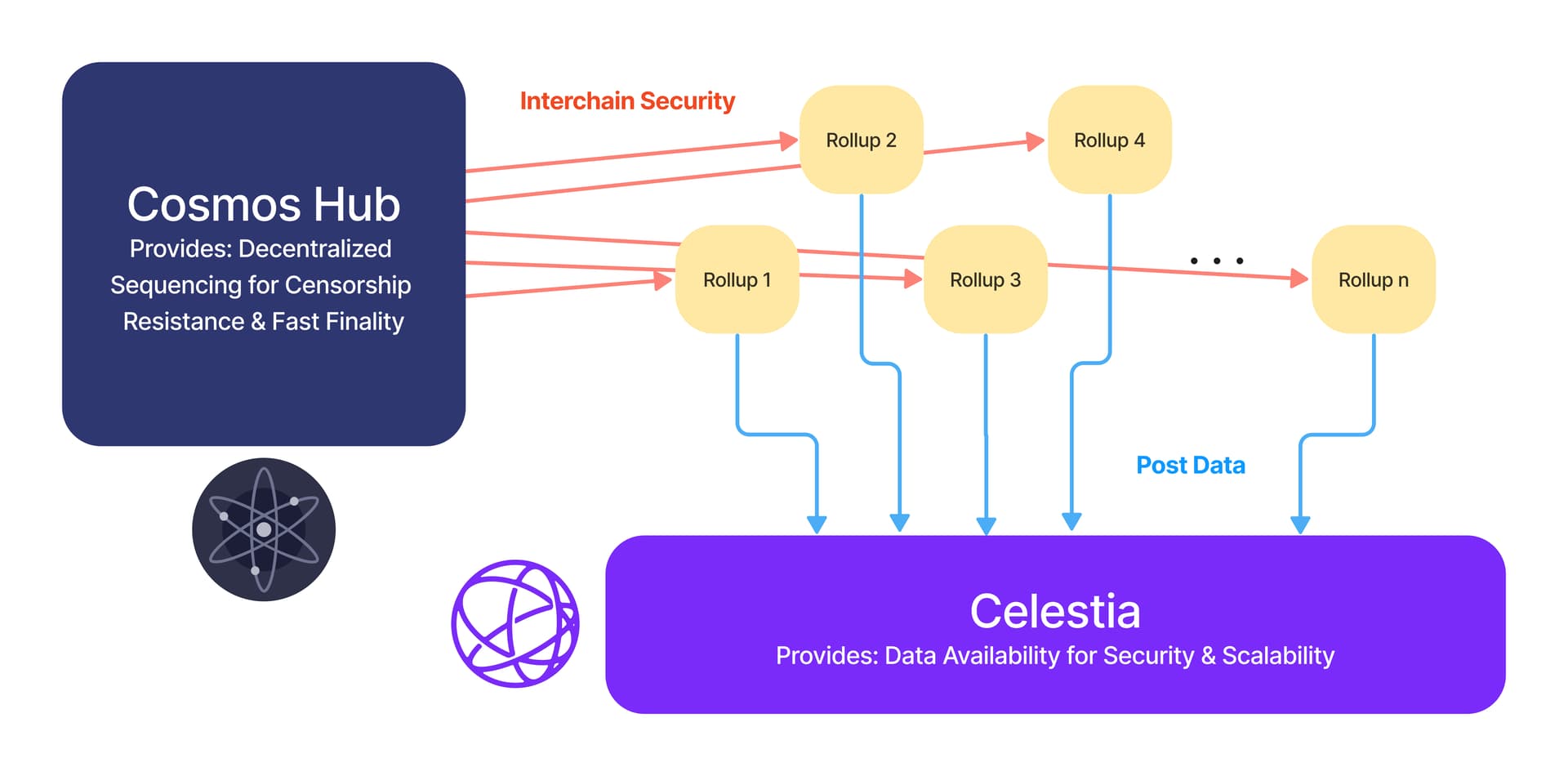
While shared sequencing solves the technical fragmentation problem, it introduces new trust considerations. The shared sequencer network must be decentralized enough to prevent collusion or censorship. If a small group of entities controls the shared ordering layer, they could still extract MEV or censor specific transactions. Therefore, the design of the shared sequencer network is critical. Protocols like Espresso and Celestia are exploring decentralized sequencer networks that use consensus mechanisms to ensure that no single entity can manipulate the order of transactions. This decentralization is essential for maintaining the trustless nature of blockchain systems.


As an Amazon Associate, we may earn from qualifying purchases.
Atomic execution reduces cross-chain MEV
Cross-rollup MEV is the primary symptom of fragmented sequencing. When Layer 2 chains operate in isolation, attackers can exploit the time lag between state updates. They front-run or sandwich transactions that bridge assets between rollups, extracting value that should belong to the user. This isn't just a minor inefficiency; it undermines the fundamental trust model of decentralized finance.
The problem stems from how sequencers currently handle cross-chain bundles. Without atomic execution, a bundle bridging assets between two rollups is treated as two separate events. An observer can see the intent, insert their own transaction ahead of it, and profit from the price impact. This vulnerability persists because the state change on the destination rollup isn't guaranteed to happen simultaneously with the source.
Atomic execution solves this by treating cross-rollup bundles as a single, indivisible transaction. The sequencer ensures that either all parts of the bundle execute correctly, or none do. This eliminates the window of opportunity for front-running and sandwich attacks. Security improves because the risk of partial execution vanishes, and users no longer pay premiums to MEV bots for basic interoperability.
The table below compares the security posture of isolated sequencing against atomic, shared sequencing models.
| Feature | Isolated Sequencing | Atomic Shared Sequencing |
|---|---|---|
| MEV Exposure | High (front-running risk) | Low (simultaneous execution) |
| Transaction Order | Fragmented across chains | Unified global order |
| State Consistency | Eventual consistency | Atomic consistency |
| User Slippage | Unpredictable | Minimized |
| Trust Model | Relies on sequencer honesty | Relies on cryptographic proof |
The Trust Gap in Shared Sequencers
The centralization of transaction ordering is the single greatest threat to cross-rollup composability. When a single entity controls the sequencer, it holds the power to reorder, censor, or front-run transactions. This creates a "trust gap" where users must rely on the benevolence of a centralized operator rather than cryptographic guarantees. In 2026, as shared sequencers become the standard for L2 interoperability, this risk is amplified. A failure in one shared sequencer can cascade across multiple rollups, creating systemic fragility.
The problem manifests as MEV (Maximal Extractable Value) extraction and censorship. Centralized sequencers often prioritize their own trading bots or accept bribes to delay specific transactions. This distorts market efficiency and undermines the fairness of the underlying Layer 1 security. Users lose confidence when they cannot trust that their transactions are processed in the order they were sent.
Decentralized interchain security offers a path forward. By leveraging existing validator sets from established networks like Celestia or Ethereum, rollups can outsource sequencing to a permissionless group of operators. This approach distributes trust, making it significantly harder for any single actor to manipulate transaction order. However, this shift requires careful architectural design to ensure that the decentralized sequencer remains performant and secure.
-
Is the sequencer permissioned or permissionless?
-
Who controls the ordering logic and censorship flags?
-
How is censorship resistance enforced technically?
-
What is the fallback mechanism if the sequencer fails?
Evaluating your sequencer’s trust model is critical before committing to a shared infrastructure provider. If the sequencer is permissioned, you are effectively outsourcing security to a small group of entities. This reduces the attack surface for censorship but increases the risk of collusion. If it is permissionless, you gain decentralization but must ensure the validator set is large enough to prevent Sybil attacks or economic capture.
The tradeoff is clear: centralized sequencers offer speed and simplicity at the cost of trust, while decentralized models offer security at the cost of complexity. As the ecosystem matures, the preference is shifting toward hybrid models that use decentralized consensus for ordering while maintaining high throughput. Understanding these tradeoffs is essential for building resilient cross-rollup applications.
No comments yet. Be the first to share your thoughts!