Why rollups need shared sequencing
Isolated sequencers create fragmented liquidity and force users into sequential bridging. When each Layer 2 rollup maintains its own private ordering of transactions, cross-rollup interactions become fragile. A user must bridge assets to an intermediate chain, wait for finality, and then submit a new transaction on the destination rollup. This multi-step process increases latency, exposes users to bridge risks, and prevents atomic execution of complex DeFi strategies.
Shared sequencing resolves this by providing a global ordering service. Instead of each rollup ordering its own block in isolation, a shared sequencer collects transactions from multiple rollups and produces a single, globally ordered stream. Each rollup then reads from this shared stream to build its own blocks. This architecture ensures that transactions intended for different rollups can be ordered relative to each other, enabling atomic cross-rollup actions.
This approach reduces the complexity of cross-chain communication. By outsourcing ordering to a decentralized network of nodes, rollups can focus on execution and validity proofs. The result is a more cohesive multi-rollup ecosystem where assets and data move freely without the friction of intermediate bridging steps.
Step 1: Select a shared sequencer protocol
Choosing the right shared sequencer is the foundation of cross-rollup interoperability. Unlike proprietary sequencing, a shared protocol provides a global ordering layer that treats transactions from different rollups as a single, unified stream. This alignment is what allows for atomic cross-rollup swaps without relying on slow, bridge-based settlement.
When evaluating protocols like Espresso or Rome, focus on three technical criteria: latency, decentralization, and rollup stack compatibility.
Evaluate Latency and Finality
The primary value proposition of a shared sequencer is speed. Your protocol must offer low-latency transaction inclusion to ensure that cross-rollup swaps feel instant to the user. Look for systems that provide immediate finality or rapid probabilistic confirmation, as this reduces the window for front-running and MEV extraction.
Espresso Systems, for example, positions its shared sequencer as a "defragmenting" layer that reads from a global order book. This approach minimizes the complexity of cross-chain messaging by ensuring that related transactions are sequenced consecutively, regardless of their originating L2.
Assess Decentralization and Trust Assumptions
A centralized sequencer creates a single point of failure and censorship risk. For production-grade interoperability, you need a sequencer that is permissionless and resistant to collusion. Evaluate the consensus mechanism: does it rely on a small set of validators, or is it designed for broad participation?
Rome Protocol, backed by Portal Ventures, argues that decentralizing transaction sequencing is essential for true cross-rollup composability. Their thesis centers on reducing the trust assumptions required for users to move assets between chains. A decentralized sequencer ensures that no single entity can reorder or drop transactions to the detriment of your users.
Verify Rollup Stack Compatibility
Not all shared sequencers support every rollup stack. Ensure the protocol you select integrates seamlessly with your specific L2 technology, whether it is Optimism-compatible (OP Stack), ZK-rollup based, or uses a different validity proof system. The integration should require minimal changes to your sequencer client or batch submission pipeline.
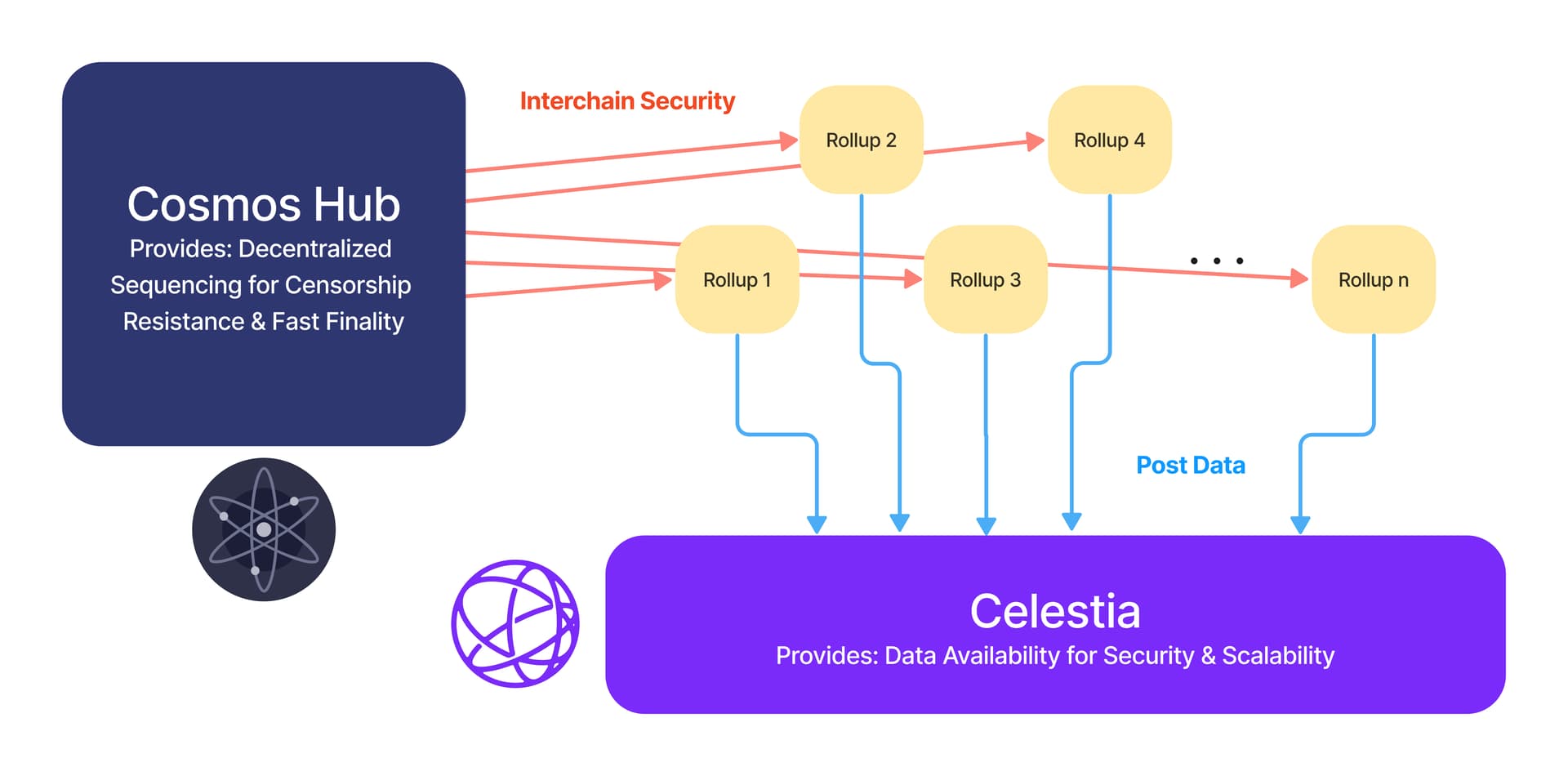
Check if the protocol supports your specific data availability layer. If your rollup uses Celestia or EigenDA, the shared sequencer must be able to efficiently route and publish data to that layer while maintaining the global order. Compatibility issues here can lead to increased gas costs or failed transactions.
Map your existing transaction flow and identify bottlenecks. Determine if your current sequencer can handle the additional load of cross-rollup message passing without compromising performance.
Run integration tests against the shared sequencer's testnet. Measure the time between transaction submission and global ordering. Verify that cross-rollup swaps execute within your acceptable latency threshold.
Review the validator set size and distribution for your chosen protocol. Ensure that the consensus mechanism aligns with your security requirements and that there are no centralization risks in the operator network.
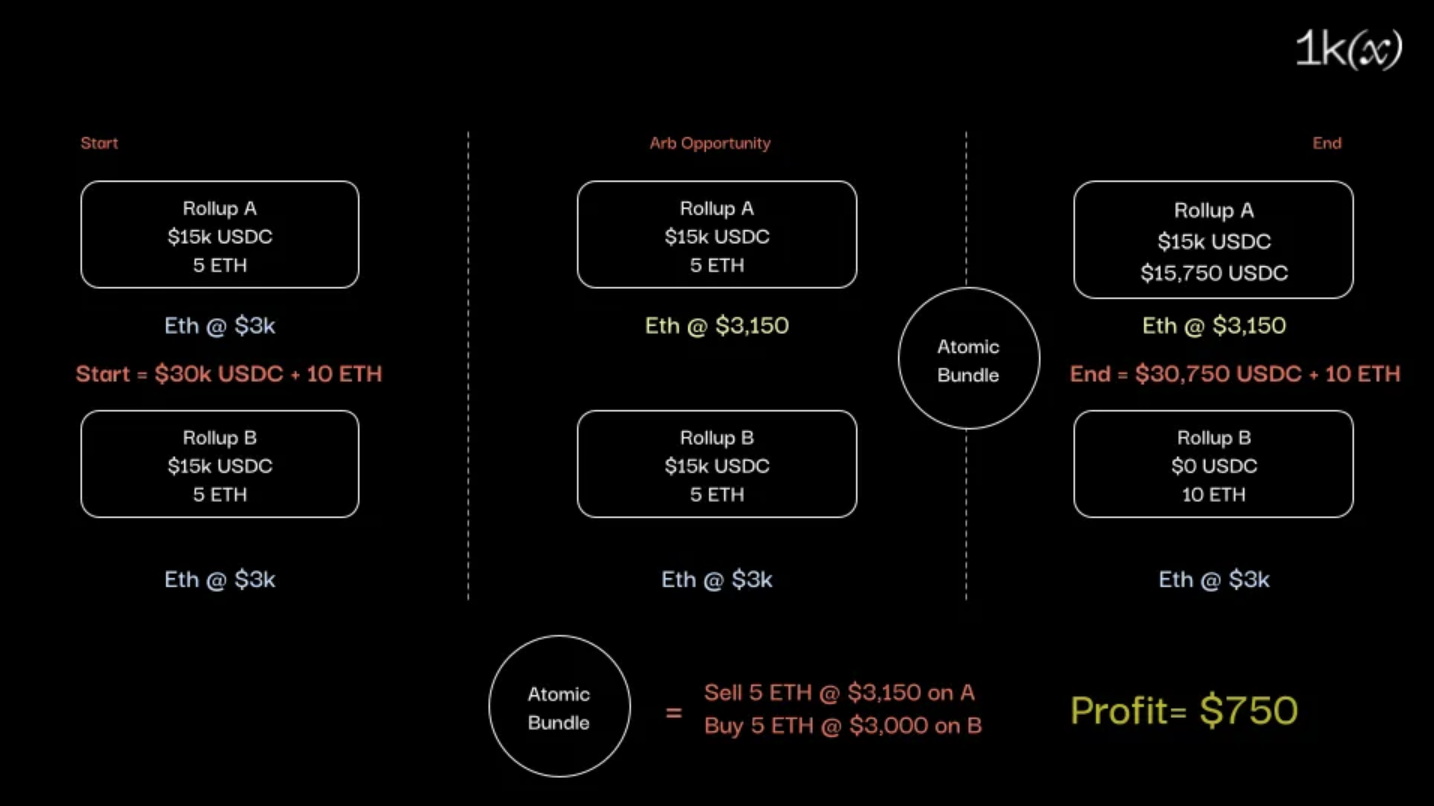
Integrate the shared sequencer client into your rollup node. Test the end-to-end flow of transactions from your L2 through the shared sequencer to the destination L2, ensuring data availability and ordering are maintained.
Configure atomic execution logic
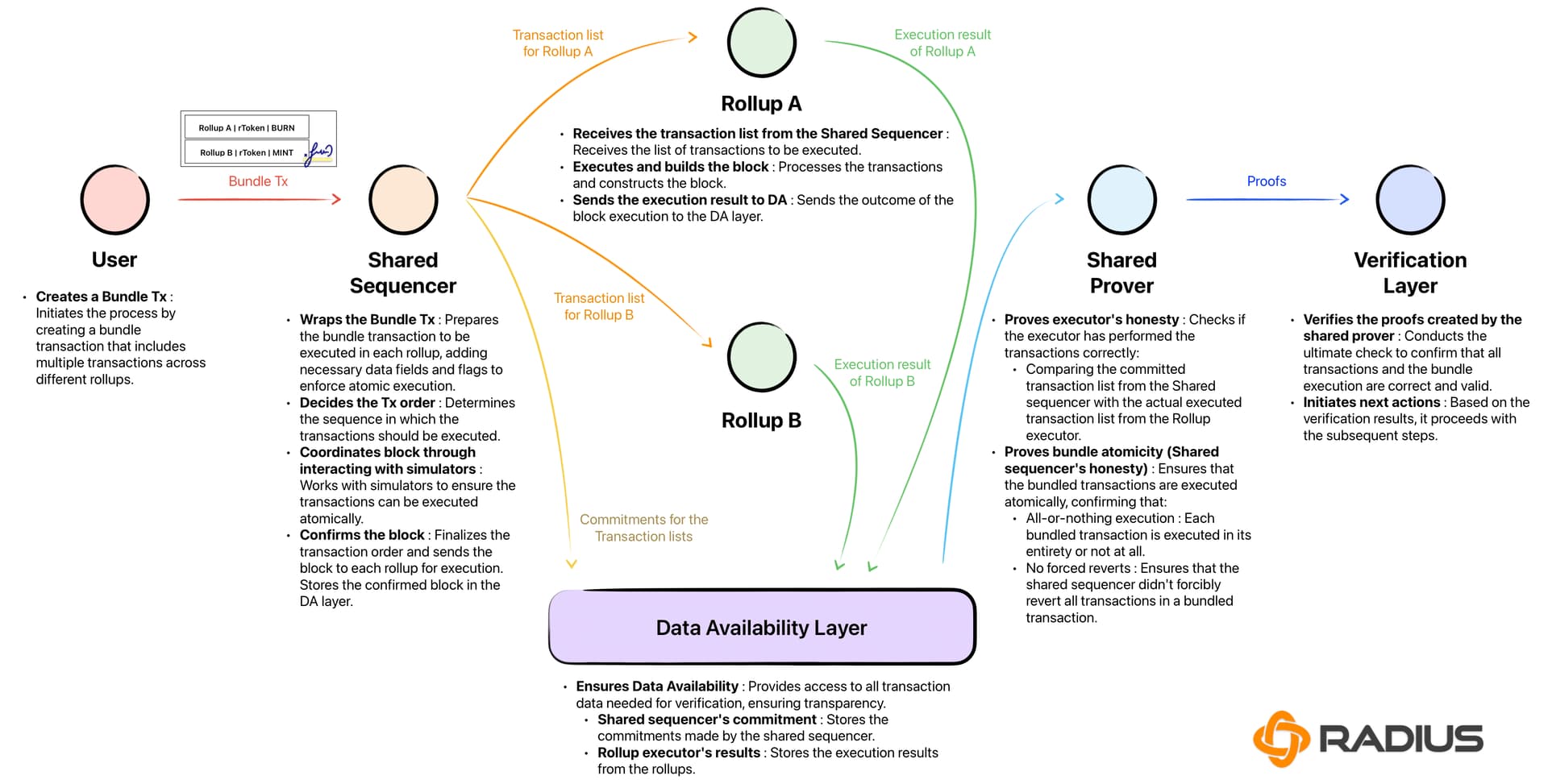
To achieve true atomicity across rollups, you must structure your smart contracts to treat the shared sequencer as the single source of truth for state transitions. Instead of relying on asynchronous message passing between isolated chains, you implement a centralized execution layer that processes transactions from Rollup A and Rollup B in a single batch. This approach eliminates the risk of partial executions, where a transaction succeeds on one rollup but fails on the other due to state divergence or timing issues.
The core of this implementation is a shared state contract deployed on the shared sequencer’s execution environment. This contract holds the canonical state for both rollups, allowing atomic updates to assets or data across both chains simultaneously. When a user submits a transaction, the sequencer verifies the signature and state validity, then applies the state change to both rollup states in one atomic step. If any part of the transaction fails validation, the entire batch is reverted, ensuring consistency.
Start by defining a unified state structure that represents the combined state of both rollups. This schema should include balances, nonces, and any other relevant data for both Rollup A and Rollup B. Ensure that the state variables are accessible and modifiable by the shared sequencer contract. This unified schema is critical for maintaining a single, consistent view of the cross-rollup state.
Create a smart contract function that acts as the atomic transaction processor. This function should accept transactions from both rollups, validate their signatures and state conditions, and then update the shared state accordingly. Use a single transaction hash for the entire batch to ensure that all updates are treated as a single atomic operation. This function should revert the entire state change if any validation fails, preventing partial executions.
Connect your atomic transaction processor to the shared sequencer. The sequencer should be responsible for ordering transactions from both rollups and submitting them to your atomic processor. Ensure that the sequencer can handle the increased load of processing cross-rollup transactions and that it maintains the correct order to preserve atomicity. This integration allows the sequencer to enforce the atomic execution logic directly.
Implement a mechanism for generating and verifying state proofs for both rollups. These proofs are necessary for finality and for ensuring that the state changes are valid according to each rollup’s individual rules. The shared sequencer should generate proofs that can be verified by both rollup operators, confirming that the atomic execution was performed correctly. This step is crucial for maintaining trust and security in the cross-rollup system.
By following these steps, you create a robust framework for cross-rollup interoperability that prioritizes atomicity and security. This method ensures that transactions are executed consistently across both rollups, reducing the complexity and risk associated with cross-chain interactions. For further details on the theoretical underpinnings of this approach, refer to Cross-rollup Synchronous Atomic Execution on Ethresear.ch.
Step 3: Handle cross-rollup MEV risks
When multiple rollups share a single sequencer, the boundary between isolated execution environments vanishes. This creates cross-rollup MEV (Maximal Extractable Value) opportunities that do not exist in standalone L2s. An operator can now observe pending transactions on Rollup A and immediately construct a profitable arbitrage or sandwich attack on Rollup B within the same block window. Because the sequencer controls the ordering of both streams, it can extract value from price discrepancies or liquidity imbalances that span across chains.
The primary vulnerability lies in the lack of atomicity guarantees during the sequencing phase. If Rollup A sends a transaction that updates a cross-chain oracle, and Rollup B relies on that oracle for a swap, the sequencer can reorder these events to front-run the oracle update. This exposes users to significant slippage and loss, effectively turning the interoperability layer into a profit center for the sequencer operator rather than a neutral bridge.
To mitigate this, you must implement private ordering or fair sequencing mechanisms. Private ordering ensures that users submit transactions through encrypted channels, preventing the sequencer from seeing the content until it is committed. Alternatively, fair sequencing protocols can enforce a strict FIFO (First-In, First-Out) order based on submission time rather than value extraction potential. These measures prevent the sequencer from exploiting its visibility into the cross-rollup transaction pool.
Without these safeguards, the efficiency gains of shared sequencing are offset by increased security costs for users. Protocol designers must treat cross-rollup MEV not as a minor edge case, but as a fundamental security threat that requires cryptographic or economic barriers to entry.
Verify transaction finality and proofs
The final step in cross-rollup sequencing is securing the atomic batch on the L1 settlement layer. Once the shared sequencer has ordered the transactions, the system must prove that the intended state changes occurred exactly as specified. This verification ensures that neither rollup can revert or alter the batch without detection, maintaining the integrity of the cross-chain interaction.
Start by checking the shared sequencer receipt to confirm the batch was included in the canonical order. Next, verify the L1 proof inclusion by validating the zk-SNARK or STARK proof against the L1 smart contract. Finally, confirm the state root on both rollups matches the expected post-execution state. If any of these checks fail, the atomic batch is rejected, and the transaction is rolled back to preserve consistency.
Common questions about L2 interoperability
Developers often conflate distinct Layer 2 architectures or struggle with the mechanics of cross-chain state verification. Understanding the specific roles of sequencers and the mechanics of cross-rollup sequencing is essential for building secure interoperable systems.
What is a rollup?
A Layer 2 rollup is an execution environment that processes transactions off-chain and posts compressed data to Ethereum L1 for security. Unlike sidechains, which operate with independent validator sets, rollups inherit the security guarantees of the underlying L1 settlement layer. This architecture allows for significantly higher throughput while maintaining the trust assumptions required for decentralized finance.
What role does a sequencer play?
The sequencer is the central node responsible for ordering transactions before they are batched and posted to L1. In a standard rollup, a single sequencer determines transaction order, which creates a potential point of failure or censorship. For cross-rollup sequencing, multiple rollups may share a single sequencer or coordinate through a shared ordering layer to ensure atomic execution across different chains.
How to track cross-chain transactions?
Tracking transactions across rollups requires monitoring event logs from both the source and destination chains. Since state roots are posted to L1, you can verify the inclusion of a message by checking the L1 calldata against the destination rollup’s state root. Reliable tracking often involves using specialized indexers that subscribe to cross-chain message events, ensuring that proofs of execution are captured in real-time.
What is the difference between sidechain and rollup?
The primary difference lies in security and settlement. Sidechains are independent networks with their own consensus mechanisms and security models, meaning they do not rely on the main chain for protection. Rollups, conversely, use the main chain’s data availability and security. While sidechains offer full control over their state transitions, rollups prioritize security by anchoring their state to the L1 settlement layer.
No comments yet. Be the first to share your thoughts!